Helping Puerto Rico since the 1950’s

Puerto Rico 1950's

70 years ago, when the Puerto Rico Builders Association was formed, the United States was on the brink of entering the World War II. December 7, 1941, would be considered a day that would “live in infamy”. Thousands of Puerto Ricans as American citizens fought in the War and would return home as victors to an island on the precipice of great economic growth.  Thanks in large part to Operation Bootstrap, o “Manos a La Obra”, the Puerto Rico Builder’s Association has played a vital role in shaping the island’s long term economic development. The Puerto Rico Builders Association (formerly known as the Homebuilders Association) was formed in a critical period of time when the island was undergoing a massive transformation from an agricultural society into a leading manufacturing hub.

Puerto Rico would see historic growth for more than three decades and the Puerto Rico Builders Association would play a leading role in shaping the island’s zoning regulations, environmental protections, financing, and building codes (often referred to as a Miami’s building code on steroids).  Puerto Rico benefited greatly from these concerted efforts by the Puerto Rico Builder Association with one of the highest homeownership rates in the Western world at 68%. Puerto Rico is also the second largest public housing jurisdiction in the United States second only to New York City.

In 2015, The Puerto Rico Builders Association, under the leadership of then PR Builders president, Ricardo Alvarez Diaz Villalon joined forces with the Urban Land Institute Southeast Florida/Caribbean District Council. ULI founded around the same time as the PR Builders Association, is one of the oldest and largest networks of real estate and land use experts in the world. ULI’s mission is to shape the future of the building industry and create thriving and sustainable communities around the globe. Shortly thereafter, Puerto Rico was devastated with two back-to-back category five hurricanes.

Hurricanes Irma and Maria destroyed most of the island’s electrical infrastructure and informal housing stock at a cost estimated over 100 billion dollars. ULI together with the Puerto Rico Builders Association created a task force to study the effects of the storms and how to build back better. Under then ULI president Greg West, the Puerto Rico Builders Association and ULI convened national panel of experts and created a specific action plan for the municipality of Toa  Baja.

The Puerto Rico Builders Association BoardThe Puerto Rico Builders Association and ULI have since held multiple meetings and conference throughout the years in both Puerto Rico and Miami to explore new areas of synergy and improvements to the island’s build environment. ULI’s current president, Scott McLaren was recently quoted, “we strongly value our long standing partnership with your organization and admire the leaders who go above and beyond, especially when faced with such tremendous obstacles.”

Come celebrate 70 with the Puerto Rico Builders Association Puerto Rico on October 27-29 in San Juan. https://constructorespr.com/convencion-2021/

AG&T is a real estate development and consulting company founded in 1998 with headquarters in Miami, Florida. Our  track record spans over 55 real estate development projects in Puerto Rico, Sint Maarten, Costa Rica, Panama, Mexico, Dominican Republic, and various other Caribbean islands.


Puerto Rico’s Hotel Industry Takes Center Stage in Miami


Puerto Rico takes centerstage at the Caribbean Hospitality Investment Summit (CHRIS) held this week at the Hardrock Hotel in Miami.


The Puerto Rico Builders Association, one of the sponsors of the CHRIS event, was honored to congratulate Hugh Andrews, CEO, IHE as he received the Lifetime Achievement Award. The award was presented by Vanessa Ledesma Acting CEO and Director at Caribbean Hotel and Tourism Association.  Vanessa, herself a great friend and native of Puerto Rico, discussed with Hugh Andrews his vast accomplishments that include the development of such Icon hotel properties as the Conquistador Hotel, El Convento, Las Casitas, and Vanderbilt Hotel.


STR in its annual report, listed Puerto Rico’s year over year recovery from 2019 as one of the Caribbean’s  top destinations. This includes maintaining strong airlift throughout the pandemic, maintaining high ADRs, and an impressive 82% Occupancy rate. The recently delivered Aloft San Juan hotel was named as top CHRIS hospitality development of 2021.  Adam Greenfader, Managing partner of AG&T and Florida Liaison Chair of the Puerto Rican Builders Association,  spoke on the success of the P3 program in Puerto Rico. He mentioned in the Public-Private Collaboration panel that the island will be soliciting a P3 bid for the management of the 9 remaining local and national airports.


Kenny Blatt, Principal/Managing Partner of CPG Real Estate, spoke extensively on Puerto Rico’s hospitality industry. He discussed the island’s capacity to greatly expand its hospitality and tourism sectors.  Blatt’s was enthusiastic about the transformation at Dorado Beach, A Ritz-Carlton Reserve and its evolution since 1958.   His key takeaways on Dorado Beach’s success include working with local partners as a critical best practice. Blatt praised the Stubbe family and PRISA group repeatedly as “ the greatest developers any resort can ever have.”


The Puerto Rico Builders Association will be celebrating its 70 year anniversary at its upcoming conference on October 27-28, 2021. For more information visit https://constructorespr.com


State of the Caribbean Hospitality Market: Capital Markets, Lending, and the Road to Recovery

State of the Caribbean Hospitality Market: Capital Markets, Lending, and the Road to Recovery

On March 16, 2021, at a time when much of the global hospitality industry remained in crisis, the Urban Land Institute Caribbean Council convened one of its most comprehensive discussions on the future of Caribbean tourism and hotel investment.

The webinar, “State of the Caribbean Marketplace,” brought together an exceptional panel of leaders representing institutional lending, development finance, hotel brokerage, destination marketing, and investment to examine the unprecedented challenges facing the hospitality sector and, more importantly, how the industry could emerge stronger.

Moderated by Adam Greenfader, Managing Partner of AG&T and Chair of the ULI Caribbean Council, the discussion featured:

  • Juan Corvinas Solans, Managing Director, Head of International Hotel Finance

  • Rogerio Basso, Head of Tourism, IDB Invest

  • Alexandra Lalos, hospitality investment professional

  • Christian Charre, Senior Vice President, CBRE Hotels

  • Brad Dean, CEO, Discover Puerto Rico

Rather than focusing solely on the immediate effects of COVID-19, the panel explored the deeper structural changes taking place across the hospitality industry and capital markets. The discussion provided valuable insights into lender responsibilities, investor behavior, hotel valuations, operational resilience, and the future of Caribbean tourism.

A Crisis Unlike Any Other

One of the central themes of the conversation was why COVID-19 differed fundamentally from the Global Financial Crisis of 2008–2009.

While both crises placed tremendous pressure on the hospitality industry, their underlying causes—and therefore the appropriate responses—were entirely different.

The Global Financial Crisis originated within the financial system itself. Excessive leverage, declining real estate values, and failures in the banking sector led to a widespread credit contraction. Liquidity evaporated, financing became scarce, and many otherwise viable projects were unable to refinance their debt. Banks faced solvency concerns, and distressed asset sales became commonplace as lenders worked through troubled portfolios.

COVID-19 presented an entirely different challenge.

Hotels did not fail because of poor underwriting or excessive leverage. In many cases, they entered 2020 with healthy balance sheets, strong occupancies, and positive cash flow. Instead, the pandemic abruptly halted global travel through government-imposed restrictions and public health measures. Demand disappeared almost overnight, not because travelers had lost interest in tourism, but because they simply could not travel.

This distinction fundamentally changed the role of financial institutions.

The Responsibility of Lenders During Extraordinary Times

One of the most compelling discussions centered on the responsibilities of lenders during a crisis that was not caused by borrowers.

Panelists emphasized that traditional loan enforcement strategies would not serve either lenders or borrowers under these unprecedented circumstances.

Instead, many financial institutions adopted a collaborative approach that focused on preserving long-term asset value rather than maximizing short-term recoveries.

Throughout the Caribbean and internationally, lenders worked closely with hotel owners to provide temporary payment deferrals, covenant waivers, loan modifications, maturity extensions, and other restructuring solutions designed to bridge the industry through the temporary disruption.

This represented a significant evolution in lender philosophy.

Rather than forcing widespread foreclosures, financial institutions recognized that preserving high-quality hospitality assets would ultimately benefit borrowers, lenders, investors, employees, and local economies alike.

The discussion highlighted an important lesson from the Global Financial Crisis: unnecessary liquidations often destroy long-term value. In contrast, patience and partnership can preserve both businesses and communities during periods of extraordinary uncertainty.

Capital Never Left the Market

Another important takeaway was that while travel had stopped, investment capital had not.

Institutional investors, private equity firms, family offices, sovereign wealth funds, and hospitality-focused lenders continued to study the market throughout the pandemic.

Many viewed the crisis as a temporary interruption rather than a permanent impairment of Caribbean tourism.

The panel discussed how sophisticated investors were actively preparing for recovery by evaluating acquisition opportunities, recapitalizations, refinancing transactions, and development sites well before travel resumed.

This confidence reflected the industry’s belief that the Caribbean’s long-term fundamentals remained intact:

  • World-class tourism destinations

  • Limited beachfront supply

  • Strong luxury demand

  • Growing interest in wellness and experiential travel

  • Continued expansion by international hotel brands

  • Attractive long-term demographic trends

As history has shown, many of these investors were well positioned to participate in one of the strongest tourism recoveries in the world.

The Evolution of Hotel Finance

The conversation also explored how financing structures were evolving.

Lenders increasingly emphasized sponsor quality, operational expertise, liquidity, and business continuity planning alongside traditional underwriting metrics.

Hotel operators were expected to demonstrate greater flexibility in managing costs, staffing, technology adoption, and guest experience.

Developers likewise began integrating resilient design, sustainability, wellness amenities, and mixed-use programming into new projects, recognizing that these features would become increasingly important to both guests and capital providers.

The pandemic accelerated trends that were already reshaping hospitality finance.

A More Sophisticated Investment Environment

Rogerio Basso provided valuable insights into the role of development finance institutions in supporting tourism throughout Latin America and the Caribbean.

Unlike traditional commercial lenders, multilateral development banks often provide patient capital that can continue flowing during periods of market uncertainty. Their participation not only supplies financing but also reinforces investor confidence, promotes sustainable development, and encourages higher environmental and governance standards.

Christian Charre shared perspectives from the hotel transaction market, illustrating how valuation methodologies were adapting in response to temporary operating disruptions. Rather than relying solely on current cash flow, investors increasingly focused on normalized performance and long-term replacement value.

Brad Dean discussed the remarkable resilience of travel demand and emphasized that tourism remained one of the world’s most powerful economic engines. While the pandemic temporarily interrupted mobility, the human desire to travel, connect, and experience new destinations remained fundamentally unchanged.

Looking Back

Several years later, many of the observations shared during this discussion proved remarkably accurate.

The Caribbean experienced one of the fastest tourism recoveries globally. Hotel occupancies rebounded, average daily rates reached record levels in many destinations, institutional investment returned, branded residences flourished, and major international hotel companies accelerated expansion throughout the region.

Perhaps most importantly, the industry demonstrated that collaboration among lenders, investors, operators, governments, and development institutions could preserve long-term value even during periods of extraordinary disruption.

AG&T’s Commitment to Caribbean Thought Leadership

The State of the Caribbean Marketplace webinar reflected AG&T’s broader commitment to advancing meaningful conversations about the future of Caribbean real estate and hospitality.

Through its leadership within the Urban Land Institute Caribbean Council, collaborations with industry organizations, and partnerships with public and private sector leaders, AG&T has consistently created forums where investors, lenders, developers, hotel operators, policymakers, and academics can exchange ideas and shape the future of the region.

The conversation was never simply about surviving the pandemic.

It was about understanding how crises reshape industries, how responsible lending preserves markets, and how thoughtful leadership can position Caribbean hospitality not merely for recovery, but for long-term growth.

The lessons remain just as relevant today. Strong destinations are built not only through exceptional hotels and visionary developments, but through resilient financial systems, collaborative partnerships, and leaders willing to think beyond the next business cycle.

Could this be the year for Puerto Rico?

Adam Greenfader


Could this be the year for Puerto Rico?


It had been almost 12 months since my last visit to Puerto Rico. Thanks to the COVID lockdown expectations were low. The last time I visited, more than 2 years after hurricanes Irma and Maria, the devastation was still overwhelming.  Streets were lined with garbage, electrical lines in disrepair, and thousands of homes had roofs covered in blue tarps. This combined with more than ten years of economic recession made has made Puerto Rico extremely pessimistic. As I landed in Luis Munoz Marin Airport, I was thinking,  “Would the ensuing earthquakes and COVID pandemic ravage the economy even more…”


I travelled the entire island from coast to coast –  100 x 35 miles, in a two week period. I drove from San Juan to Aguadilla, Mayaguez, Ponce, Humacao, Fajardo, and Ocean Park.  The roads were in good condition, the street lights working, and many buildings newly painted.  Notwithstanding the COVID crisis, the economy was bustling.  Most palpable was the positive attitude and feeling of the people. I spoke with many colleagues and friends and was told that much of the hurricane insurance had circulated through the economy.  The 8-12 billion in Federal relief from CDBG-DR is expected by early 2021.  Homemade signs seeking construction workers can be seen throughout the island that read, “Se Solicita Carpinteros y Albanilles”.

While the tourists were clearly absent ‘en mass’, a handful of new boutique hotels, especially in San Juan, have been recently delivered between 2019-2020. Much of this new hotel activity is due in part to the Tourism Tax Incentive. The tax incentive provides up to 40% of the total project’s cost back to sponsors…incredibly, some of it can be used for funding as part of the initial capital stack.  While this is not common anywhere in the world, Puerto Rico’s is not a typical Caribbean destination. The total economic activity (GDP) in Puerto Rico is less than 7% for all tourism related activities.  This includes, hotels, trades, conventions, excursions, etc..   This is an astonishing low number for an island that is surrounded by warm water, beautiful beaches, and lush landscapes. Read more about why Puerto Rico is like this at: https://agandt.com/contact-why-puerto-rico-now/

These tax incentives combined with a team of dedicated individuals in the Destination Marketing Organization (DMO) –  Discover Puerto Rico and other Public Private Partnerships (Invest Puerto Rico) is helping to make Puerto Rico a thriving tourism destination. The island currently boats some of the top hotels in the Caribbean with ADR’s over $1,500 per night.  Much of this demand is generated by the Act 20/22 (now Act 60).  For the last five years, hundreds of high net worth US individuals have moved to Puerto Rico to take advantage of zero Federal capital gains.  Act 60 has resulted in over 500 families and hundreds of new business moving to Puerto Rico.  There seems to be no end in sight for these new Americans living in Puerto Rico.  

Dorado Beach

This week Puerto Rico also inaugurated for the first time in over 20 years, the same political party. The PNP or US Statehood party won the election with a mandate for political stability, reduced corruption, and closer ties with the United States. While the island’s economic crisis is far from over, the COVID pandemic has put Puerto Rico back in the spotlight for its manufacturing proficiency. The island of Puerto Rico is one of the world’s leading pharmaceutical destinations – producing more than the top 5 US States combined. As thousands of jobs come back to the USA-Puerto Rico, invariably many will end up where the cost of labor is 15% less expensive, and there is a 60 year culture of robust manufacturing.


So is this the year for Puerto Rico?  Strong yes if you are involved with affordable housing, luxury resorts, alternative energy and critical manufacturing.

While we at AG&T do not have the proverbial ‘crystal ball’ on the island’s long term economic growth, things feel like they are on the right track and we will have more clarity with the resolution to the island’s bond crisis, the electrical authority privatization (AEE), and the completion of the responsibilities of The Fiscal Oversight and Managemnt Board for Puerto Rico. 

AG&T Joins Over One Thousand Leaders Across the United States Affirming Commitment to Global Climate Action


AG&T Joins Over One Thousand Leaders Across the United States Affirming Commitment to Global Climate Action on the Fifth Anniversary of the Paris Agreement 


Washington D.C. – December 12th marks the five-year anniversary of the world coming together to sign on to the Paris Agreement and AG&T is marking the moment by committing to a national mobilization for a clean energy economy and centering their own operations in pursuit of climate action. In doing so, AG&T joined over a thousand leaders from local governments, businesses, universities, and other institutions across the country as part of the “America Is All In” joint statement. 

This joint statement will be delivered to the incoming Biden-Harris administration, as well as to United Nations officials and global heads of state at the Climate Ambition Summit hosted by the United Kingdom, also on December 12th.  

 “As we look to recover from the dual public health and economic crises brought on by the COVID-19 pandemic, we also look to the looming threat of the climate crisis,” said Adam Greenfader. “This is a moment to foster innovation, increase national security, and protect the health and well-being of present and future generations. In our commitment to addressing the climate crisis, we at AG&T are all in and welcome the opportunity to do our part to achieve these goals and push for bold climate action across the United States.” 

The “America Is All In” declaration is organized by We Are Still In, a coalition in support for climate action and a pledge to uphold the United States commitments to reduce emissions under the Paris Agreement. With more than 3,900 organizations and institutions across all sectors of the United States, these leaders represent over half of the national population, nearly two-thirds of the economy, and more than half of the country’s emissions. While the United States officially exited the Paris Agreement on November 4th, the incoming Biden-Harris administration has committed to reentering the unprecedented global agreement.  

“December 12th is more than an anniversary of an agreement, it represents a critical turning point for the future of U.S. and global climate action,” said Elan Strait, Director of US Climate Campaigns at World Wildlife Fund (WWF). “Nationally, we have stumbled in our leadership on climate action. But We Are Still In shows that there was a commitment to change in the United States that never faltered. Today’s statement from AG&T and hundreds like them across the country sends a clear message that, moving forward, we need a unified national response to the climate crisis.”  

To date, the new statement has been signed by cities across the United States including St. Louis, Milwaukee, and Washington, DC, Fortune 100 businesses including Intel, Hewlett Packard, and McDonalds, and Michigan Governor Gretchen Whitmer.  

“There’s never been a more important time for us to come together and accelerate the progress we’ve made to address the climate crisis than now,” said Katie Fallon, Chief Global Impact Officer at McDonald’s. “At McDonald’s, we believe we have a special obligation to help the nearly 40,000 communities we serve build a more resilient and equitable future. This global pandemic is a needed wake-up call that there is still much work to be done, and that we can only succeed if we innovate and collaborate together – that is why we are still in.”

View the statement and signatories at AmericaIsAllIn.com

Learn more at WeAreStillIn.com 

 #WeAreStillIn, #AmericasPledge, #ParisAgreement, #TimetoAct, #ActOnClimate, #climatecrisis, #BuildBackBetter

New Hotel Announced in St. Maarten

Site Plan of Hotel

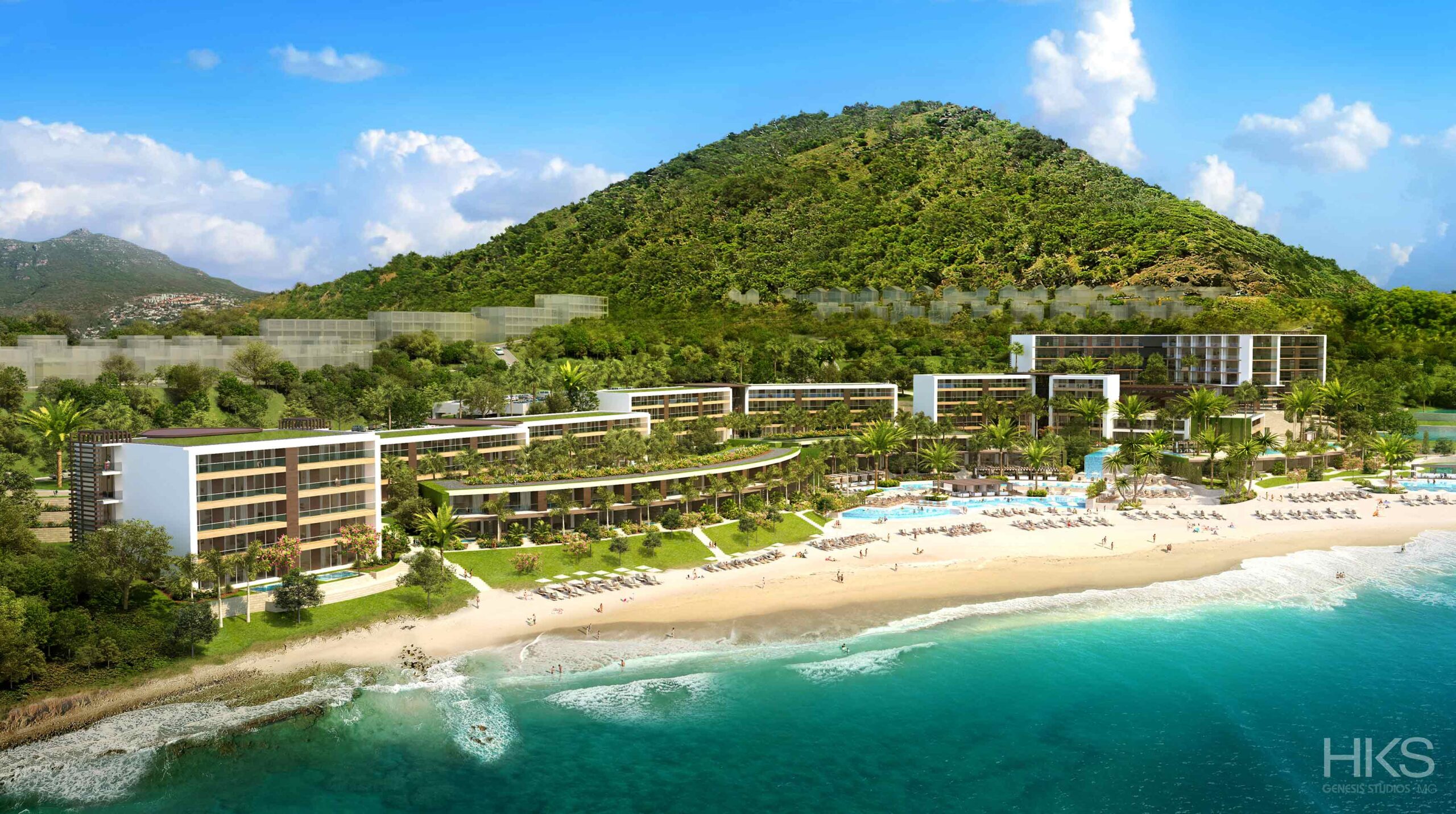
INDIGO BAY–Two prominent real estate development firms have partnered with Cay Bay Development (CBD) NV, the master developer at Indigo Bay Development, to propose the development of a US $220 million luxury hotel resort and condos in St. Maarten.  AG&T provided advisory services and a group of independent real estate brokers led by Adam Greenfader at Oceanfront International Group at Douglas Elliman coordinated the transaction. 


The proposed high-end hotel development at Indigo Bay Development,  is expected to feature certain luxury accommodations and five-star amenities, including 94 hotel rooms and suites, and 130 residential homes. Additionally, the proposed hotel development is expected to feature large water ponds and greenery areas in keeping with its eco-centric vision, as well as an extensive public parking area for public beach access to Indigo Bay.

  “The timing for such a development could not have come at a more opportune time, as country St. Maarten is tasked with creating new and innovative strategies to counter the global economic crisis due to the pandemic,”.

In an economy whereby hospitality and tourism are at the centre of its recovery, it is expected that the development of a high-end branded hotel in St. Maarten would provide an enormous boost to this endeavour by enhancing several areas in tourism.


Hotel Concept at Indigo Bay


According to the release it can enhance St. Maarten’s global attractiveness as a prime tourist destination; increase hotel accommodation by approximately 20 per cent; increase the number of annual visitors to St. Maarten by 32,000 based on hotel occupancy of 65 per cent (double) and an average stay of five nights; and attract high value tourists who may choose St. Maarten as a vacation destination as opposed to accessing surrounding islands through its air and sea ports of entry, it was stated in the release.

The proposed world-class hotel development, once completed, will be managed by an internationally-recognised hotel brand, which will lend itself to greater global recognition, the release said. The projected marketed average daily rate (ADR) for hotel rooms at the proposed new hotel development is expected to be substantially higher than the current average daily rates on St. Maarten.

The CBD and the principals of the proposed hotel development seek to assure that the interest of the citizenry and of the environment are paramount to their endeavor.  Six acres of the overall hotel site of about 18 acres is projected as a green zone, including the retention ponds that were originally constructed at Indigo Bay Development by CBD. 

For more information about Caribbean hotel opportunities contact us 

Q & A: A SPOTLIGHT ON COSTA RICA

CHRIS AND HOLA: A SPOTLIGHT ON COSTA RICA 

Adam Greenfader, Managing Partner, AG&T, Raul F. Calvet, Moderator


ADAM- A“Big shout out to everyone at CHRIS and HOLA for putting on this amazing virtual event, The Puerto Rico Builders Association for Sponsoring, and Oceanfront International Group.” 

Q- What do hotels need to do in order to go through the recovery period?

ADAM – Costs have already been cut. So now it’s time to increase revenues.  I think the key will be to help guest feel safe. There is a huge pent up demand. In particular for anything that makes people feel good, for “Regenerative Experiences”.  Places like Costa Rica with its low density and robust nature-centric offering should fare well post COVID.  Incredibly, the average stay in Costa Rica is 12 days. When you look at their secret, it is based on a diversified ecological travel experience.

Q- How are you monitoring the US economy? 

ADAM – Confidence = Jobs.  The unemployment is still at 10.2%, which is near post-war highs across the country.  We are also keeping an eye on inflation and deflation. I recently traveled across 10 States in the USA and visited many hotels with reduced ADR’s – deflation.  I ordered food from restaurants that was 30% more expensive than before COVID19 – Inflation.

Q- Are the Banks exerting pressure to sell?

ADAM- We are still in the honeymoon phase. We expect to see some distressed assets come to market in 2021 in Central America. However, because the region’s hotels have generally less debt than in US, we may not see as much distressed inventory as a CMBS loan portfolio for example.

Q- How are the REITS doing in the US?

ADAM- Real Estate Investment Trusts (REITs) collectively own about $3 trillion in assets across the US. The REITs own, operate, or finance income-producing real estate ventures.  REITs Hospitality is currently at -14% with Industrial remarkably at a positive 8%.+

Q- What regions should be first to recover from the COVID19 Pandemic?  

ADAM – Costa Rica has a highly educated workforce and stable government. By almost any standard, Costa Rica has one of the best health care systems in Latin America.  Incredibly, Costa Rica exports as much in medical devices as it does fresh bananas. Costa Rica’s quality of life is evidenced by topping the Happy Planet Index rankings to #1. Costa Rica is one of the world’s leading nations for ecological sustainability and a Blue Zone (only 6 in the whole world)!

Q- How important are airports for the hotel industries recovery?

ADAM- Airports are critically important to recovery.  Today more than ever, as tourists come back to Central America, they will be looking for

  • health and safety
  • ease of access (flights + affordable costs)
  • air conditioning

One of my favorites is Liberia Airport. LIR is one of the top Airports in all of Latin America and the Caribbean. More than 3 Million tourists travelled to Liberia airport (LIR) in 2019 with 65 flights from the USA daily.  The airport is small, modern, and full Americans dressed in Patagonia and Lululemon. “It feels like Burlington, Vermont.”

Q- How feasible is to reconvert an hotel into other use?

ADAM- In the last crisis, we saw a lot of conversions from office to residential. Today, we have a huge need to increase the wellness element of hotels.

Q- How do you value a hotel asset in today’s world?

ADAM- Discount Cash Flows (DCF) are the only way to quantify a value. This is even more true today in the COVID 19 pandemic where sales are scant.

Q- Where do you see Costa Rica’s Development opportunities in the near future?

ADAM- We like the Papagayo region where ADR and occupancy rates are the highest in the country and probably in Latin America.  Costa Rica has incredibly 12 day average stays with a reported 30% retention rate of tourists.  They come back.  As a Blue Zone, most of the Papagayo peninsula is protected. We found this eco-development that is located only 20 minutes by car from the LIR airport. Hacienda del Mar is an absolute paradise.  There are plans to build a Blu Zone hotel with 100% of its infrastructure complete. The project has lots of room to grow and we are seeking like-minded partners.

Critical Manufacturing and Puerto Rico USA

Luis Fortuno and Congresswoman Jennifer Gonzalez

¨.

The panelists :


The ULI Webinar has an incredible array of information crammed into 90 minutes and it gives a great snapshot for the many initiatives being introduced and planned to help the Puerto Rican economy and create more quality jobs. If I had to some it up in three words, Mo is back. Mo of course being momentum.

 Each of the speakers brought a different perspective. Congresswoman Gonzalez Colon noted her primary mission is the reconstruction of the Island and to shephard the many supporting bills recently introduced in the US Congress. Former Governor Luis Fortuno brought an informed Wash DC think tank perspective, Adam Greenfader is one of Puerto Rico´s most passionate advocates, Andy Carlson of JLL (Jones Lang LaSalle) brings experienced commercial  insights from the world´s second largest public brokerage firm, Dr Deusch stated his case for the reasons he brought his Swiss/German manufacturing business to Puerto Rico because of a need for precision and reliability, while Noel Zamot has a finger on the ethical pulse of developing new business in Puerto Rico.

The conversations were upbeat and positive. For instance, Congresswoman Colon made a presentation on MMEDS which was introduced last month to Congress under the bill H.R. 7527. This bill provides tax incentives and tax credits for companies creating manufacturing plants and jobs in economically distressed areas in the US and its territories. The criteria for distressed is even stricter than the recent Opportunity Zone legislation passed in late 2017. When the Congresswoman showed the MMEDS qualifying maps there were smaller areas in very non desirable locations in the US whereas Puerto Rico literally had a much larger proportional area in some desirable locations. And she stated very clearly that MMEDS is one of the very few legislative items that is drawing bi-partisan support from both sides of the aisle.

The entire panel then weighed in on the competitive advantages that Puerto Rico has when competing with the mainland U.S. including much lower labor costs by as much as 60% lower in some cases, an experienced manufacturing labor force going back 100 years, the University of Puerto Rico at Mayaguez which is a top 10% engineering school for the entire U.S. and which is very much geared to provide the engineering and chemistry talent to support Puerto Rico´s manufacturing base. That even today five of the top ten selling drugs internationally are produced in Puerto Rico and 12 of the top 20 pharmaceutical companies have plants in Puerto Rico. Luis Fortuno noted that Puerto Rico had more than $40 billion USD in pharmaceutical exports in 2019 but has the capacity to increase this substantially. The panel noted that some closed down plants are almost in turnkey conditions should manufacturers wish to return or expand capacity. It would not take much. Maybe a recession of the Jones Act, or at least an exemption for an extended period of time, might be the necessary catalyst. There are some interesting new developments on this front as was evidenced last week by Hawaii noting that 85% of their informed populace is all for rescinding the Jones Act as it costs that Island 1.2 billion USD in additional transportation and cost of goods fees.

Progress is being made on seeking some type of exemption under the taxing provisions of GILTI as it adds a 10%+ tax on profits for CFCs (controlled foreign corporations) which unfortunately applies to the US territories since the do not fall under the IRC (Internal Revenue Code). On May 1, 2020, Congresswoman Stacey E. Plasket, representing the US Virgin Islands, filed Bill HR 6648 – the Territorial Economic Recovery Act, that if becomes law, it will exclude our territories from much or all of the GILTI taxation, under certain provisions.

On April 3, 2020, Congresswoman Jennifer González, resident Commissioner for Puerto Rico, introduced Bill HR 6643, the Securing National Supply Chain Act of 2020, to provide various tax credits to Economically Distressed Zones, including a tax credit on the amount of wages paid by an employer to employees in such a zone. The proposal has some overlap with HR 7527 noted above.

President Trump’s Special Representative for Puerto Rico’s Disaster Recovery,  Rear Admiral Peter Brown, lead two delegations to Puerto Rico in August 2020, the last visit being last week. I am told the trip was very successful as a big priority was to visit and understand the many advantages of pharmaceutical manufacturing in Puerto Rico.  AG&T is committed to bringing our network top information and access to our industry’s leaders. 


Investing Through Uncertainty: Institutional Capital’s View of Caribbean Hospitality During COVID-19

Investing Through Uncertainty: Institutional Capital's View of Caribbean Hospitality During COVID-19


At the height of the COVID-19 pandemic, uncertainty gripped the global hospitality industry.

Hotels throughout the Caribbean stood nearly empty. International travel had come to an unprecedented halt. Lenders were reassessing risk, investment activity had slowed dramatically, and developers around the world were asking the same question:

What does the future of hospitality look like?

To help answer that question, AG&T and the Urban Land Institute (ULI) Caribbean Roundtable hosted a timely conversation with Nicholas Hecker, Executive Managing Director and Chief Investment Officer of Sculptor Real Estate, moderated by Adam Greenfader, Chairman of AG&T and former Chair of the ULI Caribbean Council.

The discussion provided a rare institutional perspective during one of the most uncertain periods the hospitality industry had ever experienced.

Looking Beyond the Crisis

While much of the industry focused on immediate operational challenges, the conversation explored a much broader question:

How do long-term institutional investors evaluate hospitality during periods of extreme uncertainty?

Nicholas Hecker shared insights into how sophisticated investment managers distinguish between short-term market disruption and long-term value creation. Rather than reacting solely to the immediate crisis, institutional investors continued to evaluate demographic trends, destination quality, replacement costs, barriers to entry, and the long-term fundamentals supporting hospitality investment.

The message was clear.

The pandemic represented an extraordinary disruption—but not the end of the hospitality industry.

Confidence in Caribbean Hospitality

The Caribbean entered the pandemic with some of the strongest tourism fundamentals in the world.

Exceptional natural assets, limited beachfront supply, growing global demand for experiential travel, and proximity to North American markets continued to make the region attractive from a long-term investment perspective.

The discussion emphasized that while transaction activity had slowed, high-quality destinations would likely recover first as travelers increasingly sought open-air environments, wellness experiences, and lower-density resort communities.

Many of those observations proved remarkably accurate.

In the years that followed, the Caribbean experienced record tourism recovery, rising average daily room rates, increased luxury development, and renewed institutional investment.

Institutional Capital Today

Since that conversation, Sculptor Real Estate has continued to expand one of the world’s leading alternative real estate investment platforms.

Today, the firm has raised approximately $14.5 billion in capital across opportunistic equity, credit, and long-term investment strategies, with investments representing more than $30 billion in enterprise value across hospitality, resorts, gaming, marinas, specialty real estate, infrastructure, and other alternative asset classes.

The firm’s continued focus on experiential real estate reflects growing institutional confidence in sectors closely aligned with the Caribbean’s long-term strengths.

AG&T’s Commitment to Industry Leadership

One of AG&T’s objectives throughout the pandemic was to ensure that Caribbean developers, investors, lenders, and hospitality professionals remained connected to the world’s leading thinkers.

Rather than allowing uncertainty to halt the conversation, AG&T organized a series of virtual discussions featuring executives from global investment firms, hotel brands, multilateral development banks, tourism organizations, lenders, and government agencies.

These conversations helped industry participants better understand how global capital was responding to unprecedented market conditions while providing valuable insights into the recovery that would eventually follow.

Looking Back

Viewed today, this discussion serves as an important historical snapshot. It captured institutional thinking at one of the most uncertain moments in modern hospitality history.

More importantly, it demonstrated that experienced investors were already looking beyond the immediate crisis and focusing on the long-term fundamentals that continue to drive Caribbean tourism today.

For AG&T, the conversation reinforced a principle that has guided our work for more than three decades:  Markets experience cycles. Hospitality evolves. Capital adapts.

But exceptional destinations supported by thoughtful planning, resilient infrastructure, and long-term vision continue to attract investment.

The Caribbean’s recovery over the past several years has validated that perspective—and positioned the region for a new generation of hospitality investment.

Caribbean Banking Leadership During the COVID-19 Pandemic

Isabel de Caires

Caribbean Banking Leadership During the COVID-19 Pandemic


During the unprecedented disruption of the COVID-19 pandemic, Caribbean financial institutions faced one of the most significant challenges in their history. With tourism at a standstill, hospitality assets under pressure, and uncertainty across virtually every sector of the regional economy, banks were required to move beyond traditional lending practices and work collaboratively with borrowers to preserve long-term value.

In this exclusive interview, Isabel de Caires of FirstCaribbean International Bank shares how regional lenders responded during the crisis, implementing payment deferrals, restructuring loans, reducing costs, and working alongside clients to help businesses navigate an extraordinary period of uncertainty.

One of the most important lessons from the pandemic was the willingness of Caribbean banks to cooperate—not only with borrowers, but with one another and with governments—to maintain financial stability across the region. That collaborative approach helped many projects survive a period that few could have anticipated.

For AG&T, these conversations reinforced the importance of maintaining strong relationships throughout the Caribbean banking community. Over more than three decades, we have worked closely with regional and international financial institutions, giving our clients valuable insight into evolving lending practices, capital markets, and financing strategies across multiple jurisdictions.

Whether structuring development financing, introducing lending partners, or advising on capital formation, AG&T’s longstanding relationships with Caribbean financial institutions provide clients with access to market intelligence that extends well beyond individual transactions.

Watch the interview with Isabel de Caires to learn how Caribbean banks responded during one of the region’s most challenging periods and how those lessons continue to influence lending and development today.