Unlocking Opportunities in the Caribbean Hotel Market: Strategic Approaches for Developers and Investors 

Market Research AG&T

Market Research AG&T


Executive Summary

The Caribbean hotel market presents a unique mix of challenges and opportunities for developers and investors.  2024 has been marked by fluctuating economic conditions, limitations on construction financing, an increased cost of equity, and of course a continued threat caused by climate change. Fortunately, the post Covid19 demand travel has continued with record ADR and occupancy rates. In these uncertain times, having actionable market data is key to successful investment and development. At AG&T we  explore the value of comprehensive market studies, providing a roadmap for developers, investors, and asset managers to capitalize on emerging opportunities. 

In today’s complex and competitive hotel development landscape, particularly in the Caribbean, having real-time, data-driven insights is critical for success. Developers and investors who rely on outdated or incomplete information risk making costly decisions. A well-executed market study provides the essential intelligence needed to assess opportunities, identify risks, and develop strategic approaches to investment, whether in new developments or the acquisition of distressed assets.


Market Overview

1. Tourism Trends and Data-Driven Insights:

The Caribbean remains one of the most popular tourist destinations globally, but tourism patterns are shifting. Post-Covid19 recovery travel trends reveal a growing preference for boutique, eco-friendly, and experiential hotels over traditional large-scale resorts. A market study provides granular data on these trends, helping developers and investors align with consumer preferences and focus on markets with the highest demand potential.

2. Key Growth Markets Identified Through Market Studies:

– Emerging Markets: A comprehensive study identifies little known or explored market areas. At AG&T we specifically look for new trends in destinations as well as existing markets that are growing beyond their “tried and true.” For example,  locations like Sint Maarten is demonstrating great  growth opportunities due to rising demand for unique and luxury travel experiences.

– Distressed Assets: Market studies pinpoint distressed assets. These reports offer actionable insights on pricing, market saturation, and infrastructure development, enabling investors to make informed decisions on acquisition and repositioning strategies.

3. The Value of Local Market Intelligence:

While national or island-wide trends are useful, localized data is essential for accurately assessing a hotel project’s potential. A robust market study provides detailed insights at the regional, city, or even neighborhood level, ensuring that developers and investors have a clear picture of demand, competition, and pricing within specific micro-markets.

What a Market Study Provides for Developers and Investors

1. Feasibility and Opportunity Assessment:

– Demand Forecasting: A market study analyzes current and projected demand for hotel rooms in the target market. For example, in regions like St. Maarten or St. Kitts, understanding whether tourism demand is driven by cruise visitors, long-term vacationers, or business travelers can drastically change a project’s design and service offerings.

– Competitive Analysis: Detailed reports compare the competitive landscape, outlining the strengths and weaknesses of existing properties. For instance, a study in the Dominican Republic may reveal that while large resorts are abundant, there’s an unmet demand for boutique, wellness-focused hotels. This insight allows developers to fill a gap in the market.

2. Financial Modeling and Profitability:

– Revenue Projections: Market studies provide data on room rates, occupancy levels, and operating costs in the target market. Financial models help investors calculate expected revenue and ROI under different scenarios. Whether targeting distressed assets in Puerto Rico or new developments in St. Vincent, having accurate financial projections is key to securing financing and ensuring long-term profitability.

– Capital Expenditure Insights: For distressed properties, market studies identify necessary capital improvements and calculate the potential return on those investments. Investors can make informed decisions on whether rehabilitation costs will result in the desired market repositioning and profitability.

3. Site Selection and Location Analysis:

– Site-Specific Data: A market study dives deep into location-specific factors, such as tourism patterns, infrastructure development, and government incentives. For example, a report on

– Accessibility and Market Entry Barriers: Islands that require two stops have historically been slow to attract new hospitality inventory. Challenges in getting to the island is a crucial factor for a developer. However, what happens when travel length shifts due to “work-at-home” trends?  A market study will assess the impact of air travel, ferry services, or visa requirements on potential guest numbers as well as the absorption of for sale condo-hotels. 

4. Regulatory and Tax Environment:

– Navigating Local Laws: Each Caribbean nation has its own set of legal, tax, and regulatory challenges. Market studies include detailed breakdowns of local regulations, such as property taxes, hotel licensing, and foreign investment restrictions. Developers and investors benefit from understanding these complexities before committing resources to a project.

– Incentive Programs: Many Caribbean nations offer tax breaks or incentives for hotel development, especially for projects that boost local employment or align with sustainability goals. Market studies identify these opportunities, allowing investors to capitalize on favorable policies.

Competitive Positioning: Why AG&T Market Studies Stand Out

1. Tailored Insights:

Unlike generalized reports, AG&T  market studies are customized to the client’s specific project goals and investment criteria. Whether you’re acquiring a distressed asset or launching a new hotel development, we offer data-driven insights designed to optimize your decision-making process.

2. Thirty-one years of Experience in the Caribbean:

With over 30 years of experience in Caribbean hotel development, AG&T leverages deep relationships and on-the-ground expertise to provide unparalleled market intelligence. Our studies incorporate both quantitative data and qualitative insights from local stakeholders, ensuring a comprehensive view of each market.

3. Proprietary Data Access:

Our clients benefit from access to proprietary datasets that are not available through public sources. This includes up-to-date information on hotel performance metrics, traveler demographics, and competitive pricing data—ensuring that you have the most current and relevant information at your fingertips.

4. Miami Based

Our main offices are based in Miami, Florida. Miami is the capital of the Caribbean and allows us to tap into a vast array of events, conferences, thought leadership programs, and associations. 

Service Offerings for Market Studies

1. Basic Market Study Package: To buy or not to buy 

– Focus on feasibility and high-level market analysis.

– Includes demand assessment, competitive analysis, and location data.

Ideal for preliminary project evaluations or investors seeking initial insights into a market.

2. Foundational Market Study Package: Creating the Highest and Best Use development 

– Comprehensive analysis, including financial modeling, revenue projections, and site selection guidance.

– Detailed breakdown of regulatory and tax environments.

– In-depth competitive landscape analysis and investor reports.

– Site planning and design recommendations

–  Sales and marketing guidance in terms of pricing inventory, rental program, ROI, and HOA, and hotel brand recommendations.  

Ideal for investors and developers looking for a detailed blueprint to guide decision-making for their internal team. 

3. Advanced Market Study Package: Building the Capital Stack

– Implement architectural designs into financial modeling

– Establish capital stack requirement

– identify key project metrics, returns, and waterfall structure. 

Ideal for investors and developers looking for a presentation focused document to attract capital and construction debt. 


Case Study:  “Pioneering Luxury: A Case Study on Developing Sint Maarten’s First Five-Star Hotel”

In 2019, AG&T initiated the first of three comprehensive market studies for a 125-acre beachfront parcel at Indigo Bay on the Dutch side of Sint Maarten. The phase one study focused on determining the highest and best use for the land, offering insights into project density, hotel characteristics, and land pricing. Based on this research, AG&T prepared an offering memorandum, which became a key resource for a developer conducting due diligence. As a result, the developer secured an option on the property, marking the initial step towards a major luxury development.

As part of the due diligence process, AG&T conducted a Foundational Comparative Market Study, essential for evaluating the region’s market potential. Since Sint Maarten had not seen a new luxury hotel in decades, AG&T explored 11 distinct luxury hotel projects across key markets, including Anguilla, St. Barths, Turks and Caicos, Cabo San Lucas, Panama, and Costa Rica. The study provided a detailed analysis of the competitive landscape, pricing models, unit size dimensions, and buyer preferences, leading to a full-scale project design. This design phase, supported by architecture, engineering, legal, and marketing teams, resulted in the creation of the Vie L’Ven hotel and residences, complete with carefully chosen hotel brand partners, food and beverage concepts, and spa affiliations.

As the global landscape shifted due to the COVID-19 pandemic, AG&T conducted a third and In-depth Market Study just prior to the project launch in February 2024. This study revealed key changes in pricing metrics, amenity preferences, and inventory release strategies, helping to align the development with the evolving needs of the post-pandemic travel and tourism market. 

“We are very excited about the Vie L’Ven Hotel and Residences development.  The research conducted by AG&T helped us better define the project scope and fine tune the condo-hotel unit offering.”  Jordan Debrincat, VP Altree development.  

By February 2024, Vie L’Ven broke ground. The first phase of condo-hotel residences have been successfully marketed and sold, positioning the development as a premier luxury destination in Sint Maarten.

Conclusion: The Strategic Value of a Market Study

In today’s competitive and fast-changing Caribbean hotel market, having access to reliable, actionable data is more critical than ever. A well-executed market study provides developers and investors with the insights needed to navigate challenges, capitalize on opportunities, and make confident, informed decisions. Whether you are looking to acquire distressed assets, enter new markets, or reposition existing properties, AG&T provides  tailored market studies offer the strategic guidance needed to ensure long-term success.


About AG&T

AG&T is a leading Caribbean development and advisory founded in  1993. We have offices in Miami, Palm Beach, and Puerto Rico. AG&T concentrates in creating resort developments, island projects, and master planned communities. We have a track record in over 18 Caribbean islands in 55 projects that is valued at 1.5 Billion USD.  Our key services include:

• Hotel Development and planning

• Commercial Real Estate Sales

• Capital Advisory (Equity | Debt)

To learn more contact us at amanda@agandt.com or visit our web site www.agandt.com

Why CHICOS Matters: Connecting Caribbean Hospitality with Global Capital

The Caribbean Hotel Investment Conference & Operations Summit (CHICOS) is reputed the premier hospitality conference in the region. Embarking on its 13th edition, CHICOS brings together over 300 regional and international investors and operators, as well as the region’s leading decision makers. Also participating as attendees or speakers are governmental representatives, opinion leaders, developers, bankers and other lenders, tourism officials, investment funds, hotel brand executives, individuals/companies seeking investors for their tourism projects, franchise and operations companies, public and private institutions, consultants, advisors and architects and designers.

Continue reading

Bridging Global Capital with Regional Opportunity

Bridging Global Capital with Regional Opportunity


As hospitality investment continues to accelerate across the Caribbean and Latin America, access to capital has become one of the defining factors separating projects that move forward from those that remain on the drawing board.

To better understand the evolving financing landscape, Tim Gifford, Managing Director, Capital Advisors – Latin America for CBRE Investment Banking, joined Adam Greenfader, Chairman of AG&T, for a discussion on the state of Caribbean and Latin American capital markets in 2024.

The conversation explored how lenders and institutional investors are evaluating opportunities across the region, the impact of higher interest rates on financing structures, changing debt spreads, underwriting standards, and the outlook for hospitality and mixed-use development.

Capital Markets Are Opening Again

Following several years of rising interest rates and increased market uncertainty, capital markets are gradually becoming more active.

According to Tim Gifford, lenders have become increasingly selective, placing greater emphasis on sponsor experience, project quality, market fundamentals, and conservative underwriting. While financing remains available for well-conceived developments, both pricing and loan structures have evolved significantly compared to the low-interest-rate environment that characterized the previous decade.

Debt spreads, leverage ratios, and loan terms now reflect a greater focus on risk management and long-term project performance.

For experienced developers with strong projects, however, capital continues to be available.

A Flight to Quality

One of the most important themes discussed was the continued strength of institutional interest in high-quality hospitality assets.

Luxury resorts, branded residences, mixed-use communities, and destination developments throughout the Caribbean continue to attract attention from lenders and investors seeking long-term opportunities supported by strong tourism fundamentals.

The Caribbean’s limited supply of premium beachfront sites, growing international tourism, expanding airlift, and increasing demand for experiential travel continue to support long-term investor confidence.

Institutional capital remains highly interested in projects that combine exceptional locations with experienced development teams and realistic business plans.

Bridging Institutional Capital with Regional Developers


While global firms such as CBRE Investment Banking advise many of the world’s largest transactions, the Caribbean market is also characterized by entrepreneurial developers undertaking projects that may be too small to attract the attention of major international investment banks. This is where AG&T has developed a unique role.

For more than three decades, AG&T has worked alongside regional developers, family-owned businesses, landowners, and hospitality entrepreneurs throughout Puerto Rico, Sint Maarten, Costa Rica, Panama, the Dominican Republic, and other Caribbean markets.

Many of these projects fall below the transaction size typically served by the largest global advisory firms, yet they remain critically important to the economic development of the region.

AG&T helps bridge this gap by assisting clients with project positioning, feasibility analysis, capital structuring, strategic partnerships, market intelligence, and introductions to lenders, equity investors, hospitality brands, and institutional capital sources.

Our objective is to help promising projects become investment-ready and position them to access increasingly sophisticated sources of financing.

New Development Continues

Despite higher financing costs, development activity throughout the Caribbean remains remarkably resilient.

Luxury hospitality, branded residences, resort communities, marina developments, mixed-use projects, and infrastructure investments continue to move forward across many island markets.

Developers are responding to evolving consumer preferences by emphasizing wellness, sustainability, resilient design, experiential travel, and integrated lifestyle communities.

Institutional investors continue to recognize the Caribbean’s long-term strengths:

  • Limited luxury inventory.

  • Exceptional natural assets.

  • Strong tourism demand.

  • Expanding international connectivity.

  • Increasing interest in branded residential products.

  • Growing demand for resilient, sustainable development.

These fundamentals continue to support investment even as financing markets become more disciplined.

Looking Ahead

The discussion concluded with a cautiously optimistic outlook.

While capital is no longer as inexpensive or abundant as it was several years ago, the market has become healthier and more disciplined. Projects supported by experienced sponsors, realistic financial assumptions, and strong market fundamentals continue to attract both debt and equity capital.

For Caribbean developers, success increasingly depends on thoughtful planning, disciplined execution, and assembling the right team of advisors, lenders, operators, and investors.

At AG&T, we believe our role extends beyond traditional consulting. We help connect local opportunity with global capital.

By working closely with regional developers while maintaining relationships with leading international firms such as CBRE and many of the world’s largest hospitality brands, lenders, and institutional investors, AG&T serves as a bridge between entrepreneurial vision and sophisticated capital markets.

As Caribbean hospitality enters its next phase of growth, those connections will become more valuable than ever.

Caribbean Capital Markets Outlook 2024

Caribbean Capital

Caribbean Capital Markets 2024 

By Adam Greenfader, Chair of AG&T and Amanda Staerker, Luxury Development Specialist. 

AG&T recently brought together a group of leading capital experts to discuss the Caribbean capital markets outlook for 2024. The conversation was a closed door session with the names of the participants withheld in order to insure confidentiality. Some of the companies in attendance include CBRE Capital Markets Group, Sion Capital, Greystone, Glide Capital, Regions Bank , Crowdstreet, Citigroup, Ocean Bank, GG Capital Group, Driftwood Capital, Harbour Capital Partners, EnCapital, Ranger Alternative Management, Optimum Bank, and Mullen Capital. 

The U.S. Federal Reserve in 2023 embarked on one of the most aggressive tightening of monetary policies in recent history. The goal was to curtail aggregate demand. The policy was highly successful as growth slowed more than half from 4.9% in Q3 to 2.1% in Q4. While this deceleration in growth should dampen inflation, the consensus about the effects of the tight U.S. monetary policy on the Caribbean in 2024 was mixed.

The good news is that new construction deals are still getting done in the Caribbean. The bad news, is that the cost of capital is going-up. During the conversation, several recent term sheets were discussed, with the group agreeing that a typical hotel construction loan in 2024 might have an 11.5% interest rate with a 55% loan to cost. 

As rates are going up, Caribbean financial institutions also seem to be seeking stronger sponsors and guarantees. The group felt that working with known sponsors was a top priority. In other words, developers that have experience in the Caribbean region with the specific product type. More importantly, there was ample talk about creating multiple layers of capital protection. This includes full recourse loans (i.e., personal guarantees) as well robust completion guarantees and bonds. One participant was quoted as saying, “we are looking for every single type of guarantee possible today.”

Lenders seem to only want to underwrite the original cash basis of the land today and not give the sponsor any credit for the increased value.

On the hospitality side, one participant mentioned that they like to see condo-hotel projects because pre-sales can mitigate risk. In addition to demonstrating market acceptance, condo-hotel presales reduce the overall total capital requirements. The discussed presale requirements varied from 35%-65% of the total project.

As lenders seek to mitigate risk, Caribbean capital sources are taking smaller bites of the proverbial capital stack. On the debt side, hotel deals are getting done by bifurcating or dividing the loan into parts. It is common in today’s market for banks to be syndicating their loans or splitting them up with other financial institutions. One of the participants mentioned that they recently closed a 200-million dollar hospitality construction loan by dividing the loan into two parts: capital for the hotel and a separate debt instrument for the condo-hotel uses.

While there is a general slowdown of construction lending in general, mission driven developments still are attractive. Mission driven developments can be defined as projects or locations that have unique stories to tell. Below are the four of the top mission driven locations: 

1. Mexico, the group discussed how “Near-Shoring” is driving massive investment in industrial facilities from international companies such as Tesla that want to be closer to the U.S. This includes significant involvement from the Chinese. One of the participants stated, “there is 10x the amount of capital for every opportunity in Northern Mexico today”.

2. Guayana, mentioned as “the fastest growing economy in whole word”, the rush to build hospitality is palpable. Lack of supply is so limited in the capital of Georgetown for example, that older assets like the Marriott is getting ADRs upwards of $450 per night. There was caution, however, if with new supply that rates would hold into the future.

3. Costa Rica continues to provide amazing lifestyle offerings with its “blue economy” however while there is much interest to finance projects in this location, identifying truly “shovel ready projects” seemed to be a top of mind concern for some of the participants.

4. Puerto Rico was highlighted by many as being the “safest and most lucrative hospitality market in the Caribbean today.” There was a general agreement that the U.S. island of Puerto Rico currently has very low supply of inventory (tourism GDP is at 6.75%) as well some very lucrative tax incentives under act 74. “In Puerto Rico, you get a 40% tax credit that you can sell, there is no other place in the Caribbean that gives you that kind of IRR boost”, quoted a major hotel investor.

During normal times, the Caribbean region is generally a challenge. The region is highly regulated and has a low risk tolerance from traditional lending. Today, the fear caused by the 2023 bank failures and new capital regulations under the Basel III agreements, should force traditional banks to hold more cash reserves. It was suggested that there is approximately 1 trillion dollars of U.S. commercial paper that will be coming due in the next 12-24 months. There was concern from the group that if interest rates remain at current levels, many borrowers will have to make-up their interest reserves with new equity. One banker in the group, who recently underwrote their entire portfolio stated, “I am not sure how many projects will be able to come to the table with more money.” There is hope, however, for the Fed’s recent announcement of three rates cuts in 2024. 

So, while many financial institutions have put their pencils down, other groups are proceeding cautiously today in the Caribbean. There is a consensus that there will be new opportunities in the future for private capital, family offices, private debt funds, and fintech to fill the 2024 Caribbean capital stack.

AG&T is a real estate development and consulting company based in Miami, Florida with a track record that spans over 52 real estate projects in Puerto Rico, the Caribbean, Central America, and the United States. Core services include Hospitality Development, Investment Sales, Strategic Planning, and Capital Advisory (Equity | Debt). www.agandt.com

First Look Inside Vie L’Ven, St. Maarten’s New Luxury Resort and Residences

First Look Inside Vie L’Ven, St. Maarten’s New Luxury Resort and Residences


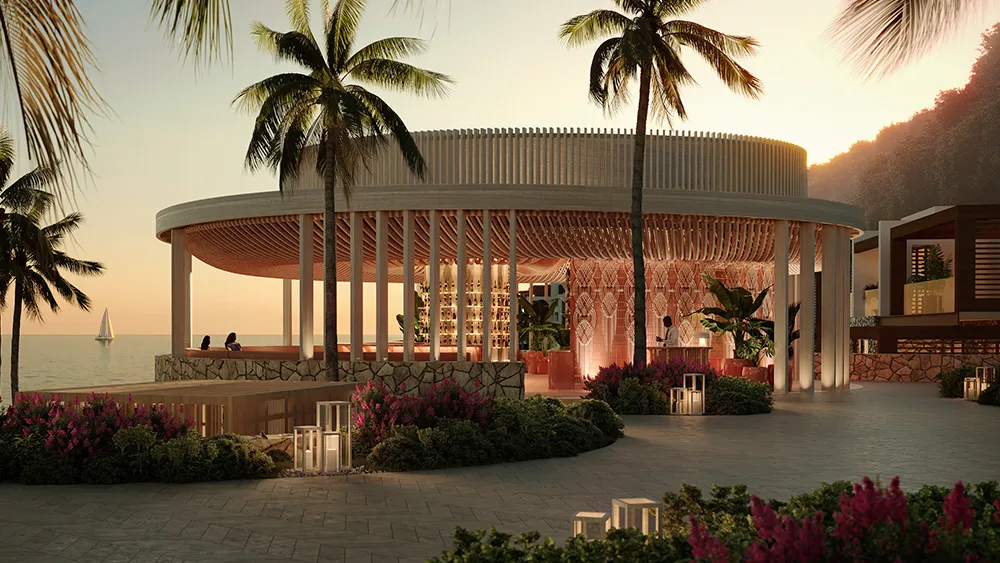
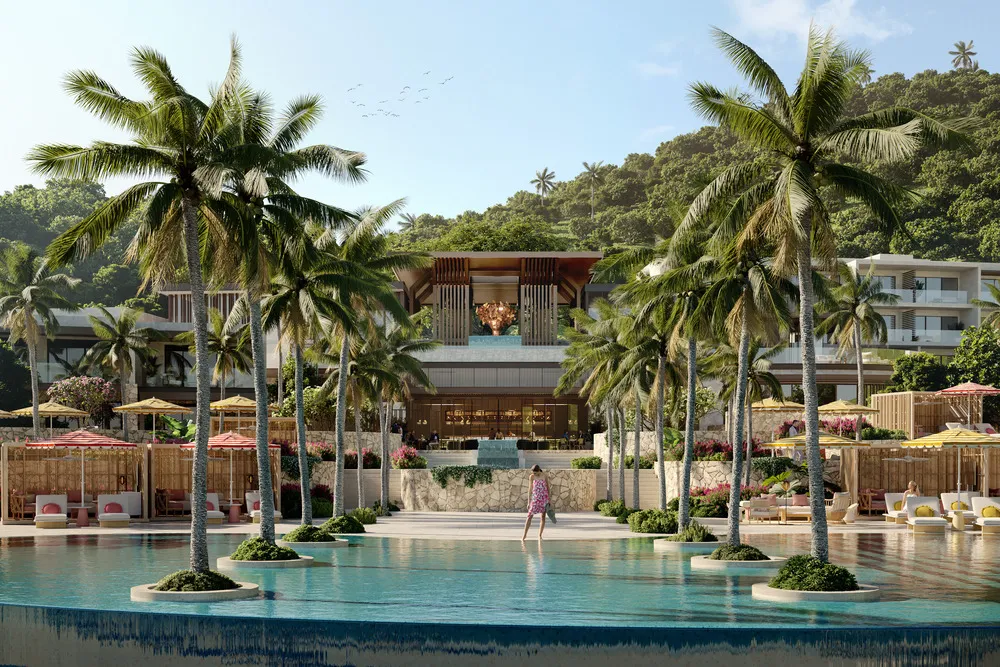
Vie L’Ven, a forthcoming resort and residential property from Altree Developments, is bringing a new level of luxury to the Dutch side of the Caribbean island of St. Maarten.

The project is slated to make its debut in 2028, and Robb Report got an exclusive first look at the renderings. The development—the name translates to “life to live”—will feature a hotel component alongside a collection of fully furnished homes ranging from $800,000 to over $2 million. Altogether, the Cay Bay project will comprise a total of 280 units with 190 hotel rooms, 60 of which will be suites, and 90 private residences.

Vie L'Ven st. maarten residences
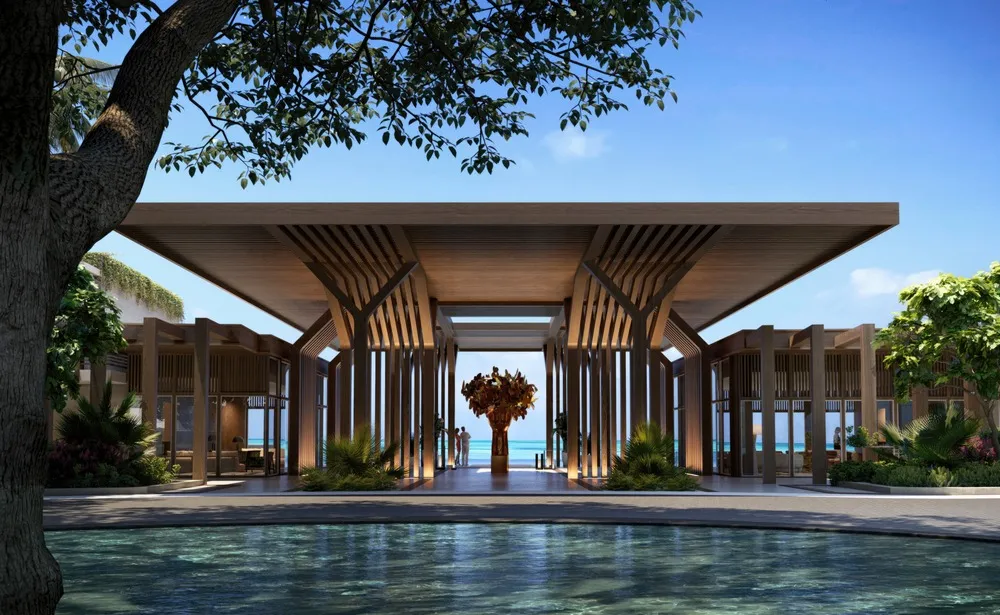
The open-air lobby entrance at Vie L’Ven, a forthcoming luxury residence in St. Maarten.BINYAN

“Vie L’Ven stands as a unique and unparalleled project in St. Maarten, distinguished by its singular luxury experience,” Zev Mandelbaum, CEO of Altree Developments, tells Robb Report. “With only one other five-star hotel catering to a similar clientele, Vie L’Ven’s presence fills a crucial gap, providing an exclusive destination that will undoubtedly be in high demand. The extensive amenities that will be offered at Vie L’Ven set it apart, establishing a standard of luxury unmatched anywhere else on the island.”

Vie L'Ven hotel and residences
The property will feature a five-star hotel and a selection of private homes for purchase.BINYAN

Drawing upon both French and Dutch cultures for inspiration, the oceanfront building will be designed by award-winning architectural firm HKS with interiors by Toronto’s Studio Munge. In addition, the developer tapped Sotheby’s International Realty to handle all the sales and marketing. The homes on offer will be available in several different layouts, ranging from one-, two-, and three-bedroom residences that measure from 600 to 6,000 square feet. Owners will also have the option of entering their home into the resort’s rental program for short- or long-term stays.

Naturally, residents will have access to all the hotel’s facilities, including its three swimming pools, signature restaurants, and 24/7 concierge services. The grounds will also sport a world-class fitness center and spa and can be reached via boat.

Vie L'Ven st maarten
An aerial view of the resort’s massive beachside swimming pool.BINYAN

“St. Maarten is a captivating island that seamlessly melds the cultural influences of both the French and Dutch, cultivating a distinctive European ambiance in the heart of the Caribbean,” adds Mandelbaum. “Embraced by natural beauty and tranquility, the island beckons with a plethora of attractions, from exhilarating nightlife to the allure of mega yachts. For those seeking a perfect blend of excitement and relaxation, St. Maarten promises a tapestry of unique experiences.” 

PUERTO RICO’S POST-PANDEMIC REBOUND, WITH ADAM GREENFADER

Adam Greenfader


PUERTO RICO’S POST-PANDEMIC REBOUND, WITH ADAM GREENFADER

EPISODE TRANSCRIPT

Adam Greenfader: Tourism today is not going to look the same as it will in the future. And in my book, I talk a lot about how blockchain and other technologies are going to change the industry. And my hope is that the new technologies are going to help Puerto Rico create high paying jobs and new professions that today we can’t even imagine because they still don’t even exist.


Robin Trimingham: I know. Welcome to the Innovative Hotelier podcast by Hotels magazine with weekly thought provoking discussions with the world’s leading hotel and hospitality innovators. Welcome to the Innovative Hotelier Podcast brought to you by Hotels magazine. I’m your host, Robin Trimingham. Between hurricanes, Zika outbreaks and COVID. Puerto Rico has had its fair share of tourism industry challenges during the past few years, and yet post-COVID tourism seems to be doing better than most people would expect. The question everyone is asking is whether this current growth phase will be short lived or whether it is likely to continue. My guest today, Adam Greenfader, is the author of a new book entitled Why Puerto Rico Now: a Master Plan for Resurgence, Resiliency and Long Term Economic Growth. And he’s here today to chat with us regarding the opportunities and challenges of marketing and island tourism destination. Join me now for my conversation with Adam. For the last 15 years, Groupe GM has been a leader in the luxury cosmetic amenities industry. The group proposes a 360 solution for manufacturing to distribution, with over 40 international brands and its worldwide distribution network. Group GmbH offers different shapes and sizes of eco friendly products in hotels all over the world. Discover more on www.GroupeGM.com That’s Group with an E, Gm dot com. Welcome, Adam. Thank you so much for joining me today.


Adam Greenfader: Good morning. Great to be here.


Robin Trimingham: I think we’re going to launch right into this because Puerto Rico is a fascinating country and we’ve got lots to talk about here. But let’s set the stage for everybody just a little bit. So over the last 12 months, to what degree would you say that the situation in Puerto Rico for tourism is mirroring what’s going on in the rest of the Caribbean? And to what degree would you say that Puerto Rico is unique?


Adam Greenfader: Yeah, great question. I think that these last 12 months, obviously, to put this all in context, has really been revolutionary for the world, not just even the Caribbean. I mean, we’ve all come through this COVID pandemic. We were locked in our houses and then suddenly now we’re free. We’re able to travel, many of us, without masks. So the world is really just kind of woken up to what it wants and what’s important. And I think that travel and hospitality and tourism has really gone to the top of the list. I mean, we talk about experiences and experiential travel and really doing things that we have never done before. So the Caribbean region has seen just a big boom in the last 12 months. I mean, people are going to the islands, they’re staying longer. They’re really having different kind of experiences that they couldn’t have before, like just talking to people in a bar or sitting at a restaurant. I mean, things that we took for granted in the past today have really gone to the top of our list as being important. And I think the Caribbean region in general with its just beautiful climate, wonderful people, easy access, it’s safe.


Adam Greenfader: I mean, we don’t have major crime or wars in the Caribbean or diseases, so it’s just really a comfortable, easy place to get to. So we’ve seen just amazing 80 hours and occupancy rates in the Caribbean in the last 12 months. There’s just been more and more interest in people wanting to buy real estate in the Caribbean and kind of make it their second home or even their kind of leisure like location where they can combine travel and work. So the region really has seen this kind of new growth in French, they say EB Luis Mont, which means to blossom. And I think that really is what this is about. Now in the Caribbean, Puerto Rico is no exception. So Puerto Rico has seen numbers that have been off the charts in terms of occupancy and growth rep, class 124% higher than in the US mainland in 2019, in Puerto Rico and Puerto Rico also saw its occupancy rates hover around 78 to 80% in the San Juan metropolitan area. So all in all, I would say that the region has had a great 12 months and we’re expecting the next 12 months to be even better.


Robin Trimingham: It’s fantastic to hear of a destination that’s doing so well internationally when a lot of others are still struggling to recover in other jurisdictions. I understand, though, that locally Puerto Ricans are a little bit concerned that the spoils the profits of this great boom might be going exclusively to large hotels, and that the jobs that created are mainly entry level jobs. How do you suggest Puerto Rico leverage its tourism growth to build a more robust, resilient economy and ultimately middle class and middle class employment?


Adam Greenfader: Yeah, that’s a wonderful question. In fact, I wrote a book on that. It’s called Why Puerto Rico Now is really a master plan for long term growth, resurgence and resiliency for Puerto Rico. So I wanted to look at kind of the long term, how do we make Puerto Rico really to be able to be economically independent. So part of the book about a third of the book is looks at the history of Puerto Rico starting in 1898. Then I go to the present, but more importantly, I look to the future. So about 50% of the book is forward looking kind of that proverbial crystal ball. So part of the research for the book, I started to look at tourism in Puerto Rico, and I was shocked to find that Puerto Rico has one of the lowest tourism GDPs in the entire Caribbean. When I go to speak on tours and I go to different conferences, I ask people to guess what’s Puerto Rico’s GDP as a percentage of tourism. And I say, Well, most of the Caribbean is in the 30%, 40%. Some islands even have 50% of their total GDPs tourism base. And when I tell people that Puerto Rico’s GDP last year was 6.75% of the total GDP, people are shocked. They go, how can that be? How can an island in the Caribbean with beautiful beaches? Old San Juan is a historical landmark. It’s got a bioluminescent bay, it’s got a rainforest. How could Puerto Rico, with all these amazing natural and cultural amenities, have such a low GDP in tourism? And the reality is pretty simple. Puerto Rico’s economy still to this day, is the manufacturing hub of the world.


Adam Greenfader: Puerto Rico’s manufacturing represents 42% of the entire GDP of the island, in fact. Puerto Rico manufactures more pharmaceuticals than the next five US states combined. So Puerto Rico, since its beginning, has always been a manufacturing center, and tourism was always kind of like the next thing later down the road that Puerto Rico wanted to do. So what happened was, miraculously in the 1940s, fifties and sixties with this Operation Bootstrap that brought millions of dollars to build Puerto Rico’s manufacturing economy, really, tourism and hospitality was there just to serve the manufacturing base. So it really doesn’t have a lot of hotel rooms. When you look at the number per capita, it’s got a huge potential for growth. For example, Puerto Rico and the Dominican Republic in in the late 1990s had about 14,000 hotel kids To this day. Puerto Rico still hovering around 15,000 hotel keys whilst the Dominican Republic is close to 90,000 hotel keys. So Puerto Rico’s growth has been very small in terms of hospitality because it wasn’t one of the island’s priorities. However, that has changed. And Puerto Rico, after its last 15 years of economic crisis, Puerto Rico in the 2008 Great Recession never recovered. Puerto Rico stayed in this very, very dire economic depression where it had 50 quarters of negative economic growth, and that really devastated the island. It was a very challenging time for Puerto Rico. So long story short, Puerto Rico as of last year is officially come out of bankruptcy. The governor announced at one of our Urban Land Institute events here in Miami that Puerto Rico was out of bankruptcy. But Puerto Rico has set its sights on the low hanging fruit, which is tourism.


Adam Greenfader: And so Puerto Rico has created now a new tourism Incentive act. It’s act of 74, which provides really lucrative, robust tax incentives to build hotels and to build the industry up. So to answer your question, yes, Puerto Rico is looking forward to building this industry from a 6.75% GDP up to probably 15%, which will be in line with most of the Caribbean islands. And there are going to be growing pains. Obviously, those growing pains are going to me learning service, learning how to be a service economy. I mean, Puerto Rico is one of the best manufacturing economies, but really doesn’t have the same service mentality that other islands have. I think in the past people would come to Puerto Rico and complain about the service and the quality of the workers. It’s understandable because that’s not where the island was focused. So today is the island starts growing its tourism industry. Obviously, it’s going to need to be able to develop the infrastructure and the support systems. So as Puerto Rico starts to grow its tourism industry, it’s going to really need to develop great jobs through, I believe, new technologies. And we were talking about this before, tourism today is not going to look the same as it will in the future. And in my book, I talk a lot about how blockchain and other technologies are going to change the industry. And my hope is that new technologies are going to help Puerto Rico create high paying jobs and new professions that today we can’t even imagine because they still don’t even exist.


Robin Trimingham: Okay, So fascinating insights and a whole ton of information there. So let’s try and break this down just a little bit. You are telling us that Puerto Rico is actually in a very fortunate position because they have a much more diversified economy in some respects than a lot of other island jurisdictions. For a lot of other islands, tourism is it. And when you have a situation like COVID or a world recession, their economy just gets wiped out. Pretty much. So Puerto Rico is actually in growth mode for tourism. And I understand that you have an interesting problem as a result of all of this in that more people are working in tourism than ever before, and yet there is a clear labor shortage in the tourism business sector. How can that be if your island is coming out of a recession and tourism is in growth mode and people need jobs and there are jobs available?


Adam Greenfader: Yeah, breaking it down. I think that when you look at the Caribbean islands, the only other island that kind of comes to mind as being non tourism focused, it would be the Cayman Islands that’s obviously focused on finding.


Robin Trimingham: My homeland as well.


Adam Greenfader: And your homeland as well. So it’s the it’s not the rule, it’s more like the exception. And so having manufacturing has been kind of a recession, kind of proofing a bit for the island, especially during COVID, we saw in many of the Caribbean islands, I spend a lot of time working throughout the region, Saint Martin, for example, where we’ve been very active in the hotel sector, we saw thousands of people that had to leave the island just because all the hotels and the cruise ports closed down. It was very sad. Puerto Rico didn’t have that reason. Puerto Rico lost about half a million people from about 1999 to about 2000 and. One team because of its economic crisis. So most of the people left just because they couldn’t find jobs in all industries. So that half a million people that Puerto Rico lost. Thankfully, we’re starting to see for the first time last year, 2022 was the first year that Puerto Rico had a net migration of zero. So meaning that this flux of people leaving the island had stopped. More people were coming in and it was starting to balance out.


Adam Greenfader: We expect Puerto Rico, as the economy hits a 2 to 3% GDP, that the economy, like it has in the past, will grow its population. Part of my book, when I was uncovering kind of the history of the island’s economy, I was fascinated to find that Puerto Rico has had these huge, massive migrations of people on two different occasions from the 1960s to the 1970s, Puerto Rico lost about 600,000 people. In fact, it was called the greatest air migration in the history of the United States. People were literally paid to leave the island because there were no jobs. So Puerto Ricans, unlike most people in the Caribbean, are US citizens with US passports and can travel freely. And so that travel back and forth from Puerto Rico to the mainland. Us has a lot of fluidity and it happens regularly over the last it’s happened regularly over the last 200 years. So I do believe that we’re going to find a lot of people coming back to the island as the economy gets better and that the jobs are available.


Robin Trimingham: That’s a very interesting situation to be dealing with. I understand that part of growing tourism, of course, would be renovating hotel products that were damaged in hurricanes, building new hotels wherever you can. But I also think maybe that traditionally there has been a bit of a problem raising financing for construction. Talk to me about the Opportunity Zone program and how that’s working.


Adam Greenfader: Sure. So to understand the financing of Puerto Rico, you really have to go back to the 1990s when those Section 936 was implemented, Section 936, to make it really simple. It was a manufacturing tax incentive that really created the pharmaceutical industry in Puerto Rico. And there was a small clause in that incentive that said that banks had to either retain some of the funds and profits from that or if they sent them back to their mainland branches, they would have to pay a tollgate tax of 10%. So in most cases, the banks retained millions and millions of dollars in Puerto Rico that went into the economy, that led to the massive growth in the financial sector. Puerto Rico when I arrived, which was in 1993, had 12 financial institutions, 12 banks from the US, Spain, Canada and other locations were very active in Puerto Rico when 936 expired. That was created a huge sucking sound of financial institutions, and Puerto Rico went into its recession and today only has three and one half banks on the island. And I say a half because the other banks aren’t in the construction or hotel lending. So really with three financial institutions from 12 to 3. So there’s been a huge and there still is today a huge need for weather and construction or manufacturing or new business. So Puerto Rico today has gone from 12 banks to three, and it’s desperately seeking money and funds for new industries, new businesses and hospitality specifically.


Robin Trimingham: I have a follow up question for you then. To what extent then does being part of the US help your economy and raising finances, and to what extent does it hinder you, particularly when it comes to these tourism products?


Adam Greenfader: That’s a great question. Puerto Rico is part of the United States in almost every facet. It’s US banks, US courts, US military, US passport, US jurisdictions for regulatory agencies. The one area where Puerto Rico is considered foreign is in taxes. So Puerto Rico is considered a foreign tax jurisdiction. So the advantages and the disadvantages to this kind of hybrid system, really interesting from a let’s do business in Puerto Rico respect its kind of works like the United States and feels like the United States, obviously with a culture and Spanish and a lot of fun other things. But from a tax perspective you’re able to take advantage of tax incentives that don’t exist on the mainland. In the United States, for example, x 74, which I mentioned previously, is the Tourism Development Act, which provides up to 40% of your money back of your total project cost. If you’re going to do a hotel or any kind of tourism related business. And that’s a huge amount of money. I mean, that’s if you invest $10 Million in your project, you’re going to get $4 million of that back of which you can get 10% before you even start construction, which can be part of your equity stack. So without getting too complicated. Puerto Rico has some really good advantages of being part of the United States, and it’s got some really good advantages from having a tax incentive, a tax code that allows some flexibility that you can’t find in North America.


Robin Trimingham: I see. So let me change the conversation up a little bit. I understand that just like all countries, governments come and go and one government in power can have one idea about tourism and then another party comes to power and they have a completely different idea. So in all of this for Puerto Rico, how important do you feel it is that tourism development initiatives be research driven? And why do you say this?


Adam Greenfader: Anyone like yourself that have seen the history of Puerto Rico over the last 30, 40 years, it’s fascinating to see how Puerto Rico has had more logos, tags and themes in the last 30 years. And a really smart individual who runs Discover Puerto Rico, which is a public private partnership called Brad Dean. He’s the CEO currently said it’s like, imagine if Coca Cola would change its flavor every four years. And essentially Puerto Rico, the way it ran its tourism was that it basically with every new government, it decided we’re going to have a new tag phrase, a new line. We’re going to market Puerto Rico differently to different people. We’re going to destroy all of the other work that was done and just kind of reinvent ourselves every four years. The budgets were never very large because, as I mentioned, Puerto Rico really didn’t spend a lot of time on tourism. And it was just kind of like this thing that was just being reinvented every time Puerto Rico three years ago decided that it needed to change that, and it created a public private partnership with an entity called Discover Puerto Rico. Discover Puerto Rico is a DMO, a destination marketing organization. And the DMO has really been instrumental in kind of bringing some consistency to Puerto Rico’s tourism. It’s based its marketing on heavy research. The research has found that there’s markets that Puerto Rico hadn’t even looked at that were really active on the island, specifically the Midwest, the Midwest had never been seen as an island that was good for Puerto Rico. And part of this market research and analysis done by Discover Puerto Rico uncovered this huge opportunity in 2022. There have been direct flights now that have been opened from them, so we can see how research and really detailed analysis can uncover opportunities and create growth in an industry. Whereas before it wasn’t even thought it was important.


Robin Trimingham: Did you know that offering top cosmetic brands is a delight for your guests? For the last 50 years, Groupe GM has been a leader in the luxury amenity industry. The group proposes a 360 solution for manufacturing to distribution on cosmetic amenities and dry accessories. With over 40 international brands such as Greenland nukes, Italia Cologne. The group offers different shapes and sizes of eco friendly products in hotels all over the world. This is possible thanks to its worldwide distribution network. Thanks to their care about the Earth programme, you can offer your guests top cosmetic products with a reduced environmental impact. Discover more on www.groupegm.com. That’s group with an “E” GM dot com. So with all of these changes, to what degree has Puerto Rico struggled from the tourist perspective to establish an identity where when you say Puerto Rico to our tourists, they go, Oh, I know what you mean.


Adam Greenfader: Yeah. So in my book Discover Puerto Rico, that was one of the questions that had always come up. And what’s fascinating is I chair the Urban Land Institute, usually Caribbean Council, and I’ve been doing that for a few years, and we’re based here in South Florida, and we always provide a lot of marketing to the region in general. And what’s funny is initially when I used to say Puerto Rico to people, they would go Costa Rica. So we always get confusion on Puerto Rico, Costa Rica. And then when I would say Puerto Rico to people, I would get things like, Oh, West Side Story, yeah, I remember Puerto Rico. And so I in my book actually talk about the West Side Story syndrome, where most people’s images of Puerto Rico are kind of vague if they can even figure out it’s part of the United States. But then basically the only image they have is things from the 1950s or they were call some Miss Universe. So there’s been a lot of confusion because Puerto Rico tends to brand itself as both part of the US and not part of the US on what it is and where it comes from. They say there’s a crisis in every opportunity, and in 2017, Puerto Rico was devastated with two category five hurricanes.


Adam Greenfader: Yeah, that for anybody who’s lived in the Caribbean, a Category three is devastating enough. A Category five just don’t eat. I can’t even imagine what that’s like. But two back to back hurricanes, it destroyed the island. And in every crisis, there is an opportunity with the press and the media that came to Puerto Rico during that period of time and thereafter, Americans, North American citizens, started to hear so much about the island that the when polls were taken before and after on what is Puerto Rico miraculously North American population. A year after hurricanes Irma and Maria, 74% of Americans at least were able to say Puerto Rico is part of the United States. Puerto Ricans are American. And so I think that the island has now taken, thanks to many people, has taken kind of a new positioning. At least North America realizes that the 3.5 million people that live on that land and that island are American citizens. And that’s been huge. That’s really been a big kind of feather in the cap of the island throughout these climatic crisis.


Robin Trimingham: That’s very interesting. And just for anybody who’s watching this, a Category five hurricane, it sounds like a freight train roaring through your backyard. I’ve lived through one of those. It’s quite the experience where you do have tourism in Puerto Rico at the moment. To what extent is there friction between the industry stakeholders and local communities, and to how are you working to overcome this?


Adam Greenfader: The tourists that come to the island have really played an important role in Puerto Rico’s history. Puerto Rico has about 5 million people that live on the US mainland, and with those 5 million people that live on this US mainland, they have extended friends and family. So a lot of the tourists that come to Puerto Rico know the island already. Many of them are coming for work, whether it’s manufacturing, finance, other industries, and many of them are also coming for holidays to see old family members to go visit a place that they had heard about as kids. So the type of tourists that comes to Puerto Rico to begin with, May has some connection with the island, which is very unique. Puerto Rico’s economy, from a tourist perspective, is today mainly centered around the San Juan Condado or San Juan area. So about 60%, 70% of tourism all happens in the San Juan metropolitan area. The island today is looking to kind of expand its tourism offering to the rest of the island, because I think that when people really go to Puerto Rico, some of the first things they hear is, wow. Can’t believe how beautiful the airport is. The new renovated, beautiful airport. The roads are in great condition. My cell phone works. I can go to a Walgreens and get my prescription.


Adam Greenfader: My ATM card works in a bank machine. So the infrastructure is there from a social perspective. As I mentioned previously, Puerto Rico has gone through this really tough economic 15 year period and it’s starting to recover. So part of that recovering process is about kind of figuring out how things are going to work going forward. Puerto Rico today pays the highest sales tax anywhere in the United States at 11.5%. So the people that have been living on the island, the locals currently have a tax system that needs to be overhauled because they’re paying to try to get out of this debt. So when workers come to the island, obviously that is a very favorable thing for the island from an economic perspective. But then there’s always consequences of people coming to your island. How do you deal with people who have never come to Puerto Rico before? I remember during the COVID pandemic and just right after it, airlines prices all throughout the Caribbean and the US dropped dramatically. And so we started to see a whole new breed of tourists who couldn’t afford to fly before coming to Puerto Rico, coming to Miami, coming to the rest of the Caribbean. And initially, I think for the people in the Caribbean, not just Puerto Rico, it was kind of like a surprise, like, oh, we’re getting tourists again.


Adam Greenfader: These are not the kind of tourists we’ve gotten in the past. How do we deal with this? And I’ve been really surprised by the positive expectation. The island’s in Puerto Rico to be able to say, hey, we’re okay with having people come visit our island, but we kind of have to set a kind of a framework for how we look at that. And what I’ve seen in Puerto Rico is that Puerto Rico is adapting to tourism. Tourism is just a small percentage of the economy, and it’s learning through growing pains to kind of figure things out. But it’s really remarkable. I always make a joke that 20 years ago for me to get a glass of water at a restaurant and call the waiter could take 20 minutes. And today when you go to a restaurant, you don’t even have to do anything. You just the waiter looks down, sees it, your glass of water is empty and will pour the glass of water. That might seem like a small thing, but from a hospitality perspective, it’s really a big thing. And I’m very hopeful that the island is going to grow into a wonderful service provider for tourism and hospitality.


Robin Trimingham: Ah, you make an interesting point because since COVID, a lot of people all over the world, North America in particular, have had to entirely change their livelihood. They’ve had to accept that the what they did is no longer a viable possibility. They’re having to retrain, learn new skills, be open to different kinds of employment. So I think there’s a lot of people who can empathize with the situation in Puerto Rico. Earlier in our conversation, you mentioned the rainforest, which I understand is absolutely beautiful. To what extent do you think that Puerto Rico’s natural wonders are being properly and sufficiently marketed, or is there a concern that the natural environment is basically just being trampled on by a whole pile of new tourists?


Adam Greenfader: Yeah, I have a chapter in my book called Thinking Beyond the Shore and My Profession. I’m a real estate developer. I’ve focused, spent a lot of time building affordable housing, hospitality. So I’ve always been very involved in what’s the environment look like, how do we deal with the environment? And I think that the Caribbean islands and Puerto Rico is no exception. We are on the front line of the climate change. I mean, we’re literally at sea level. Sea level is rising. I mean, we’ve even heard of islands that are disappearing, completely disappearing. So we have to, as a region, really be concerned about how we’re going to protect these natural resources, not just for hospitality and tourism, but for our own existence. I mean, this is an existential threat. And at the end of the day, I think it’s the private sector that really has to stand up and take more responsibility for the environment. And in my book, Why Puerto Rico? Now, I specifically talk about building beyond the shore and taking responsibility beyond the shore. We tend to say that the island’s kind of development space ends at the waterline and that we can build at the waterline 100 meters back. But my thinking has been with the new technology advancements is that we really have to go into the waterline.


Adam Greenfader: We really have to start to analyze the reefs. We really have to start to look at mangroves. We really have to start to look at how we can generate energy from the water and be able to take responsibility for that. Today, there’s just a plethora of companies that are revolutionizing that space, whether it’s aquatic architecture and engineering or whether it’s energy creation or whether it’s reef building. But really the future of the Caribbean region is going to be based on how those assets are protected and not just for the assets sake alone, but what the protection that they can provide the islands. And so there’s been a lot of new technologies. I think what we’ve seen during COVID with blockchain, just simple stuff, reservations on accessing when people can go to. Certain areas like the rain forest by reservation. I think that’s made some great changes because it allows a certain amount of people to go at certain times and then they can get information while they’re there. So I would say that in the last parts of my book, I really dedicated to kind of this out-of-the-box thinking about how we can take a more innovative approach really to the island survival.


Robin Trimingham: It’s very encouraging to hear you talk about all these things because you’re right, the world is going through a phase of radical transition and we all need to be aware about what’s going on and planning accordingly. We’ve got a couple of minutes left here. Based on all of your experiences and insights from writing your book, what do you feel is the mistake that most island nations are making when it comes to marketing tourism?


Adam Greenfader: Certain islands and locations in the Caribbean do an amazing job, and I’ll start with that first and then I’ll get to the mistakes. For example, Costa Rica and its blue zones. Anybody who has heard of a blue zone, which is a place where people live way beyond their years and Costa Rica has really developed this kind of mystique about its environment and lifespan, and they’ve just done a great job of focusing on that. I think if you look at an island like Saint Martin with 500 restaurants on both the French side and the Dutch side, I mean, 500 restaurants on a population, 15,000 people, it’s just like, how can you put that much food in a single place? And so they’ve really kind of figured out this unique branding of kind of being a fun place to go hang out at night on the Dutch side and a great place to eat on the French side. And they make it all work out together. Obviously all inclusive. You can think of the Dominican Republic where you go and you can spend a week where your bracelet and you don’t have to do anything else and you’re being hosted by people that speak every single language imaginable.


Adam Greenfader: So certain islands have done a great job of kind of figuring out who they are. Cayman’s for finance, you want to go do finance. On the other hand, when I look at kind of general marketing in the Caribbean, I tend to think that islands that solely kind of market we have a beautiful beach tends to be a little limiting because tourists today are looking for the new experience, the post COVID. Tourism is really about finding yourself in this new environment, and I would say that it’s kind of contingent on on each island to kind of figure out what makes them special. I was having a conversation with the director of Tourism of Dominica, which is just an amazing, rugged mountain with these beautiful hills. And she was telling me, Adam, I think when you come see these islands and you see the mountains, you know, you’re in Dominica. And so I would say ultimately that’s what it’s about. It’s about kind of branding yourself by your unique selling proposition, what makes your island unique, and try not to just be another beach where people go and hang out.


Robin Trimingham: Yeah, I couldn’t agree with you more because you’re right. I mean, we all know now that baking yourself in the sun is not the wisest idea, and weather is somewhat obscure. We don’t always have sunshine and blue skies when we’re supposed to, and there’s a lot more that islands have to offer. Just a closing thought for you. What is the number one piece of advice that you can offer to any island tourist destination?


Adam Greenfader: The Caribbean today is dealing with an existential threat of climate change, and the faster that the region can start to deal with this, the better the region is going to be at the end of the day. And if I could wave the proverbial magic wand and say, what would I like to see the region? First of all, I’d like more collaboration between the islands. The islands have to start working as a team. There’s 300 plus islands in the Caribbean, but they have to start working as a team. When a hurricane hits the southern part of the Caribbean, tourism drops all throughout the region. When there’s a crisis in the northern part of the Caribbean, tourism drops all throughout the region. So we really have to start thinking as a team when it comes to protecting the Caribbean insurance or Parametric Insurance, which covers the region, is probably going to be one of the best investments that can happen in that region. And I think that the islands have to start thinking how do we protect each other and ourselves from climate change? Because ultimately, when a disaster happens, the answer cannot be simply to have people leave your island or rely on a private insurance agency or a.


Robin Trimingham: Foreign aid.


Adam Greenfader: A foreign aid. It just can’t be that there has to be better solutions. So obviously we want to harden our assets. We want to make our hotels be able to do more than just service the hospitality industry when things are good. But what happens to hotels when there’s a crisis? What service do they provide to insurance agencies, to relief workers, to people that have been blown out of their homes? So I think that we have to start thinking about the tourism industry both in when times are. Good. But also be thinking of the tourism industry and the hospitality specifically when times are bad. So my thought is basically that we have to start working together as a region and we have to start thinking about how to protect each other and ourselves using the tools that are currently available.


Robin Trimingham: Thank you, Adam. You’ve lots of great ideas and advice, and I’m sure our global listeners are really going to appreciate this conversation. You’ve been listening to the Innovative Hotel podcast. Join us again soon for more information and insights, specifically for the hotel and hospitality industry. You’ve been listening to the Innovative Hoteliers podcast by Hotels Magazine. Join us again soon for more conversations with hospitality industry thought leaders.

 

Adam Greenfader Releases Why Puerto Rico Now: A Masterplan for Resurgence, Resiliency, and Long-Term Economic Growth

FOR IMMEDIATE RELEASE

Adam Greenfader Releases Why Puerto Rico Now: A Masterplan for Resurgence, Resiliency, and Long-Term Economic Growth

A forward-looking vision for Puerto Rico’s economic future through resilience, innovation, and sustainable development.

MIAMI, FLORIDA — November 2, 2022 — Real estate developer, author, and Caribbean thought leader Adam Greenfader announces the release of his new book, Why Puerto Rico Now: A Masterplan for Resurgence, Resiliency, and Long-Term Economic Growth—a comprehensive vision for building a stronger, more resilient, and globally competitive Puerto Rico.

Rather than focusing solely on recovery from past crises, the book presents a long-term strategy for transforming Puerto Rico into one of the Caribbean’s leading centers for innovation, hospitality, manufacturing, renewable energy, entrepreneurship, and sustainable economic development.

The inspiration for the book is deeply personal.

Having lived in Puerto Rico for twenty-five years, Greenfader experienced firsthand the island’s extraordinary resilience through economic recession, hurricanes, earthquakes, and the COVID-19 pandemic. The fifth anniversary of Hurricanes Irma and Maria served as a reminder that rebuilding cannot simply restore what once existed—it must create a stronger foundation for future generations.

“The question is no longer how Puerto Rico recovers,” says Greenfader. “The question is how Puerto Rico can emerge as one of the most innovative, resilient, and economically competitive jurisdictions in the Americas.”

Drawing upon more than three decades of experience and participation in over $2 billion of residential, hospitality, and mixed-use development projects throughout Puerto Rico and the Caribbean, Greenfader explores the opportunities created by federal reconstruction investment, strategic tax incentives, advanced manufacturing, technology, hospitality, renewable energy, and the island’s unique position as a bridge between the United States, Latin America, and the Caribbean.

The book argues that while federal recovery funding and investment incentives have accelerated Puerto Rico’s economic momentum, lasting prosperity will depend upon creating a diversified economy driven by private investment, entrepreneurship, innovation, education, and sustainable development.

Throughout its chapters, Why Puerto Rico Now presents practical ideas alongside bold long-term concepts designed to stimulate discussion among business leaders, policymakers, developers, entrepreneurs, investors, students, and members of the Puerto Rican diaspora.

The book is intended not only for the more than three million people who call Puerto Rico home, but also for the millions of Puerto Ricans living throughout the continental United States who remain deeply connected to the island’s future. It also serves as a resource for investors, entrepreneurs, developers, and business leaders exploring opportunities within one of the Caribbean’s most dynamic economies.

Adam Greenfader officially launched Why Puerto Rico Now during the Puerto Rico Builders Association’s Annual Convention in San Juan, bringing together leaders from government, finance, construction, hospitality, and real estate to discuss the island’s next chapter of economic growth.

Today, the book continues to contribute to conversations surrounding Puerto Rico’s future through conferences, universities, investment forums, industry organizations, and thought leadership initiatives throughout the Caribbean and the mainland United States.

About the Author

Adam Greenfader is Chairman of AG&T, a Miami-based real estate development and capital advisory firm specializing in hospitality, residential, mixed-use, and island developments throughout Puerto Rico, the Caribbean, and Latin America. Founded in 1998, AG&T has participated in more than 55 development projects with an aggregate value exceeding $2 billion.

A recognized speaker on Caribbean real estate, hospitality investment, resilience, and economic development, Greenfader has organized numerous investment conferences and educational forums designed to strengthen economic ties between Puerto Rico, the Caribbean, and the U.S. mainland. He previously served as Chair of the Urban Land Institute Caribbean Council and has been an active member of the Puerto Rico Builders Association since 1993.

Greenfader earned a Master of Real Estate Development degree from the University of Southern California, a Bachelor of Arts in Government from Clark University, and completed studies at the Université de la Sorbonne in Paris. He is also an accomplished photographer, author, and mentor to graduate students in the University of Miami Master of Real Estate Development + Urbanism program.

His work continues to focus on resilient communities, regenerative hospitality, sustainable development, and creating long-term economic opportunities throughout the Caribbean.

For more information about Why Puerto Rico Now, visit www.whypuertoriconow.com.

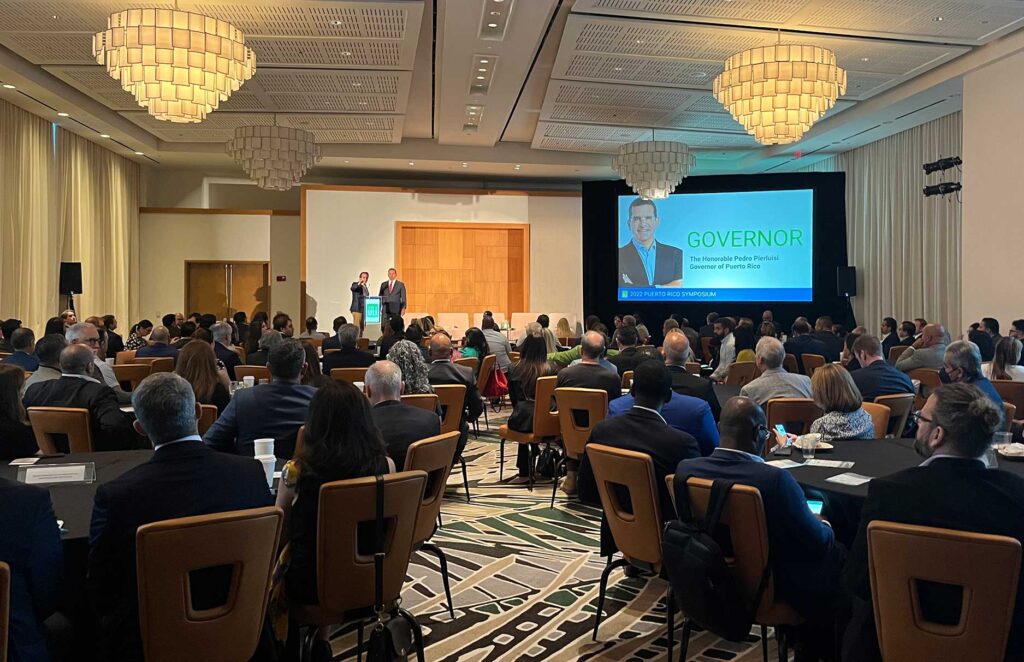
The Puerto Rico Symposium in Miami With Historic Announcement


See All Photos Here

See Agenda and Sponsors


The Governor of Puerto Rico Pedro Pierluisi made the historic announcement at The Puerto Rico Symposium in Miami that Puerto Rico was officially out of bankruptcy. The message was well received by over 250 industry leaders from both the public and private sectors.  The event was organized by The Urban Land Institute South East Florida / Caribbean and The Puerto Rico Builders Association.


Governor Pedro Pierluisi
Governor Pedro Pierluisi makes historic announcement


The Symposium was kicked-off by Scott McLaren, President ULI SE Florida / Caribbean. Scott spoke about the longstanding relationship and collaboration between ULI and the Puerto Rico Builders Association. He highlighted the work on the ULI National Advisory Services Panel on social, economic, and physical resilience in Toa Baja, Puerto Rico. https://seflorida.uli.org/toa-baja-puerto-rico-panel/

Scott Maclaren finished his remarks by recognizing  Vanessa de Mari, the new President of the Puerto Rico Builders Association and the first women president in the organization’s 70 year history. The Symposium was dedicated to this historic accomplishment. In attendance were some of Puerto Rico’s top government leaders.  This included the Honorable Pedro Pierluisi, Governor of Puerto Rico, Manuel Laboy, COR3 Executive Director,  Maretzie Diaz, Deputy Director PR Housing Department CDBG-DR, Natalia I. Zequeira, Commissioner of Financial Institutions, and in attendance, the Secretary of Housing of Puerto Rico, William Rodríguez Rodríguez. The keynote address by the Honorable Pedro Pierluisi, Governor of Puerto Rico’s highlighted the island’s economic accomplishments, the end of Puerto Rico’s population exodus, and the conclusion of the bankruptcy which was officially announced the day of the Symposium.
https://www.bnnbloomberg.ca/puerto-rico-is-out-of-bankruptcy-after-a-22-billion-debt-exchange-1.1738142

In the private sector, Ricardo Alvarez-Diaz, CEO, Alvarez-Diaz & Villalon discussed some of progress of the island’s rebuilding after the 2017 hurricanes Irma and Maria. The reconstruction of the island was  a constant theme throughout the day with specific examples of over 900 started projects.

The first panel, “Why Puerto Rico: Stories of Success,  was a testament to the resiliency of the development community. Moderated by Andrew Carlson, SVP Country Manager, of JLL the discussion highlighted the historic growth of the island’s hospitality sector with the construction and/or renovation of over 3,000 new room keys from El Conquistador, Grand Reserve (formerly known as Coco Beach), Sheraton, AC , and many others. The panel included Federico Sanchez, President & CEO, Interlink Group.


Speakers Panel
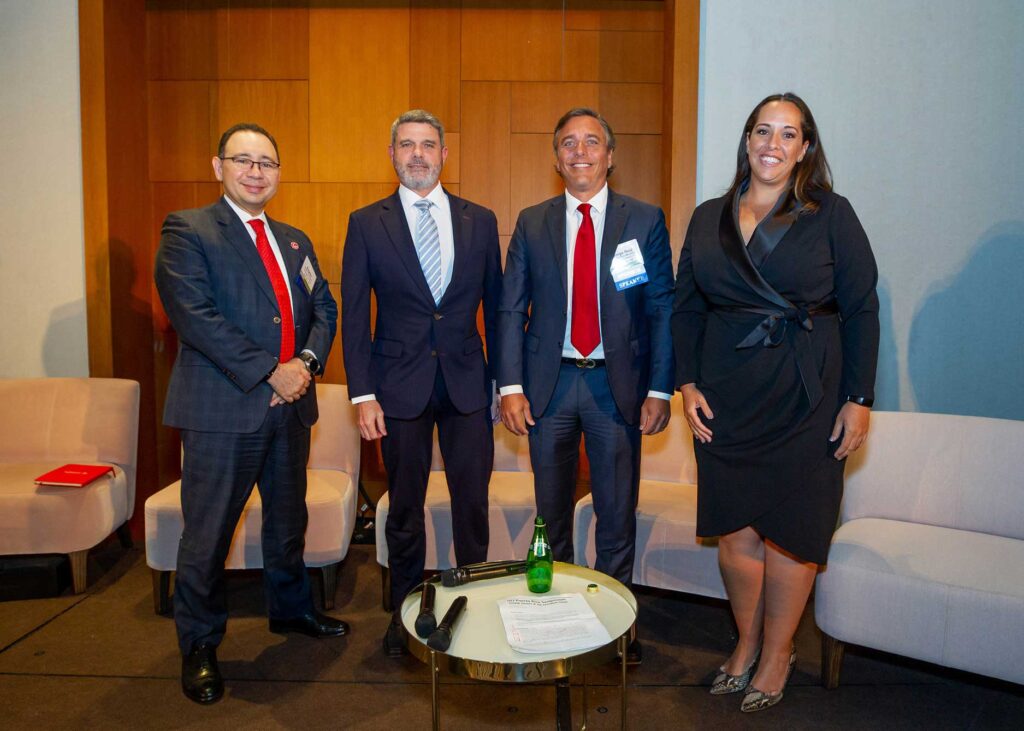
Dan Kodsi, Brad Dean, Rafael Rojo, Andrew Carson


Dan Kodsi, CEO, Royal Palm Companies, Rafael E. Rojo, President & CEO, VRM Companies. Also in attendance was Brad Dean, CEO, Discover Puerto Rico who highlighted the island’s impressive tourism growth (ADR and occupancy rates) during the Covid 19 pandemic and new expansion of tourism throughout all U.S. feeder markets.

As Puerto Rico seeks to build back its tourism and other industries, the financial sector will invariably play a major role. One of the goals of the Puerto Rico Symposium was to facilitate the conversation of growth in both traditional banking as well as new Fintech, IFEs, and other debt/equity players.  Natalia I. Zequeira, Commissioner of Financial Institutions, explained the ease of regulations and process for new financial institutions as Puerto Rico shares many of the same regulations of the U.S. states on the mainland. Ms. Zequeira also mentioned that International Financial Entities (IFE) can now participate in special opportunity projects.

https://www.investpr.org/key-sectors/finance-and-insurance/

Michael McDonnell, Executive Vice President, First Bank, that recently re-opened its  construction division, was bullish on the island’s economic prospects and announced that the Puerto Rico will achieve positive economic growth (GDP) this year– something it has not done in over a decade.  Banesco USA announced the U.S. Department of the Treasury, will invest more than $8.7 billion through ECIP in institutions across the country – Banesco USA is the only bank recipient located in Florida or Puerto Rico.

https://www.prnewswire.com/news-releases/banesco-usa-approved-to-receive-237-5-million-investment-from-the-us-treasurys-emergency-capital-investment-program-301445832.html

Over the last few years, we have all hear about the 80 billion dollars of relief aid that has been allocated to Puerto Rico and is coming. In the “Myth versus Reality panel: Federal Funding Opportunities on The Island,” moderator Ella Woger Nieves of Invest Puerto Rico helped lift-up the proverbial transparency veil. Manuel Laboy, the COR3 Executive Director spoke with detailed facts of the funding by agency with FEMA authorizing 5 billion for temporary work, 21 Billion for 9,000 permanent projects and 800 that are currently under construction today. He also discussed the next wave of over 900 projects that are currently under engineering and design.  Much of this work will be channeled through CDBG-DR and the PR Housing Department. Maretzie Diaz, the Deputy Director PR Housing Department, explained the process for companies wanting to participate in the island’s rebuilding of housing and infrastructure. Mahdu Beriwal, Owner/founder of EIM provided first-hand knowledge of the rebuilding work in Puerto Rico.


Adam Greenfader, Ricardo Alvarez-Diaz, Pamela Pautenade, Vanessa de Mari, Alfredo Martinez, Emilion Colon


Keynote Speaker Pamela Pautenade, Ex. Deputy Secretary of HUD, was also on hand to share her experiences about the collaboration with the Puerto Rico Builders Association during the 2017 hurricanes crisis. In a moving conversation with Ricardo Alvarez-Diaz, Mrs. Pautenade explained the dedication of the island’s public and private sectors and dispelled any rumors about misuse of relief funds.


Keynote Lunch Address
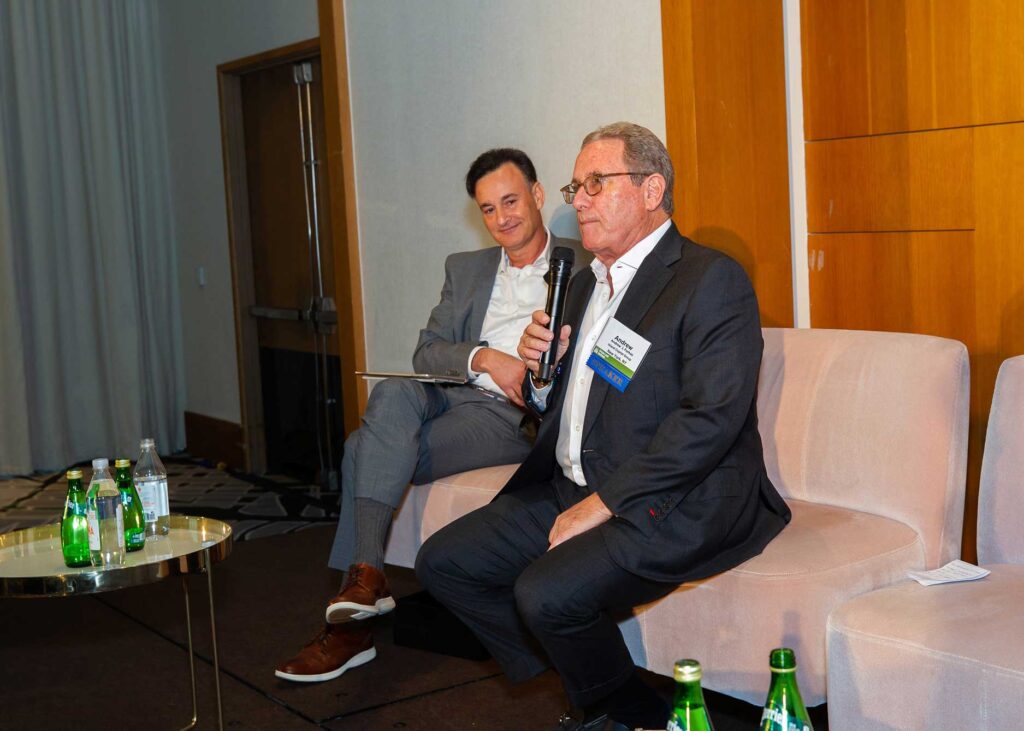
Andrew Farkas, Adam Greenfader


Puerto Rico, like much of the Caribbean is in the process of bouncing back from the Covid 19 pandemic.  Adam Greenfader, who chairs the ULI Caribbean Council had a high level sit down conversation with keynote Speaker Andrew Farkas, CEO Island Capital Group. The conversation was focused on social equity and specifically what  role the financial sector has in supporting the region with a particular focus on sustainability, ESG, and helping economic migrants return back to their island homes.

In the last few years Puerto Rico has become known as blockchain capital of the world. While thousands of tech savvy individuals have moved to the island to take advantage of federal tax incentives they have inadvertently created a new economic driver for the Puerto Rico.

https://www.bloomberg.com/news/features/2021-12-11/crypto-rich-are-moving-to-puerto-rico-world-s-new-luxury-tax-haven


In our “Fintech & Financial Innovation panel in Puerto Rico, Moderator Nathan Whigham, Founder & President, EN Capital discussed the growth of this huge industry. Rodrick Miller, CEO, Invest Puerto Rico, explained what his group is doing to change the paradigm in Puerto Rico from selling tax incentives to focusing on the island’s quality of labor, education system, and proficiency in bio science and other innovations. Stephen Inglis, CEO, Importal explained his new portal to monetize tax credits and  Yael Tamar, CEO & Co-founder, SolidBlock explained how her company is integrating real estate and blockchain.

https://www.prnewswire.com/news-releases/invest-puerto-rico-elevates-the-islands-role-as-a-global-bioscience-rd-and-manufacturing-hub-attracting-two-major-life-critical-investments-228m-in-new-activity-301221471.html

After a marathon day of conversation it was amazing to see the room still full for our last panel “Growth Industries and Tax Incentives” moderated by Carla Campos and an all-star team including  Jorge Ruiz Montilla, McConnel Valdez,  Francisco Luis, of Kevane Grant Thornton and Rogelio “Roy” Carrasquillo, of the Carrasquillo Law Group. In this panel, specific programs like the Tourism Tax Incentive were explained in detail and there was robust conversation regarding how these incentives have created new jobs in manufacturing, life sciences, construction, and agro-science.


On behalf of all of us at the Puerto Rico Builders Association and The Urban Land Institute SE Florida/ Caribbean, thank you to all of the people and sponsors that made The Puerto Rico Symposium possible. We are all hopeful that together both the public and private sector can create long lasting sustainable economic growth.


For more information about investing in Puerto Rico visit our web site or contact us.

AG&T is a real estate development and consulting company founded in 1998 with headquarters in Miami, Florida. Our  track record spans over 55 real estate development projects in Puerto Rico, Sint Maarten, Costa Rica, Panama, Mexico, Dominican Republic, and various other Caribbean islands.


18 Billion For The Next Great Construction Boom


San Juan, Puerto Rico.

Last week The Puerto Rico Builders Association held its 70th year conference in San Juan Puerto Rico. The historic event was inaugurated with a conversation on Financing the Next Great Economic Construction Boom.  The panel included Michael McDonald, Executive Vice President and Group Director at Firstbank, Luis Alemañy President and CEO at the Economic Development Bank of Puerto Rico, and Eric Delgado Business Banking Relationship Manager at Acrecent Financial Corporation and Adam Greenfader, Managing Partner at AG&T.

It was clear from the conference panelists, that after more than fifteen years of stagnate growth, Puerto Rico appears ready to build back better. Billions of dollars of FEMA and CDBG-DR funds are being allocated in what will be the largest government funding program in US history.  While much of the Federal funds will be used to subsidize projects, the group was in agreement that there is a huge need for private investment and capital to bridge the financing gapMichael McDonald, Executive Vice President and Group Director at Firstbank, made the historic announcement that the bank is opening up its construction division. Several members from the newly formed team were present in the packed room including Carlos Navarro and Mei Li Tsai Rivera. “There is no better indicator of an economy that is ready to grow that when a bank reopens its construction division”, quoted Alfredo Martínez-Álvarez, Jr., Chairman of the Puerto Rico Builders Association.

Equally promising, Luis Alemañy President and CEO at the Economic Development Bank of Puerto Rico, was asked about the much awaited CDBG-DR funding. Mr. Alemañy explained that the Economic Development Bank of Puerto Rico has already started allocating over $225 Million dollars to small entrepreneurs. The group was especially receptive to the fact that the grants are being disbursed in $50,000 tranches and does not require repayment.

Since 2008, Puerto Rico has gone from twelve financial institutions to less than four. Eric Delgado Business Banking Relationship Manager at Acrecent Financial Corporation, sees a new role for niche lenders filling that gap in Puerto Rico.  He specifically discussed how Acrecent can play a role in funding new construction projects. “We are able to get to funding much faster than traditional banks and also have the capacity for higher loan to coast ratios.  Both Firstbank and Acrecent mentioned that capital is seeking anywhere from 25%-35% of project equity.

“As Puerto Rico gets ready to build thousands of much needed homes, critical infrastructure and other key projects, it will be up to both private and public institutions to step up and provide the much needed capital and leadership”, quoted Adam Greenfader of AG&T.  All of the panelist were in agreement that the island in the next few years is ready for strong growth. They specifically mentioned that in addition to the more than 8 billion dollars of Federal Grants, Puerto Rico has one of the most robust tax incentives and credit programs in the world. The hospitality incentive with a 40% tax credit was specifically highlighted as a very strong component of any capital stack today.

Helping to plan a better future for the island, The Puerto Rico Builders Association will be holding its annual conference on September 20 and 21, 2022.  Speaking and sponsorship opportunities are available and you may contact AG&T at contact@agandt.com.


AG&T is a real estate development and consulting company founded in 1998 with headquarters in Miami, Florida. Our  track record spans over 55 real estate development projects in Puerto Rico, Sint Maarten, Costa Rica, Panama, Mexico, Dominican Republic, and various other Caribbean islands.