The Puerto Rico Symposium in Miami With Historic Announcement

A Historic Moment: The Puerto Rico Symposium and the End of Bankruptcy

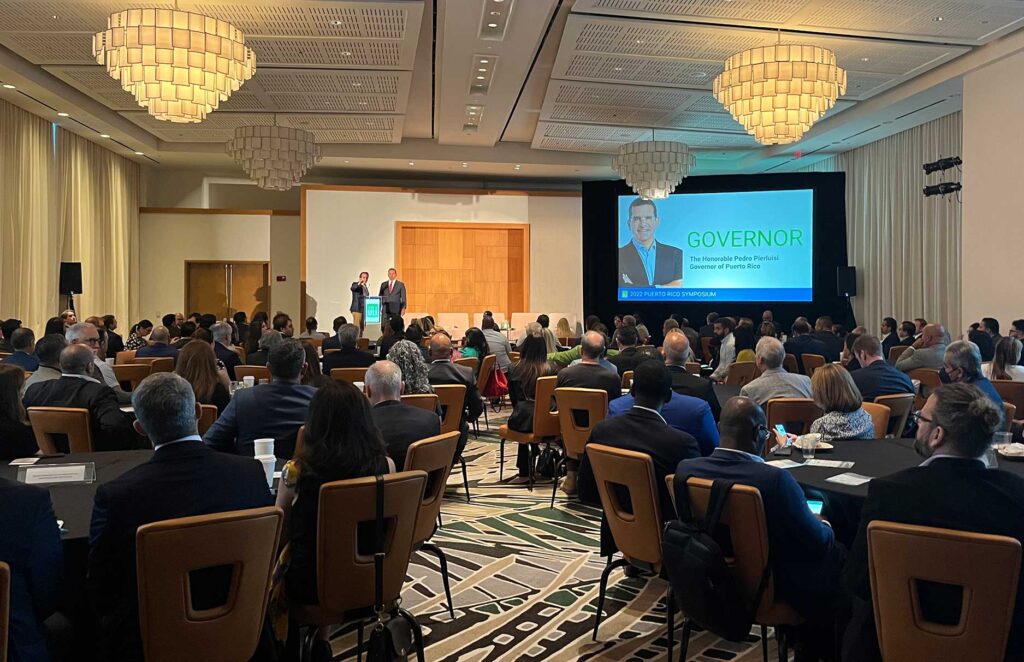
Miami, March 2022 — In front of more than 250 leaders from the public and private sectors, Governor Pedro Pierluisi announced that Puerto Rico had officially exited bankruptcy — one of the most consequential announcements in the island’s modern economic history.

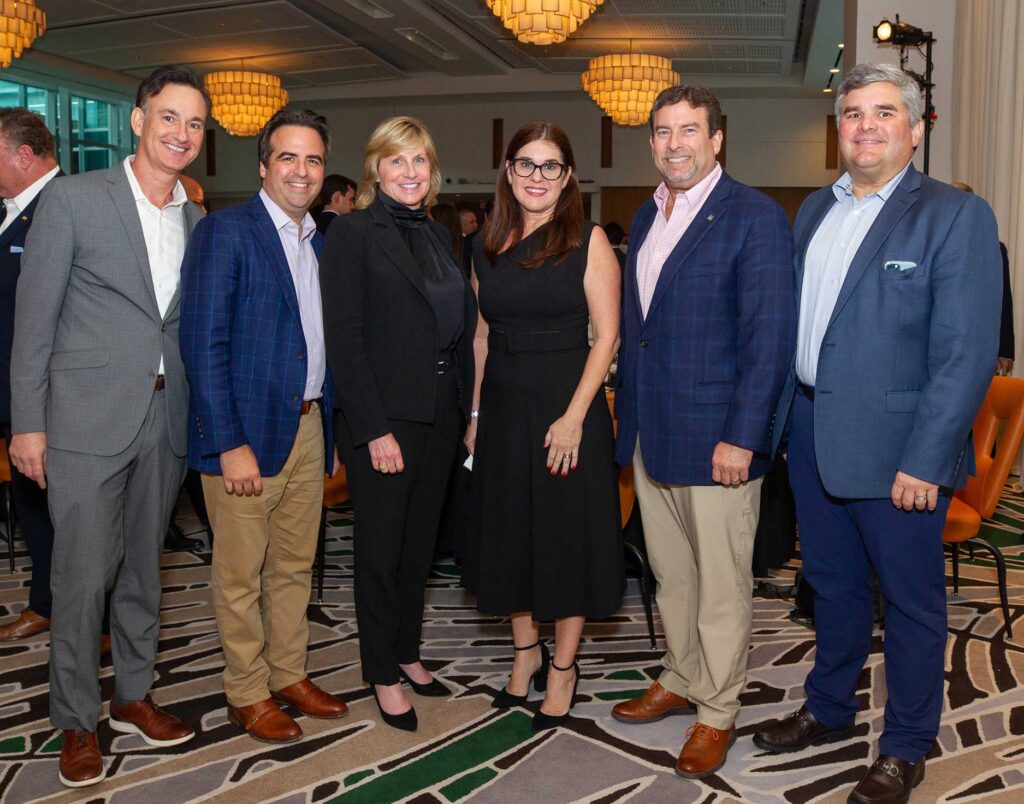
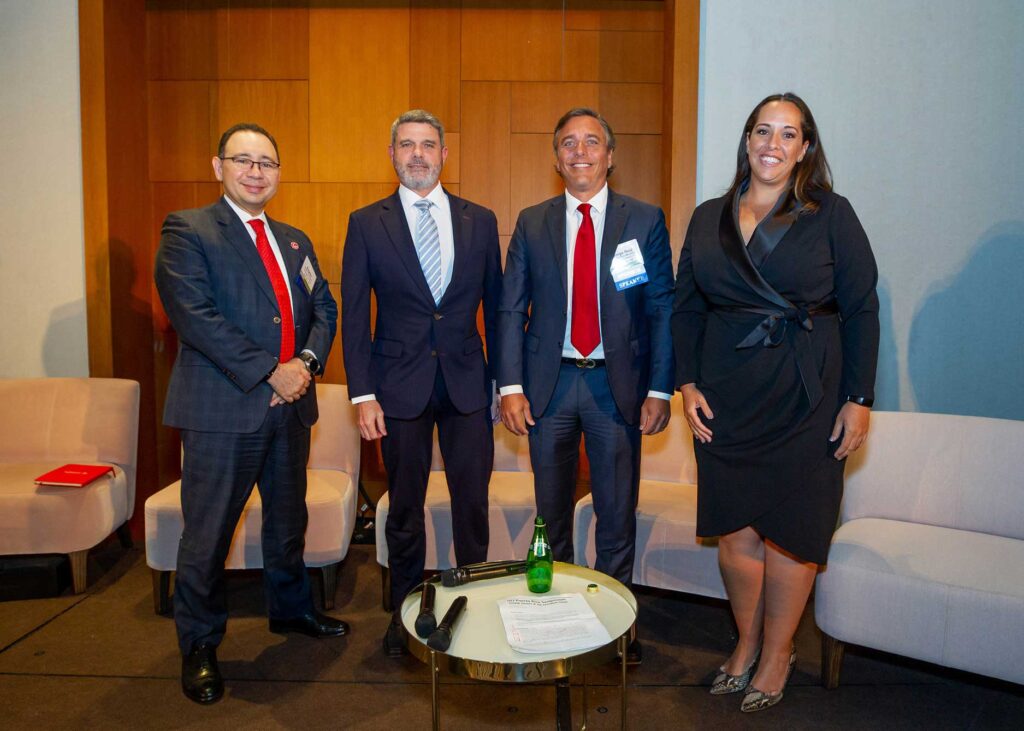
The moment took place at The Puerto Rico Symposium, co-hosted by the Urban Land Institute Southeast Florida/Caribbean — chaired at the time by AG&T’s Adam Greenfader — and The Puerto Rico Builders Association, whose newly appointed president, Vanessa de Mari, was recognized as the first woman to lead the organization in its 70-year history.

The Symposium was dedicated to both milestones.

A Convening Role for AG&T

For AG&T, the Symposium reflected the firm’s long-standing conviction that Caribbean capital markets thrive when regional stakeholders and global investors sit in the same room.

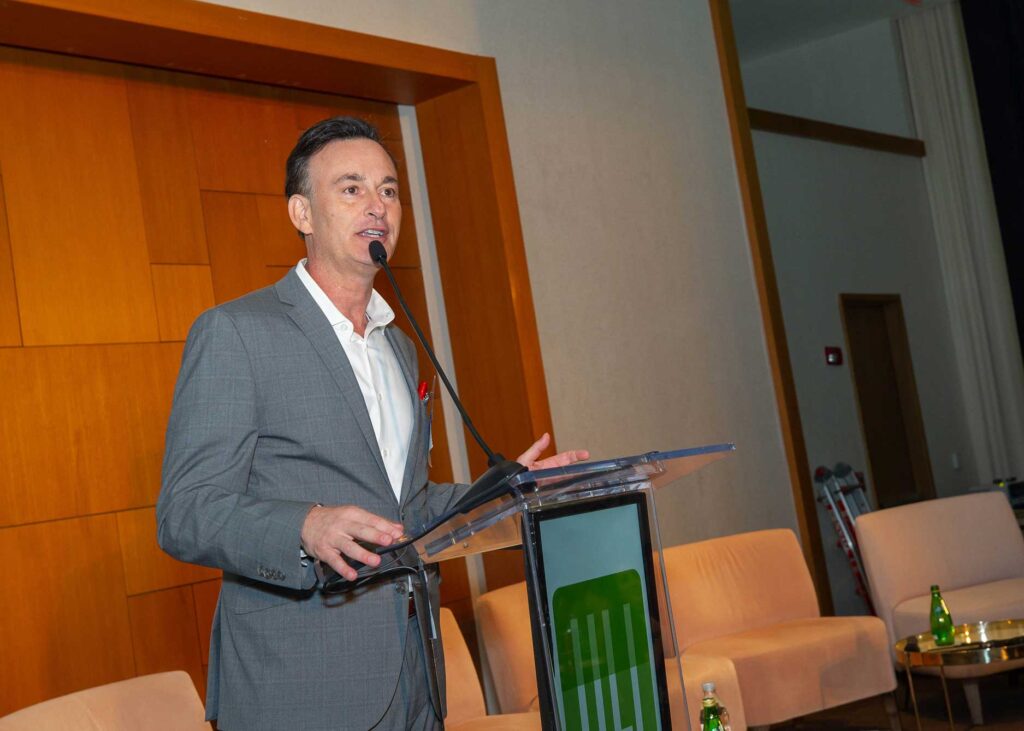
Governor Pierluisi’s keynote highlighted the island’s economic recovery: the end of Puerto Rico’s population exodus, over 900 reconstruction projects underway, and — most notably — the formal end of the debt restructuring that had defined the island’s economy for the previous decade.

Attending government leaders included:

  • Pedro Pierluisi, Governor of Puerto Rico
  • Manuel Laboy, Executive Director, COR3
  • Maretzie Diaz, Deputy Director, PR Housing Department (CDBG-DR)
  • Natalia I. Zequeira, Commissioner of Financial Institutions
  • William Rodríguez Rodríguez, Secretary of Housing, Puerto Rico

The Panels

Panel 1 — Why Puerto Rico: Stories of Success

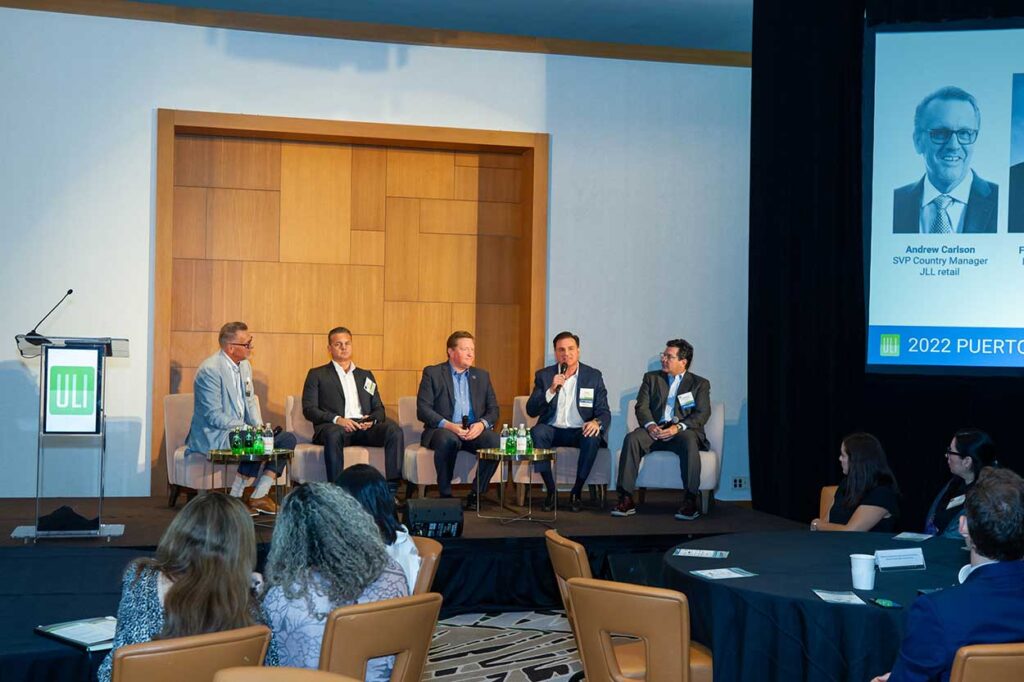
Moderated by Andrew Carlson, SVP Country Manager at JLL, the opening panel examined the island’s hospitality resurgence — more than 3,000 new or renovated room keys across El Conquistador, Grand Reserve (formerly Coco Beach), Sheraton, AC Hotels, and others.

Panelists included Federico Sanchez (Interlink Group), Dan Kodsi (Royal Palm Companies), Rafael E. Rojo (VRM Companies), and Brad Dean (Discover Puerto Rico), who noted that Puerto Rico had achieved record ADR and occupancy through COVID and was expanding demand across U.S. feeder markets.

Panel 2 — Federal Funding: Myth vs. Reality

Moderated by Ella Woger Nieves of Invest Puerto Rico, this panel unpacked the roughly $80 billion in federal recovery aid.

Manuel Laboy detailed the numbers: FEMA authorized $5 billion for temporary work and $21 billion for 9,000 permanent projects, with 800 currently under construction. Maretzie Diaz outlined the procurement process for private-sector participation, and Pamela Pautenade, former Deputy Secretary of HUD, dispelled misconceptions about relief-fund misuse.

Panel 3 — Fintech and Financial Innovation

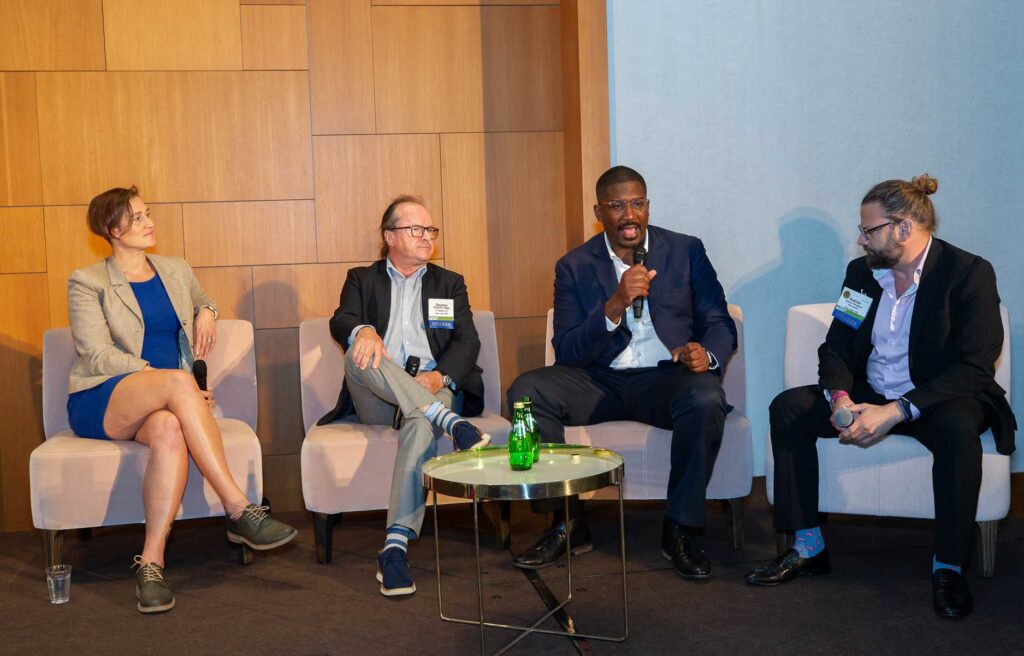
Moderated by Nathan Whigham, Founder & President of EN Capital, the panel addressed Puerto Rico’s emergence as one of the world’s leading blockchain and fintech destinations.

Rodrick Miller, CEO of Invest Puerto Rico, framed the strategic shift: from marketing tax incentives to promoting the island’s labor quality, education system, and expertise in life sciences and biotech. Additional insight from Stephen Inglis(Importal) and Yael Tamar (SolidBlock) explored tokenized real estate and tax-credit monetization.

Panel 4 — Growth Industries and Tax Incentives

Moderated by Carla Campos, this closing panel with Jorge Ruiz Montilla (McConnell Valdés), Francisco Luis (Kevane Grant Thornton), and Rogelio “Roy” Carrasquillo (Carrasquillo Law Group) examined how tourism, manufacturing, life sciences, and agro-science tax incentives had translated into measurable job creation.

Banking’s Return

Speakers from Puerto Rico’s financial sector signaled renewed confidence in the island’s growth. Michael McDonnell, EVP at FirstBank — which had just re-opened its construction division — projected positive GDP growth for 2022, ending more than a decade of contraction.

Banesco USA, the only Florida- or Puerto Rico–based bank recipient of the U.S. Treasury’s $8.7 billion Emergency Capital Investment Program, also participated — a signal that federal capital was flowing back through island-connected institutions.

Natalia I. Zequeira, Commissioner of Financial Institutions, emphasized that International Financial Entities (IFEs) can now participate in special opportunity projects — a meaningful shift for structured capital.

A Conversation with Andrew Farkas

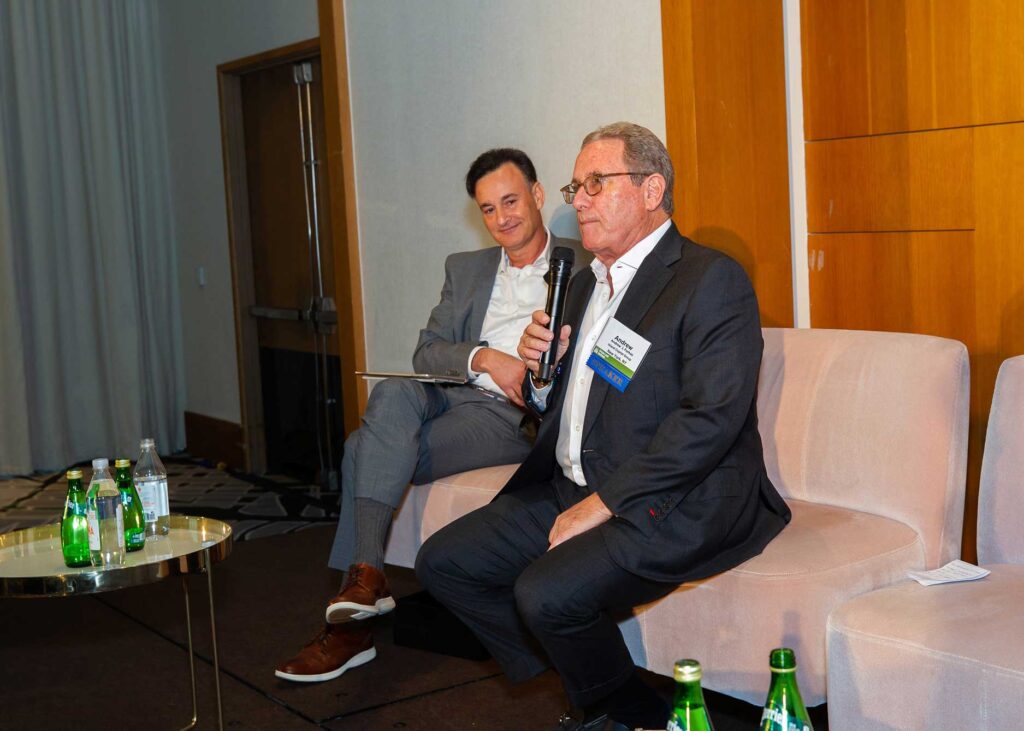
One of the day’s defining moments was a high-level conversation between Adam Greenfader and Andrew Farkas, founder of Island Capital Group.

The discussion focused on the role of institutional capital in Caribbean recovery — how sustainability, ESG frameworks, and long-term investment strategies can help return economic migrants to their island homes and rebuild communities beyond hurricane recovery.

That conversation continues to shape how AG&T positions institutional capital in the Caribbean today.

AG&T’s Perspective

The Puerto Rico Symposium underscored AG&T’s core belief: that Caribbean capital markets do not mature in isolation. They mature when regional developers, government leaders, institutional investors, and financial institutions build shared conviction in the same room, at the same table.

Announcements of this scale — a governor declaring the end of a decade-long bankruptcy in front of global institutional investors — do not happen by coincidence. They happen because someone, over years, has been convening the conversation.

For AG&T, that work continues.
Governor Pedro Pierluisi

Speakers Panel

Keynote Lunch Address


18 Billion For The Next Great Construction Boom


San Juan, Puerto Rico.

Last week The Puerto Rico Builders Association held its 70th year conference in San Juan Puerto Rico. The historic event was inaugurated with a conversation on Financing the Next Great Economic Construction Boom.  The panel included Michael McDonald, Executive Vice President and Group Director at Firstbank, Luis Alemañy President and CEO at the Economic Development Bank of Puerto Rico, and Eric Delgado Business Banking Relationship Manager at Acrecent Financial Corporation and Adam Greenfader, Managing Partner at AG&T.

It was clear from the conference panelists, that after more than fifteen years of stagnate growth, Puerto Rico appears ready to build back better. Billions of dollars of FEMA and CDBG-DR funds are being allocated in what will be the largest government funding program in US history.  While much of the Federal funds will be used to subsidize projects, the group was in agreement that there is a huge need for private investment and capital to bridge the financing gapMichael McDonald, Executive Vice President and Group Director at Firstbank, made the historic announcement that the bank is opening up its construction division. Several members from the newly formed team were present in the packed room including Carlos Navarro and Mei Li Tsai Rivera. “There is no better indicator of an economy that is ready to grow that when a bank reopens its construction division”, quoted Alfredo Martínez-Álvarez, Jr., Chairman of the Puerto Rico Builders Association.

Equally promising, Luis Alemañy President and CEO at the Economic Development Bank of Puerto Rico, was asked about the much awaited CDBG-DR funding. Mr. Alemañy explained that the Economic Development Bank of Puerto Rico has already started allocating over $225 Million dollars to small entrepreneurs. The group was especially receptive to the fact that the grants are being disbursed in $50,000 tranches and does not require repayment.

Since 2008, Puerto Rico has gone from twelve financial institutions to less than four. Eric Delgado Business Banking Relationship Manager at Acrecent Financial Corporation, sees a new role for niche lenders filling that gap in Puerto Rico.  He specifically discussed how Acrecent can play a role in funding new construction projects. “We are able to get to funding much faster than traditional banks and also have the capacity for higher loan to coast ratios.  Both Firstbank and Acrecent mentioned that capital is seeking anywhere from 25%-35% of project equity.

“As Puerto Rico gets ready to build thousands of much needed homes, critical infrastructure and other key projects, it will be up to both private and public institutions to step up and provide the much needed capital and leadership”, quoted Adam Greenfader of AG&T.  All of the panelist were in agreement that the island in the next few years is ready for strong growth. They specifically mentioned that in addition to the more than 8 billion dollars of Federal Grants, Puerto Rico has one of the most robust tax incentives and credit programs in the world. The hospitality incentive with a 40% tax credit was specifically highlighted as a very strong component of any capital stack today.

Helping to plan a better future for the island, The Puerto Rico Builders Association will be holding its annual conference on September 20 and 21, 2022.  Speaking and sponsorship opportunities are available and you may contact AG&T at contact@agandt.com.


AG&T is a real estate development and consulting company founded in 1998 with headquarters in Miami, Florida. Our  track record spans over 55 real estate development projects in Puerto Rico, Sint Maarten, Costa Rica, Panama, Mexico, Dominican Republic, and various other Caribbean islands.


Helping Puerto Rico since the 1950’s

Puerto Rico 1950's

70 years ago, when the Puerto Rico Builders Association was formed, the United States was on the brink of entering the World War II. December 7, 1941, would be considered a day that would “live in infamy”. Thousands of Puerto Ricans as American citizens fought in the War and would return home as victors to an island on the precipice of great economic growth.  Thanks in large part to Operation Bootstrap, o “Manos a La Obra”, the Puerto Rico Builder’s Association has played a vital role in shaping the island’s long term economic development. The Puerto Rico Builders Association (formerly known as the Homebuilders Association) was formed in a critical period of time when the island was undergoing a massive transformation from an agricultural society into a leading manufacturing hub.

Puerto Rico would see historic growth for more than three decades and the Puerto Rico Builders Association would play a leading role in shaping the island’s zoning regulations, environmental protections, financing, and building codes (often referred to as a Miami’s building code on steroids).  Puerto Rico benefited greatly from these concerted efforts by the Puerto Rico Builder Association with one of the highest homeownership rates in the Western world at 68%. Puerto Rico is also the second largest public housing jurisdiction in the United States second only to New York City.

In 2015, The Puerto Rico Builders Association, under the leadership of then PR Builders president, Ricardo Alvarez Diaz Villalon joined forces with the Urban Land Institute Southeast Florida/Caribbean District Council. ULI founded around the same time as the PR Builders Association, is one of the oldest and largest networks of real estate and land use experts in the world. ULI’s mission is to shape the future of the building industry and create thriving and sustainable communities around the globe. Shortly thereafter, Puerto Rico was devastated with two back-to-back category five hurricanes.

Hurricanes Irma and Maria destroyed most of the island’s electrical infrastructure and informal housing stock at a cost estimated over 100 billion dollars. ULI together with the Puerto Rico Builders Association created a task force to study the effects of the storms and how to build back better. Under then ULI president Greg West, the Puerto Rico Builders Association and ULI convened national panel of experts and created a specific action plan for the municipality of Toa  Baja.

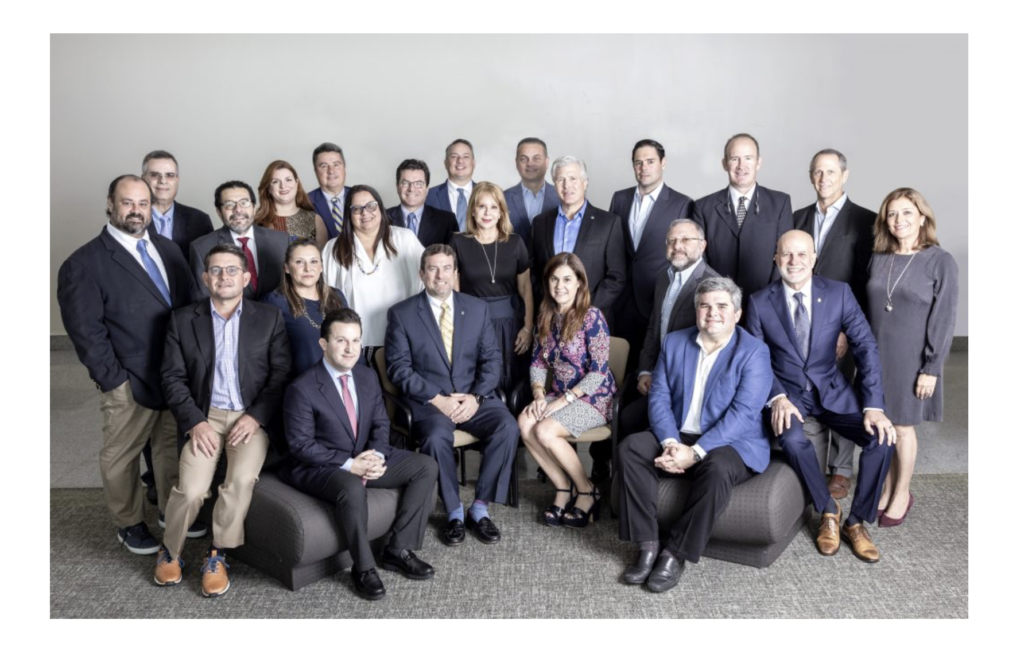
The Puerto Rico Builders Association BoardThe Puerto Rico Builders Association and ULI have since held multiple meetings and conference throughout the years in both Puerto Rico and Miami to explore new areas of synergy and improvements to the island’s build environment. ULI’s current president, Scott McLaren was recently quoted, “we strongly value our long standing partnership with your organization and admire the leaders who go above and beyond, especially when faced with such tremendous obstacles.”

Come celebrate 70 with the Puerto Rico Builders Association Puerto Rico on October 27-29 in San Juan. https://constructorespr.com/convencion-2021/

AG&T is a real estate development and consulting company founded in 1998 with headquarters in Miami, Florida. Our  track record spans over 55 real estate development projects in Puerto Rico, Sint Maarten, Costa Rica, Panama, Mexico, Dominican Republic, and various other Caribbean islands.


State of the Caribbean Hospitality Market: Capital Markets, Lending, and the Road to Recovery

State of the Caribbean Hospitality Market: Capital Markets, Lending, and the Road to Recovery

On March 16, 2021, at a time when much of the global hospitality industry remained in crisis, the Urban Land Institute Caribbean Council convened one of its most comprehensive discussions on the future of Caribbean tourism and hotel investment.

The webinar, “State of the Caribbean Marketplace,” brought together an exceptional panel of leaders representing institutional lending, development finance, hotel brokerage, destination marketing, and investment to examine the unprecedented challenges facing the hospitality sector and, more importantly, how the industry could emerge stronger.

Moderated by Adam Greenfader, Managing Partner of AG&T and Chair of the ULI Caribbean Council, the discussion featured:

  • Juan Corvinas Solans, Managing Director, Head of International Hotel Finance

  • Rogerio Basso, Head of Tourism, IDB Invest

  • Alexandra Lalos, hospitality investment professional

  • Christian Charre, Senior Vice President, CBRE Hotels

  • Brad Dean, CEO, Discover Puerto Rico

Rather than focusing solely on the immediate effects of COVID-19, the panel explored the deeper structural changes taking place across the hospitality industry and capital markets. The discussion provided valuable insights into lender responsibilities, investor behavior, hotel valuations, operational resilience, and the future of Caribbean tourism.

A Crisis Unlike Any Other

One of the central themes of the conversation was why COVID-19 differed fundamentally from the Global Financial Crisis of 2008–2009.

While both crises placed tremendous pressure on the hospitality industry, their underlying causes—and therefore the appropriate responses—were entirely different.

The Global Financial Crisis originated within the financial system itself. Excessive leverage, declining real estate values, and failures in the banking sector led to a widespread credit contraction. Liquidity evaporated, financing became scarce, and many otherwise viable projects were unable to refinance their debt. Banks faced solvency concerns, and distressed asset sales became commonplace as lenders worked through troubled portfolios.

COVID-19 presented an entirely different challenge.

Hotels did not fail because of poor underwriting or excessive leverage. In many cases, they entered 2020 with healthy balance sheets, strong occupancies, and positive cash flow. Instead, the pandemic abruptly halted global travel through government-imposed restrictions and public health measures. Demand disappeared almost overnight, not because travelers had lost interest in tourism, but because they simply could not travel.

This distinction fundamentally changed the role of financial institutions.

The Responsibility of Lenders During Extraordinary Times

One of the most compelling discussions centered on the responsibilities of lenders during a crisis that was not caused by borrowers.

Panelists emphasized that traditional loan enforcement strategies would not serve either lenders or borrowers under these unprecedented circumstances.

Instead, many financial institutions adopted a collaborative approach that focused on preserving long-term asset value rather than maximizing short-term recoveries.

Throughout the Caribbean and internationally, lenders worked closely with hotel owners to provide temporary payment deferrals, covenant waivers, loan modifications, maturity extensions, and other restructuring solutions designed to bridge the industry through the temporary disruption.

This represented a significant evolution in lender philosophy.

Rather than forcing widespread foreclosures, financial institutions recognized that preserving high-quality hospitality assets would ultimately benefit borrowers, lenders, investors, employees, and local economies alike.

The discussion highlighted an important lesson from the Global Financial Crisis: unnecessary liquidations often destroy long-term value. In contrast, patience and partnership can preserve both businesses and communities during periods of extraordinary uncertainty.

Capital Never Left the Market

Another important takeaway was that while travel had stopped, investment capital had not.

Institutional investors, private equity firms, family offices, sovereign wealth funds, and hospitality-focused lenders continued to study the market throughout the pandemic.

Many viewed the crisis as a temporary interruption rather than a permanent impairment of Caribbean tourism.

The panel discussed how sophisticated investors were actively preparing for recovery by evaluating acquisition opportunities, recapitalizations, refinancing transactions, and development sites well before travel resumed.

This confidence reflected the industry’s belief that the Caribbean’s long-term fundamentals remained intact:

  • World-class tourism destinations

  • Limited beachfront supply

  • Strong luxury demand

  • Growing interest in wellness and experiential travel

  • Continued expansion by international hotel brands

  • Attractive long-term demographic trends

As history has shown, many of these investors were well positioned to participate in one of the strongest tourism recoveries in the world.

The Evolution of Hotel Finance

The conversation also explored how financing structures were evolving.

Lenders increasingly emphasized sponsor quality, operational expertise, liquidity, and business continuity planning alongside traditional underwriting metrics.

Hotel operators were expected to demonstrate greater flexibility in managing costs, staffing, technology adoption, and guest experience.

Developers likewise began integrating resilient design, sustainability, wellness amenities, and mixed-use programming into new projects, recognizing that these features would become increasingly important to both guests and capital providers.

The pandemic accelerated trends that were already reshaping hospitality finance.

A More Sophisticated Investment Environment

Rogerio Basso provided valuable insights into the role of development finance institutions in supporting tourism throughout Latin America and the Caribbean.

Unlike traditional commercial lenders, multilateral development banks often provide patient capital that can continue flowing during periods of market uncertainty. Their participation not only supplies financing but also reinforces investor confidence, promotes sustainable development, and encourages higher environmental and governance standards.

Christian Charre shared perspectives from the hotel transaction market, illustrating how valuation methodologies were adapting in response to temporary operating disruptions. Rather than relying solely on current cash flow, investors increasingly focused on normalized performance and long-term replacement value.

Brad Dean discussed the remarkable resilience of travel demand and emphasized that tourism remained one of the world’s most powerful economic engines. While the pandemic temporarily interrupted mobility, the human desire to travel, connect, and experience new destinations remained fundamentally unchanged.

Looking Back

Several years later, many of the observations shared during this discussion proved remarkably accurate.

The Caribbean experienced one of the fastest tourism recoveries globally. Hotel occupancies rebounded, average daily rates reached record levels in many destinations, institutional investment returned, branded residences flourished, and major international hotel companies accelerated expansion throughout the region.

Perhaps most importantly, the industry demonstrated that collaboration among lenders, investors, operators, governments, and development institutions could preserve long-term value even during periods of extraordinary disruption.

AG&T’s Commitment to Caribbean Thought Leadership

The State of the Caribbean Marketplace webinar reflected AG&T’s broader commitment to advancing meaningful conversations about the future of Caribbean real estate and hospitality.

Through its leadership within the Urban Land Institute Caribbean Council, collaborations with industry organizations, and partnerships with public and private sector leaders, AG&T has consistently created forums where investors, lenders, developers, hotel operators, policymakers, and academics can exchange ideas and shape the future of the region.

The conversation was never simply about surviving the pandemic.

It was about understanding how crises reshape industries, how responsible lending preserves markets, and how thoughtful leadership can position Caribbean hospitality not merely for recovery, but for long-term growth.

The lessons remain just as relevant today. Strong destinations are built not only through exceptional hotels and visionary developments, but through resilient financial systems, collaborative partnerships, and leaders willing to think beyond the next business cycle.

Critical Manufacturing and Puerto Rico USA

Luis Fortuno and Congresswoman Jennifer Gonzalez

¨.

The panelists :


The ULI Webinar has an incredible array of information crammed into 90 minutes and it gives a great snapshot for the many initiatives being introduced and planned to help the Puerto Rican economy and create more quality jobs. If I had to some it up in three words, Mo is back. Mo of course being momentum.

 Each of the speakers brought a different perspective. Congresswoman Gonzalez Colon noted her primary mission is the reconstruction of the Island and to shephard the many supporting bills recently introduced in the US Congress. Former Governor Luis Fortuno brought an informed Wash DC think tank perspective, Adam Greenfader is one of Puerto Rico´s most passionate advocates, Andy Carlson of JLL (Jones Lang LaSalle) brings experienced commercial  insights from the world´s second largest public brokerage firm, Dr Deusch stated his case for the reasons he brought his Swiss/German manufacturing business to Puerto Rico because of a need for precision and reliability, while Noel Zamot has a finger on the ethical pulse of developing new business in Puerto Rico.

The conversations were upbeat and positive. For instance, Congresswoman Colon made a presentation on MMEDS which was introduced last month to Congress under the bill H.R. 7527. This bill provides tax incentives and tax credits for companies creating manufacturing plants and jobs in economically distressed areas in the US and its territories. The criteria for distressed is even stricter than the recent Opportunity Zone legislation passed in late 2017. When the Congresswoman showed the MMEDS qualifying maps there were smaller areas in very non desirable locations in the US whereas Puerto Rico literally had a much larger proportional area in some desirable locations. And she stated very clearly that MMEDS is one of the very few legislative items that is drawing bi-partisan support from both sides of the aisle.

The entire panel then weighed in on the competitive advantages that Puerto Rico has when competing with the mainland U.S. including much lower labor costs by as much as 60% lower in some cases, an experienced manufacturing labor force going back 100 years, the University of Puerto Rico at Mayaguez which is a top 10% engineering school for the entire U.S. and which is very much geared to provide the engineering and chemistry talent to support Puerto Rico´s manufacturing base. That even today five of the top ten selling drugs internationally are produced in Puerto Rico and 12 of the top 20 pharmaceutical companies have plants in Puerto Rico. Luis Fortuno noted that Puerto Rico had more than $40 billion USD in pharmaceutical exports in 2019 but has the capacity to increase this substantially. The panel noted that some closed down plants are almost in turnkey conditions should manufacturers wish to return or expand capacity. It would not take much. Maybe a recession of the Jones Act, or at least an exemption for an extended period of time, might be the necessary catalyst. There are some interesting new developments on this front as was evidenced last week by Hawaii noting that 85% of their informed populace is all for rescinding the Jones Act as it costs that Island 1.2 billion USD in additional transportation and cost of goods fees.

Progress is being made on seeking some type of exemption under the taxing provisions of GILTI as it adds a 10%+ tax on profits for CFCs (controlled foreign corporations) which unfortunately applies to the US territories since the do not fall under the IRC (Internal Revenue Code). On May 1, 2020, Congresswoman Stacey E. Plasket, representing the US Virgin Islands, filed Bill HR 6648 – the Territorial Economic Recovery Act, that if becomes law, it will exclude our territories from much or all of the GILTI taxation, under certain provisions.

On April 3, 2020, Congresswoman Jennifer González, resident Commissioner for Puerto Rico, introduced Bill HR 6643, the Securing National Supply Chain Act of 2020, to provide various tax credits to Economically Distressed Zones, including a tax credit on the amount of wages paid by an employer to employees in such a zone. The proposal has some overlap with HR 7527 noted above.

President Trump’s Special Representative for Puerto Rico’s Disaster Recovery,  Rear Admiral Peter Brown, lead two delegations to Puerto Rico in August 2020, the last visit being last week. I am told the trip was very successful as a big priority was to visit and understand the many advantages of pharmaceutical manufacturing in Puerto Rico.  AG&T is committed to bringing our network top information and access to our industry’s leaders. 


Adam Greenfader Named Chairman Florida Puerto Rico Builders Association

Adam Greenfader Named Chairman Florida Puerto Rico Builders Association

San Juan, Puerto Rico

Adam Greenfader was recently named Chairman of the Florida Liaison Committee of the Puerto Rico Builders Association (PR Builders Association). For over sixty years, the PR Builders Association has been the island’s leading professional construction and development group. The PR Builders is responsible for government lobbying and networking. The Builders Association consists of high-level professionals in the residential, hospitality, industrial and commercial sectors.

“We are honored to have Adam Greenfader chair this new committee. Mr. Greenfader has been part of our organization for many years, is a tested professional in both markets and has a wealth of knowledge that will be a great asset,” exclaims Arch. Ricardo Álvarez-Díaz, president of the Builders of Puerto Rico.

The Mission of the Florida Liaison Committee is to be a bridge between Florida and Puerto Rico. The goal is to support  builders, bankers, investors and other professionals. The committee aims to facilitate access to services, information, and key contacts. “Our goal is that the PR Builders Association is seen as a first and most important stop for anyone that wants to expand to either market,” says Adam Greenfader.

In the last couple of years, with the passing of laws 20 and 22, Puerto Rico has seen a significant increase of interest from companies and individuals from the US mainland. There are also great opportunities for Puerto Rican companies that want to export their services and products, and use Florida as a first stepping-stone.

The Florida Liaison team is in the process of developing key stakeholders relationships and organizing its events for 2016 in both Florida and Puerto Rico. If either you or your company is interested in participating, you may contact Mr. Adam Greenfader at adamgreenfader@gmail.com or call the Builders Association at 787.751.1471. Learn more about the Puerto Rico Builders association here. 


San Juan, Puerto Rico

Por más de sesenta años, la Asociación de Constructores ha sido el principal grupo profesional de construcción y desarrollo. Esta organización ha sido responsable de promover el intercambio de información entre desarrolladores, inversionistas, miembros asociados y profesionales, en el desarrollo y la construcción de Puerto Rico. La Asociación de Constructores consiste en profesionales de alto nivel en el sector residencial, hotelero, industrial y comercial.

“Nos sentimos honrados de tener a Adam Greenfader dirigiendo este comité. El Sr. Greenfader ha sido parte de nuestra organización por muchos años, y es un profesional con gran conocimiento de ambos mercados”, indica el Arq. Ricardo Álvarez-Díaz, presidente de la Asociación de Constructores de Hogares.

La misión del Comité de Enlace de la Florida es la de ser un puente entre la Florida y Puerto Rico, apoyando y anudando lazos y relaciones entre constructores, banqueros, inversionistas y otros profesionales en ambos países. El objetivo del comité es facilitar el acceso a servicios, información y contactos claves. “Nuestra meta es que la Asociación de Constructores de Puerto Rico sea vista como el primer y más importante paso para la persona y/o empresa que desee expandir su negocio a cualquiera de estos mercados”, explica Adam Greenfader.

Durante los últimos años, Puerto Rico ha visto un aumento significativo en el interés de empresas e individuos del continente de los Estados Unidos con la implementación de las leyes 20 y 22. Existen además, grandes oportunidades para empresas puertorriqueñas que deseen exportar sus servicios y productos. Éstos ven a la Florida como un buen primer paso.

El equipo del Comité de Enlace de la Florida está en proceso de desarrollar relaciones profesionales y organizar sus eventos para el 2016 en Florida y Puerto Rico. De estar interesado en ser parte del comité, puede contactar al Sr. Greenfader por correo electrónico adamgreenfader@gmail.com o llamar a la Asociación de Constructores al 787.751.1471.