A Historic Moment: The Puerto Rico Symposium and the End of Bankruptcy
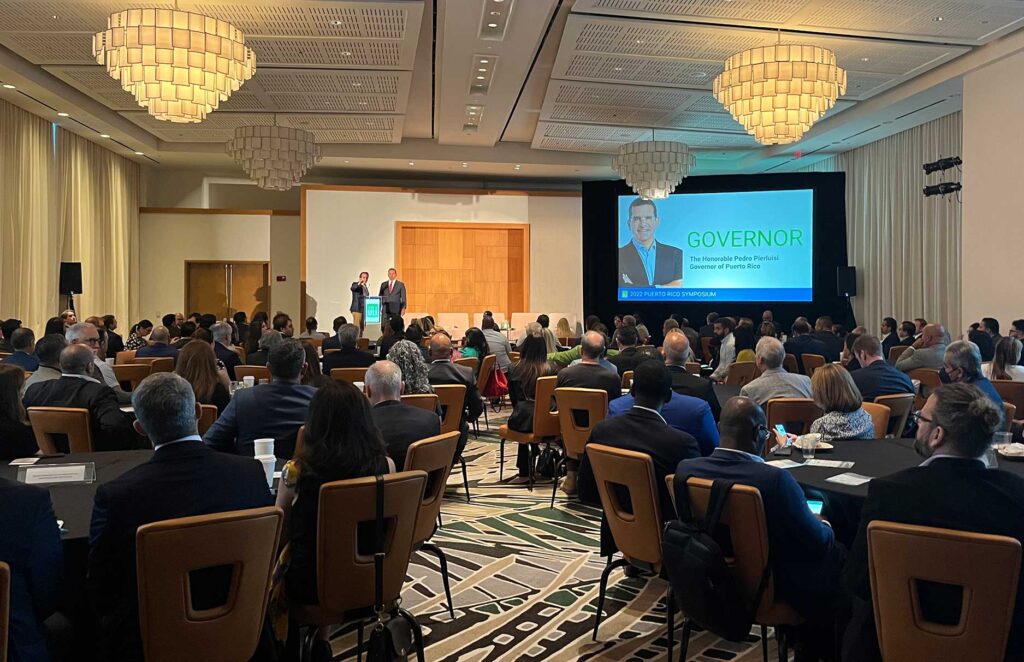
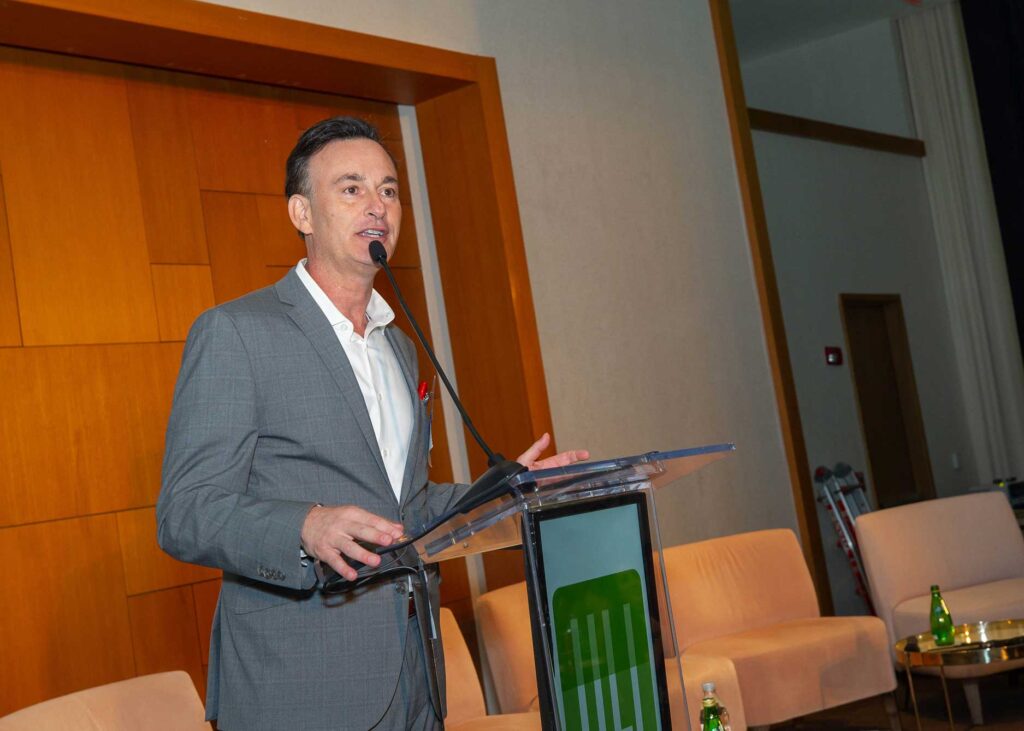
Miami, March 2022 — In front of more than 250 leaders from the public and private sectors, Governor Pedro Pierluisi announced that Puerto Rico had officially exited bankruptcy — one of the most consequential announcements in the island’s modern economic history.
The moment took place at The Puerto Rico Symposium, co-hosted by the Urban Land Institute Southeast Florida/Caribbean — chaired at the time by AG&T’s Adam Greenfader — and The Puerto Rico Builders Association, whose newly appointed president, Vanessa de Mari, was recognized as the first woman to lead the organization in its 70-year history.
The Symposium was dedicated to both milestones.
A Convening Role for AG&T
For AG&T, the Symposium reflected the firm’s long-standing conviction that Caribbean capital markets thrive when regional stakeholders and global investors sit in the same room.
Governor Pierluisi’s keynote highlighted the island’s economic recovery: the end of Puerto Rico’s population exodus, over 900 reconstruction projects underway, and — most notably — the formal end of the debt restructuring that had defined the island’s economy for the previous decade.
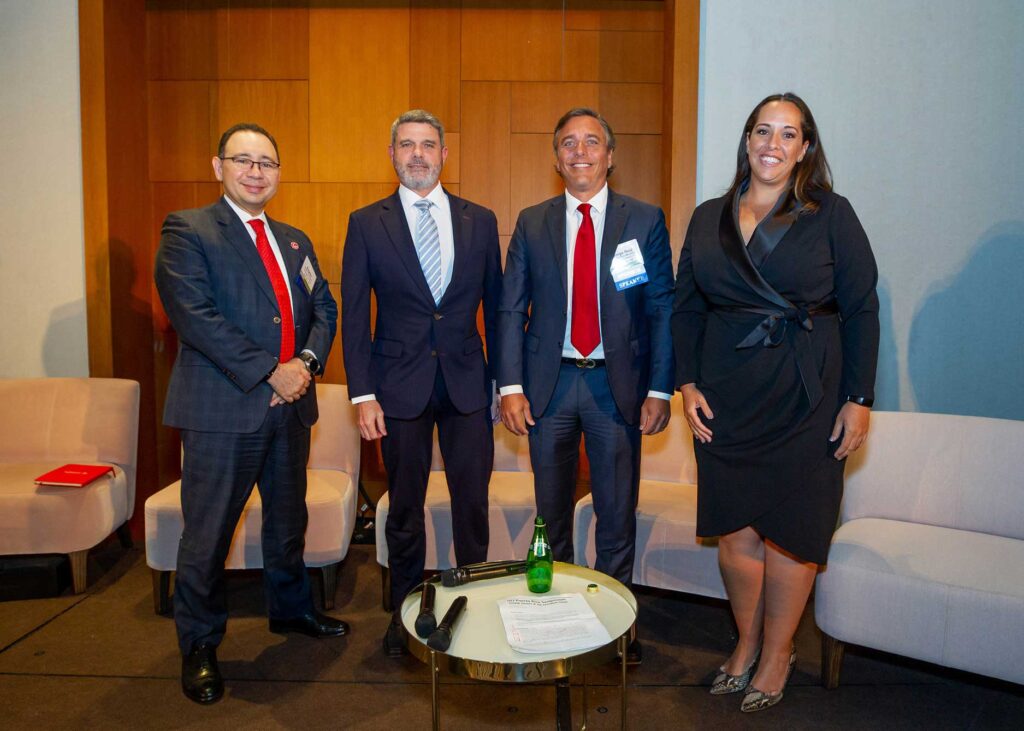
Attending government leaders included:
- Pedro Pierluisi, Governor of Puerto Rico
- Manuel Laboy, Executive Director, COR3
- Maretzie Diaz, Deputy Director, PR Housing Department (CDBG-DR)
- Natalia I. Zequeira, Commissioner of Financial Institutions
- William Rodríguez Rodríguez, Secretary of Housing, Puerto Rico
The Panels
Panel 1 — Why Puerto Rico: Stories of Success
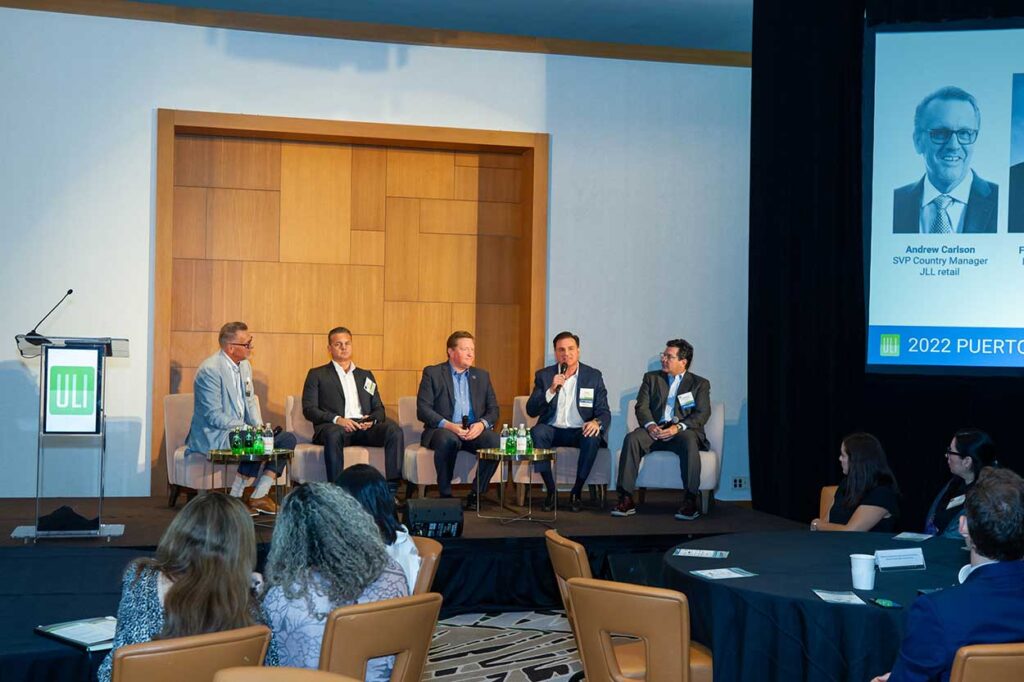
Moderated by Andrew Carlson, SVP Country Manager at JLL, the opening panel examined the island’s hospitality resurgence — more than 3,000 new or renovated room keys across El Conquistador, Grand Reserve (formerly Coco Beach), Sheraton, AC Hotels, and others.
Panelists included Federico Sanchez (Interlink Group), Dan Kodsi (Royal Palm Companies), Rafael E. Rojo (VRM Companies), and Brad Dean (Discover Puerto Rico), who noted that Puerto Rico had achieved record ADR and occupancy through COVID and was expanding demand across U.S. feeder markets.
Panel 2 — Federal Funding: Myth vs. Reality
Moderated by Ella Woger Nieves of Invest Puerto Rico, this panel unpacked the roughly $80 billion in federal recovery aid.
Manuel Laboy detailed the numbers: FEMA authorized $5 billion for temporary work and $21 billion for 9,000 permanent projects, with 800 currently under construction. Maretzie Diaz outlined the procurement process for private-sector participation, and Pamela Pautenade, former Deputy Secretary of HUD, dispelled misconceptions about relief-fund misuse.
Panel 3 — Fintech and Financial Innovation
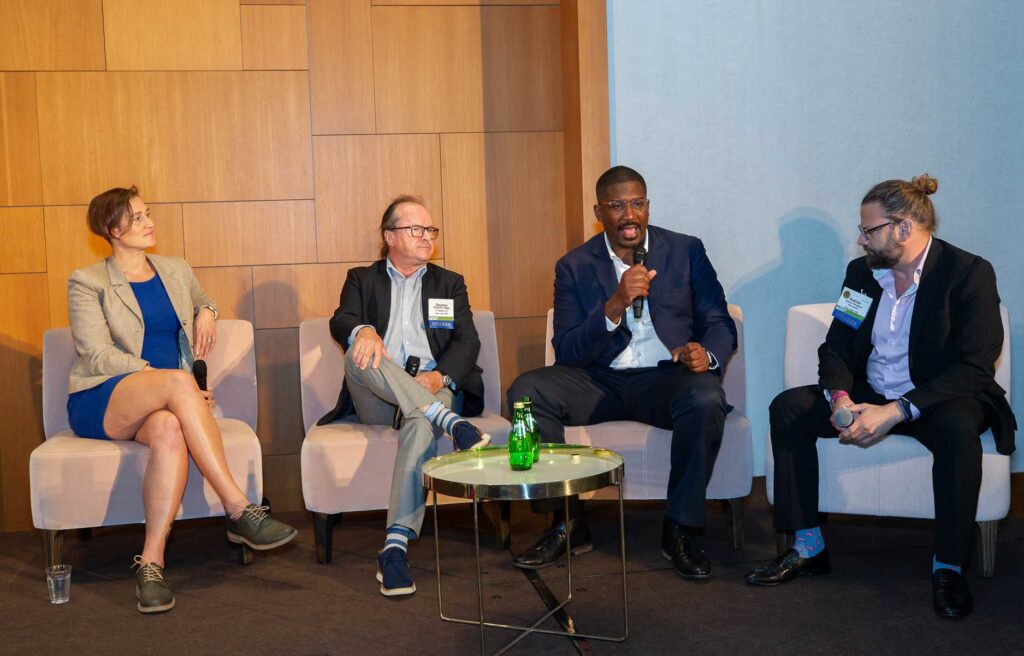
Moderated by Nathan Whigham, Founder & President of EN Capital, the panel addressed Puerto Rico’s emergence as one of the world’s leading blockchain and fintech destinations.
Rodrick Miller, CEO of Invest Puerto Rico, framed the strategic shift: from marketing tax incentives to promoting the island’s labor quality, education system, and expertise in life sciences and biotech. Additional insight from Stephen Inglis(Importal) and Yael Tamar (SolidBlock) explored tokenized real estate and tax-credit monetization.
Panel 4 — Growth Industries and Tax Incentives
Moderated by Carla Campos, this closing panel with Jorge Ruiz Montilla (McConnell Valdés), Francisco Luis (Kevane Grant Thornton), and Rogelio “Roy” Carrasquillo (Carrasquillo Law Group) examined how tourism, manufacturing, life sciences, and agro-science tax incentives had translated into measurable job creation.
Banking’s Return
Speakers from Puerto Rico’s financial sector signaled renewed confidence in the island’s growth. Michael McDonnell, EVP at FirstBank — which had just re-opened its construction division — projected positive GDP growth for 2022, ending more than a decade of contraction.
Banesco USA, the only Florida- or Puerto Rico–based bank recipient of the U.S. Treasury’s $8.7 billion Emergency Capital Investment Program, also participated — a signal that federal capital was flowing back through island-connected institutions.
Natalia I. Zequeira, Commissioner of Financial Institutions, emphasized that International Financial Entities (IFEs) can now participate in special opportunity projects — a meaningful shift for structured capital.
A Conversation with Andrew Farkas
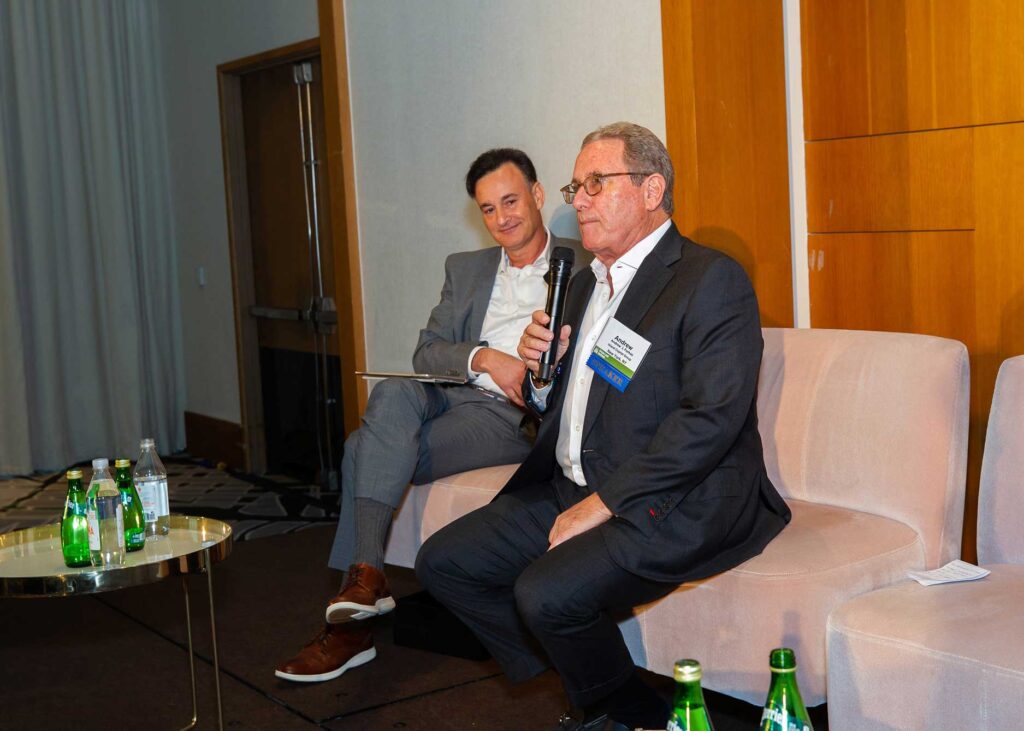
One of the day’s defining moments was a high-level conversation between Adam Greenfader and Andrew Farkas, founder of Island Capital Group.
The discussion focused on the role of institutional capital in Caribbean recovery — how sustainability, ESG frameworks, and long-term investment strategies can help return economic migrants to their island homes and rebuild communities beyond hurricane recovery.
That conversation continues to shape how AG&T positions institutional capital in the Caribbean today.
AG&T’s Perspective
The Puerto Rico Symposium underscored AG&T’s core belief: that Caribbean capital markets do not mature in isolation. They mature when regional developers, government leaders, institutional investors, and financial institutions build shared conviction in the same room, at the same table.
Announcements of this scale — a governor declaring the end of a decade-long bankruptcy in front of global institutional investors — do not happen by coincidence. They happen because someone, over years, has been convening the conversation.
For AG&T, that work continues.