On May 6, 2026, the*Urban Land Institute Netherlandshosted a private working session in Amsterdam focused on investment, hospitality, and real estate opportunities in the Dutch Caribbean.
Continue reading
Country and island-specific market information.
On May 6, 2026, the*Urban Land Institute Netherlandshosted a private working session in Amsterdam focused on investment, hospitality, and real estate opportunities in the Dutch Caribbean.
Continue reading
When I released the first edition of Why Puerto Rico Now three years ago, the island was just beginning to emerge from one of the most challenging chapters in its modern history. Since then,*Puerto Rico has undergone a remarkable transformation—economically, demographically, and institutionally.
Continue reading
Princess Juliana International Airport (SXM) — With a total population of roughly 43 million, the Caribbean is heavily reliant on its tourism industry with over 25 million annual visitors.
Continue reading
In the Caribbean hospitality industry, one factor reigns supreme: airlift. Its significance transcends mere transportation; rather, it serves as the lifeblood fueling the region’s tourism and other economic activity.
Continue reading
Large-scale luxury developments require vision, patience, significant capital, and the ability to evolve as markets, ownership, and consumer preferences change. Few projects illustrate this better than the transformation of the former Four Seasons Resort at Cayo Largo into what is now Moncayo Golf & Ocean Club—one of the most significant luxury hospitality and residential developments currently underway in Puerto Rico.
For AG&T, the project represents far more than a single transaction.
It reflects nearly two decades of working alongside world-class developers, investors, hospitality brands, and international capital to help position Puerto Rico among the Caribbean’s leading luxury destinations.
Long before Puerto Rico’s current hospitality renaissance, the Cayo Largo site was envisioned as one of the island’s premier luxury resort communities.
Located along Puerto Rico’s spectacular eastern coastline, the project was designed to capitalize on one of the Caribbean’s most extraordinary natural settings while introducing a new level of luxury hospitality to the island.
At the time, financing a project of this scale required innovative thinking.
More than $100 million was successfully raised through the EB-5 Immigrant Investor Program, attracting international investors—primarily from China and Brazil—and demonstrating that Puerto Rico could compete for global sources of development capital.
The project also highlighted Puerto Rico’s unique competitive advantages as a U.S. jurisdiction, combining the security of the American legal and financial system with attractive economic development incentives and a world-class tourism destination.
As often happens with large master-planned communities, the project continued to evolve.
Markets changed. Capital markets shifted. New investors entered. The vision expanded.
Today, the property has entered an exciting new chapter as Moncayo Golf & Ocean Club, a transformative luxury community that has attracted one of the world’s most respected developers of private residential clubs—Discovery Land Company—along with a distinguished group of investment partners. The community will be anchored by Auberge Resorts Collection, marking the luxury hospitality brand’s first resort in Puerto Rico and further elevating the island’s position within the global luxury travel market.
Spanning more than 1,100 acres, Moncayo will feature an Auberge luxury resort, championship golf, private club amenities, wellness facilities, luxury residences, and extensive open space designed to celebrate Puerto Rico’s remarkable coastline and natural beauty.
While the total investment has not been publicly disclosed, the scale of the development places it among the largest and most significant luxury hospitality investments currently underway in Puerto Rico. Once completed, Moncayo is expected to establish a new benchmark for luxury residential and resort living in the Caribbean.
Perhaps the most important aspect of Moncayo is what it represents.
It reflects confidence in:
Puerto Rico’s growing luxury tourism market.
The island’s improving infrastructure.
Strong air connectivity to the mainland United States.
Increasing demand for branded residences and private club communities.
The long-term attractiveness of Puerto Rico as a destination for both investment and lifestyle.
For the broader hospitality industry, Moncayo demonstrates that Puerto Rico is increasingly competing alongside the Caribbean’s premier luxury destinations.
Large resort communities rarely follow a straight path. They evolve through multiple ownership groups, changing market cycles, innovative financing structures, and new strategic partnerships.
The transformation from the original Four Seasons vision to today’s Moncayo Golf & Ocean Club illustrates the importance of patience, flexibility, and long-term commitment when developing world-class destinations.
It also reinforces an important lesson for investors.
Great projects are not defined by a single financing structure or ownership group.
They are defined by exceptional locations, thoughtful master planning, and the ability to attract world-class partners over time.
Nearly two decades later, it is gratifying to see the original vision continue to evolve.
The emergence of Moncayo Golf & Ocean Club represents far more than a new luxury resort.
As Puerto Rico enters a new era of luxury hospitality and branded residential development, Moncayo stands as a reminder that visionary projects, supported by patient capital and exceptional partners, have the power to redefine an entire destination.

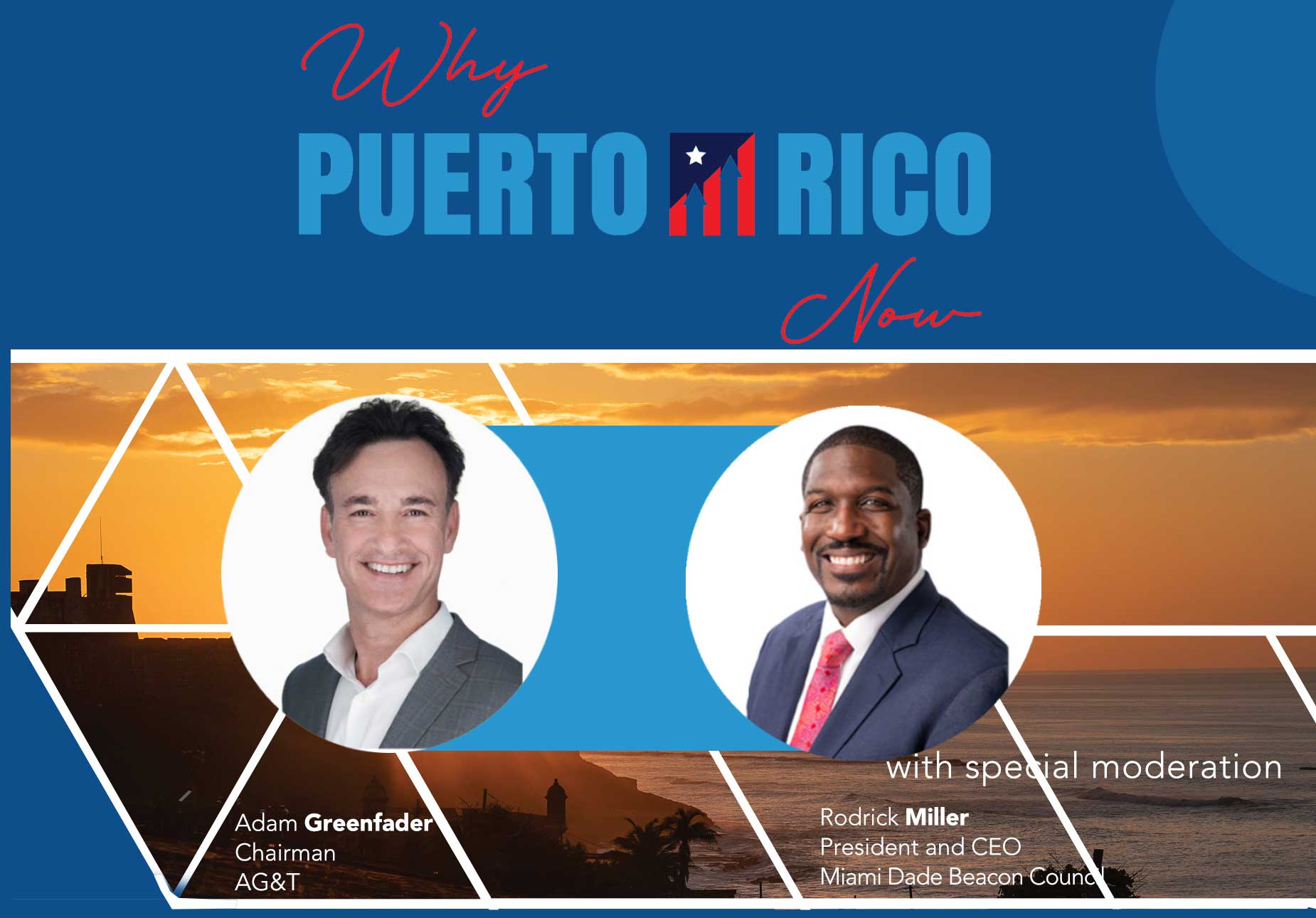
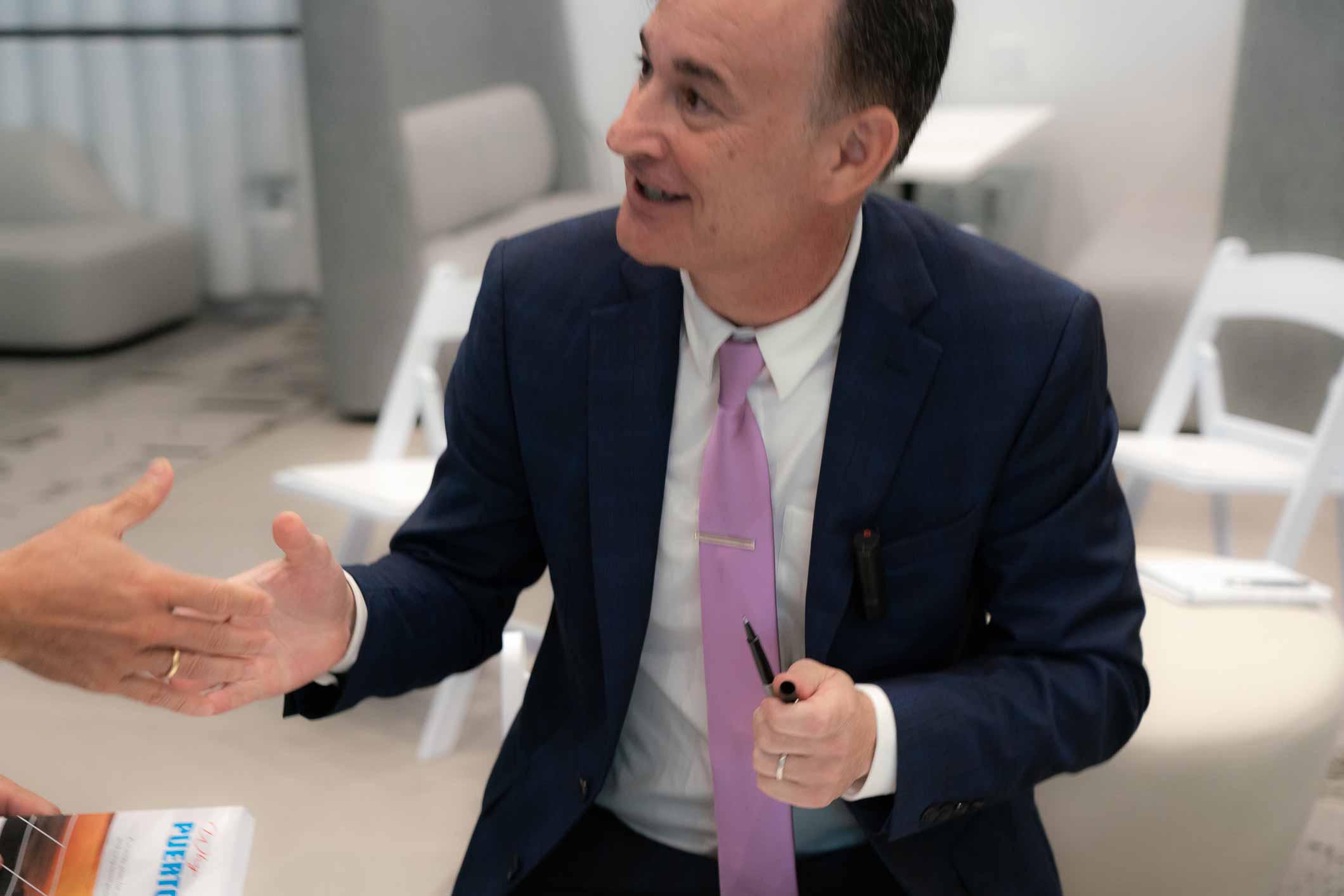
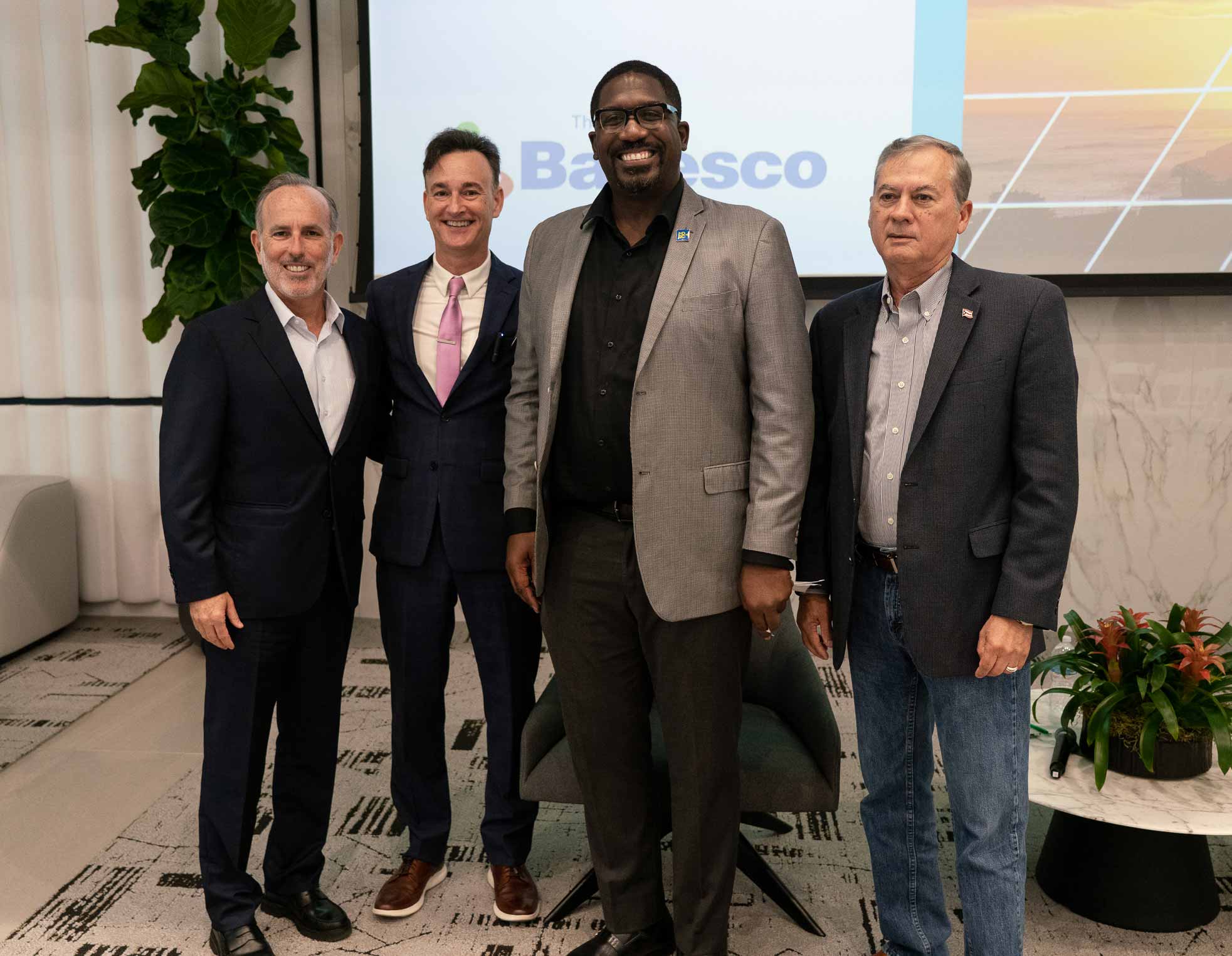
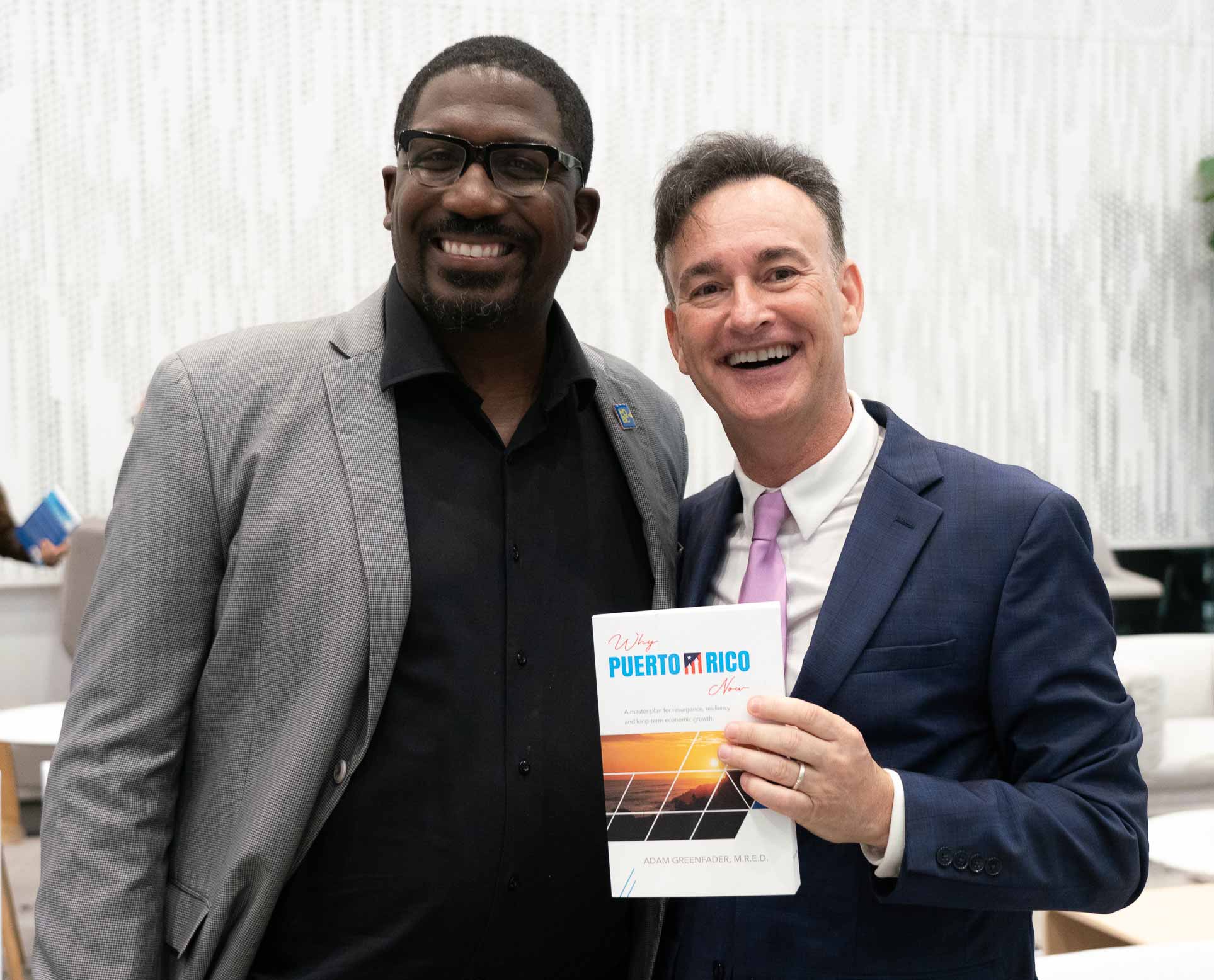
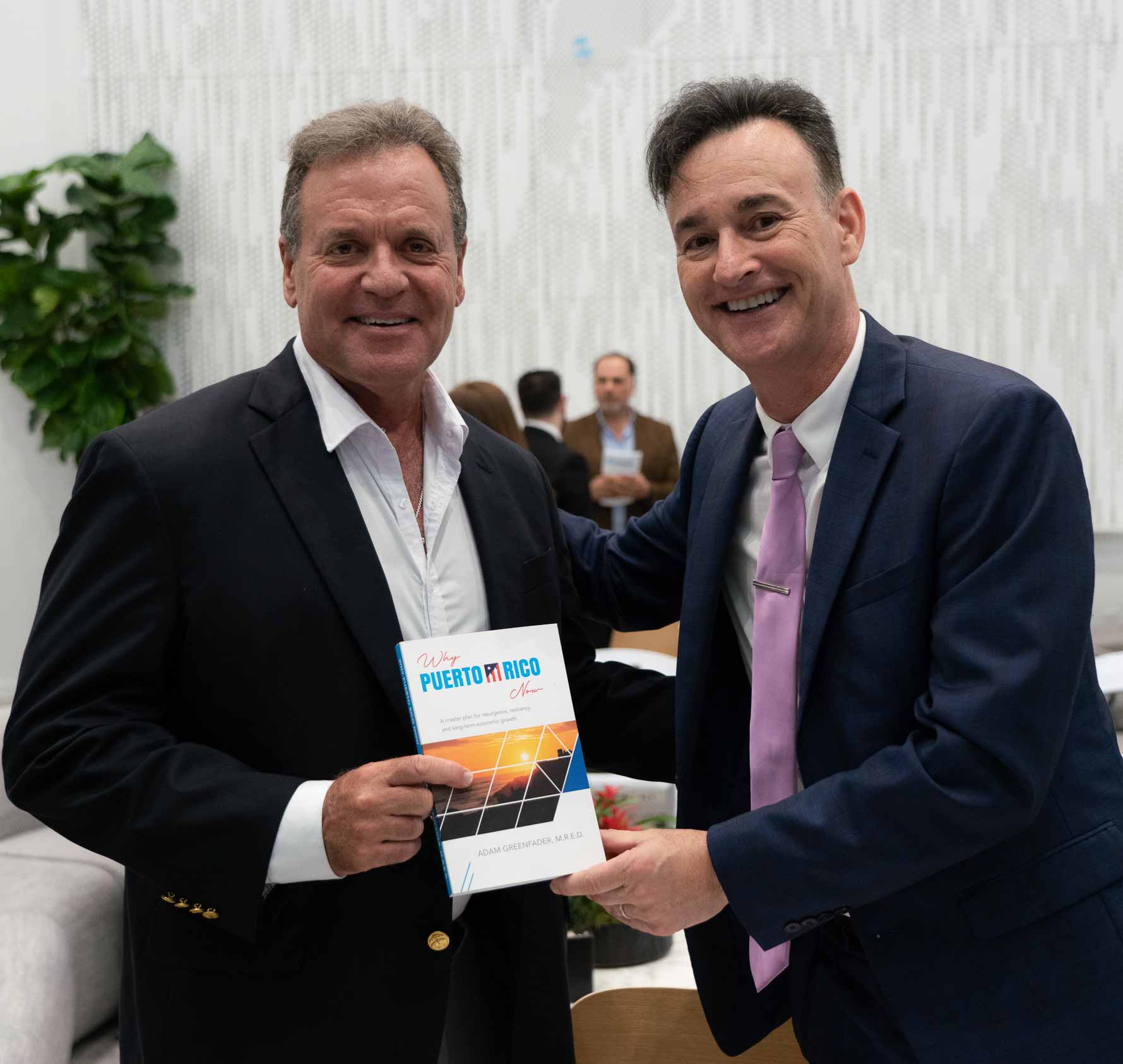
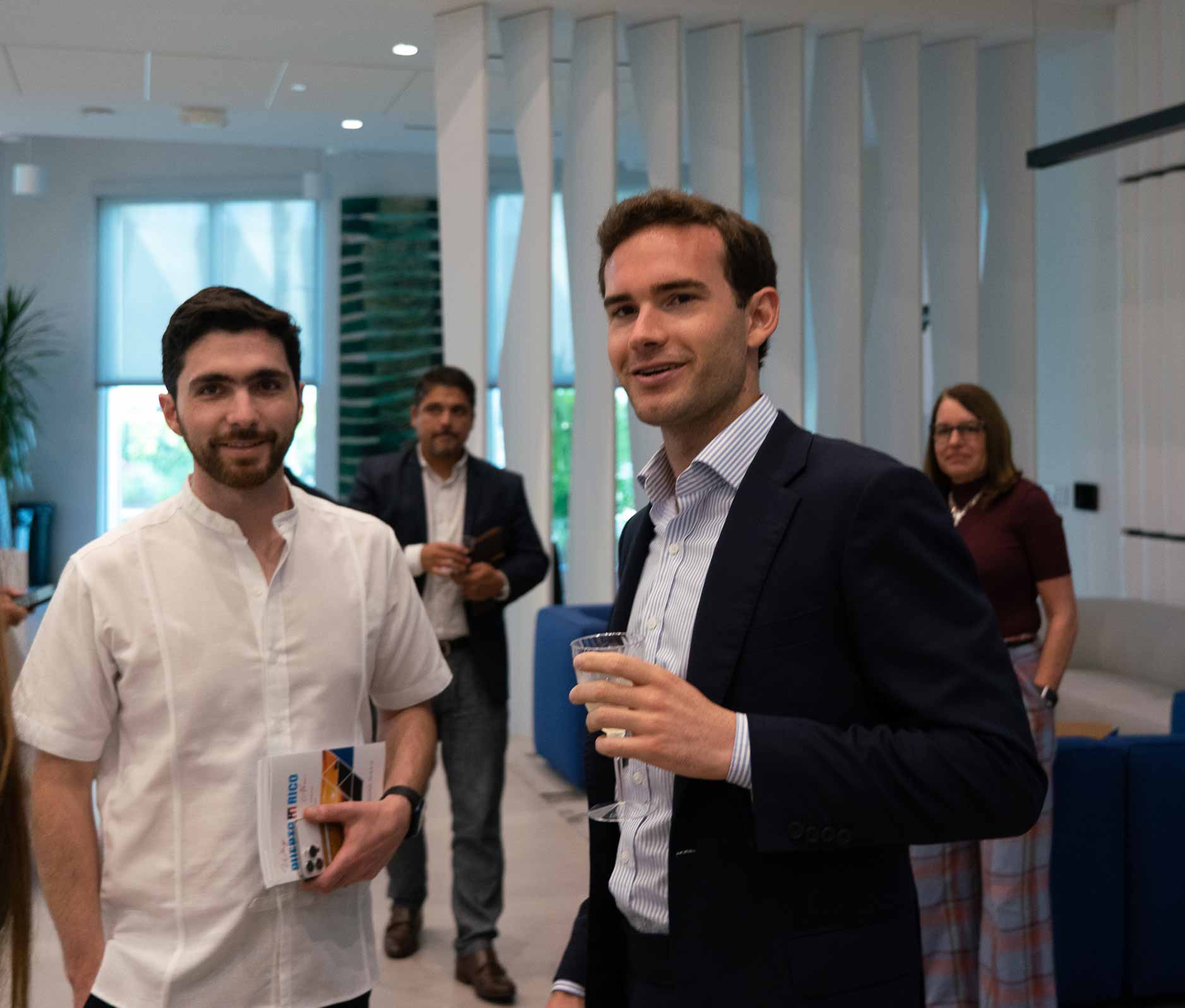
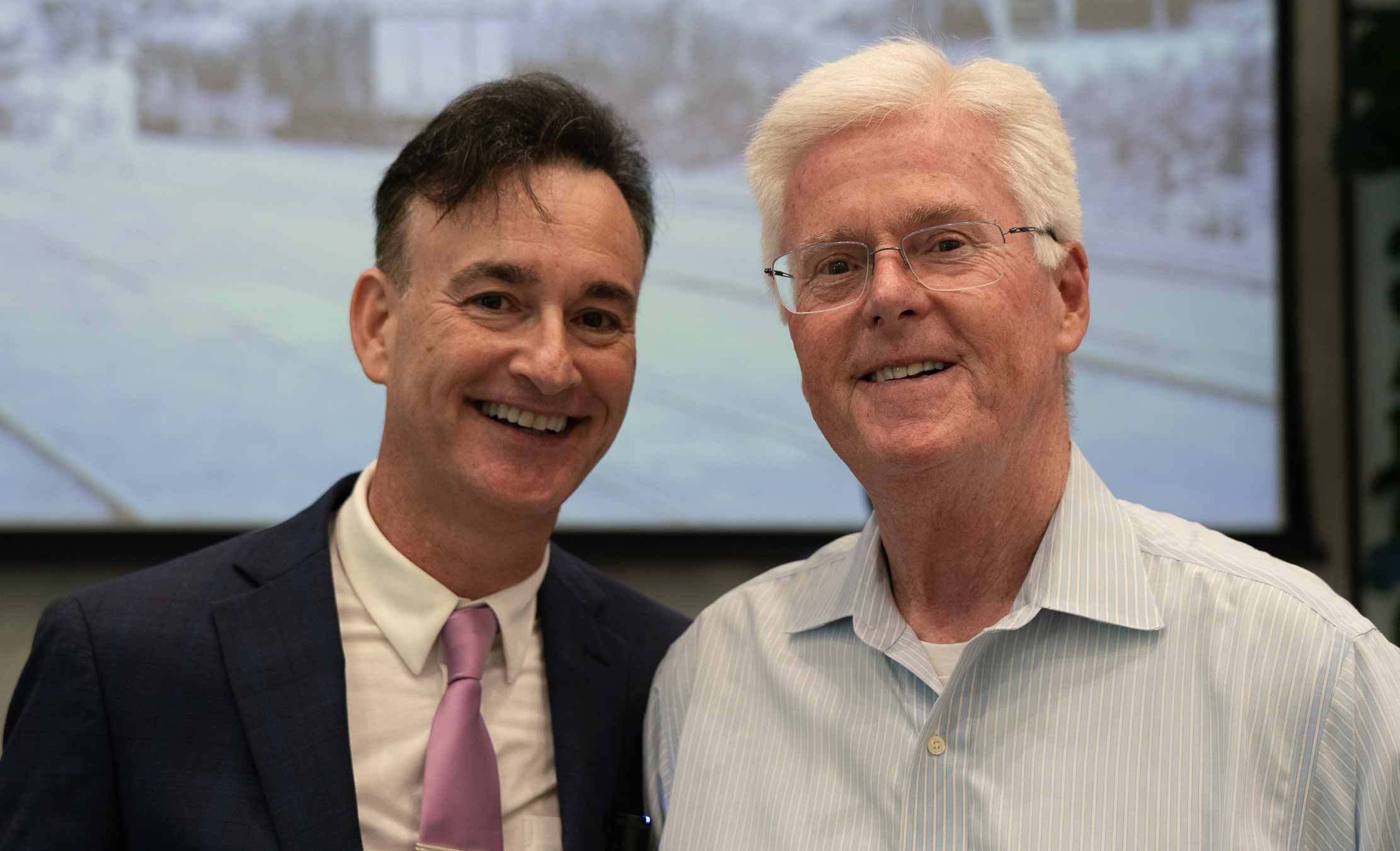
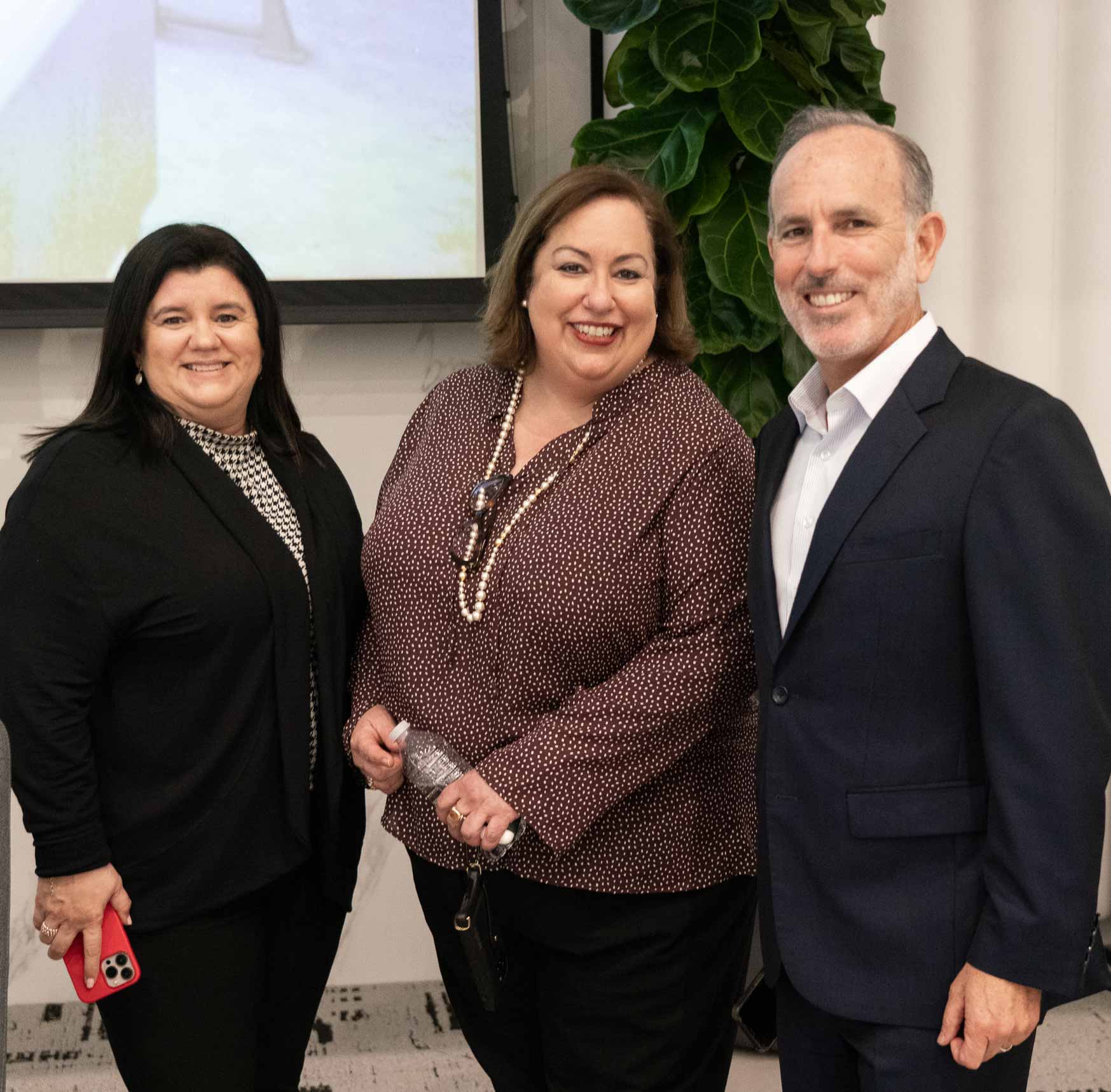
Miami, Florida — June 15, 2023 — Banesco USA welcomed business leaders, investors, developers, financial professionals, and policymakers to its new headquarters in Doral for an evening of conversation centered on Puerto Rico’s long-term economic future. The event featured Adam Greenfader, Chairman of AG&T, discussing his book, Why Puerto Rico Now: A Masterplan for Resurgence, Resiliency, and Long-Term Economic Growth.
More than a traditional book presentation, the event explored Puerto Rico’s transformation following years of fiscal restructuring, natural disasters, and unprecedented federal investment. The conversation examined how resilience, private capital, innovation, and public-private collaboration are reshaping the island’s economy and creating new opportunities across real estate, hospitality, infrastructure, technology, and finance.
The discussion was particularly meaningful as it coincided with the fifth anniversary of Hurricanes Irma and Maria—two events that fundamentally changed Puerto Rico’s approach to development and resilience. Rather than focusing solely on rebuilding what had been lost, the book argues for creating a stronger, more diversified, and more sustainable economic model capable of serving future generations.
Drawing upon more than twenty-five years of experience advising and participating in over $2 billion in residential, hospitality, commercial, and mixed-use development projects throughout Puerto Rico and the Caribbean, Greenfader shared lessons learned from working alongside developers, investors, lenders, government agencies, and international organizations during one of the island’s most transformative periods.
Throughout his career, Greenfader has championed initiatives designed to strengthen Puerto Rico’s economic ties with the U.S. mainland. Through investment conferences, educational forums, publications, and collaborations with organizations such as the Puerto Rico Builders Association, the Urban Land Institute, Bisnow, and numerous public and private institutions, AG&T has worked to position Puerto Rico as one of the Caribbean’s leading destinations for investment and long-term economic development.
The evening’s featured discussion paired Adam Greenfader with Rodrick T. Miller, President and CEO of the Miami-Dade Beacon Council, for a wide-ranging conversation about Puerto Rico’s evolving role within the broader U.S. and Caribbean economies.
Topics included:
Puerto Rico’s economic transformation following fiscal restructuring
Investment opportunities across hospitality, real estate, infrastructure, and technology
The growing importance of resilience and sustainable development
Innovation in financial services and fintech
Strengthening commercial relationships between Puerto Rico, Miami, and the Caribbean
The role of private investment in accelerating long-term economic growth
The discussion reflected a growing recognition that Puerto Rico’s future will be shaped not only by public investment but also by collaboration among financial institutions, developers, entrepreneurs, and business leaders committed to the island’s long-term prosperity.
By hosting the event, Banesco USA reinforced its commitment to fostering meaningful dialogue around economic development, entrepreneurship, and regional investment. Bringing together leaders from finance, construction, law, real estate, and professional services, the evening created an opportunity to exchange ideas and strengthen relationships between South Florida and Puerto Rico’s business communities.
The conversation also reflected a broader objective shared by both Banesco USA and AG&T: creating forums where thoughtful discussion can lead to new partnerships, informed investment decisions, and sustainable economic growth throughout Puerto Rico and the Caribbean.
Adam Greenfader is Chairman of AG&T, a Miami-based real estate development and capital advisory firm specializing in hospitality, residential, mixed-use, and island developments throughout Puerto Rico, the Caribbean, and Latin America. Over the past three decades, AG&T has participated in more than 55 development projects with an aggregate value exceeding $2 billion.
A frequent speaker on Caribbean real estate, hospitality investment, resilience, and economic development, Greenfader has organized numerous industry conferences and investment forums designed to strengthen connections between Caribbean opportunities and global capital. He previously served as Chair of the Urban Land Institute Caribbean Council and has worked closely with the Puerto Rico Builders Association and other regional organizations to advance sustainable development and long-term economic growth.
Why Puerto Rico Now: A Masterplan for Resurgence, Resiliency, and Long-Term Economic Growth is available in paperback, e-book, and audiobook formats, with the audiobook narrated by the author.
For more information about the book “Why Puerto Rico Now,” please visit www.whypuertoriconow.com. The book and Audio Book is available at amazon in paperback as well as in audio format, narrated by the author himself.

By David Eisen
February 23, 2023
Adam Greenfader: Tourism today is not going to look the same as it will in the future. And in my book, I talk a lot about how blockchain and other technologies are going to change the industry. And my hope is that the new technologies are going to help Puerto Rico create high paying jobs and new professions that today we can’t even imagine because they still don’t even exist.
Robin Trimingham: I know. Welcome to the Innovative Hotelier podcast by Hotels magazine with weekly thought provoking discussions with the world’s leading hotel and hospitality innovators. Welcome to the Innovative Hotelier Podcast brought to you by Hotels magazine. I’m your host, Robin Trimingham. Between hurricanes, Zika outbreaks and COVID. Puerto Rico has had its fair share of tourism industry challenges during the past few years, and yet post-COVID tourism seems to be doing better than most people would expect. The question everyone is asking is whether this current growth phase will be short lived or whether it is likely to continue. My guest today, Adam Greenfader, is the author of a new book entitled Why Puerto Rico Now: a Master Plan for Resurgence, Resiliency and Long Term Economic Growth. And he’s here today to chat with us regarding the opportunities and challenges of marketing and island tourism destination. Join me now for my conversation with Adam. For the last 15 years, Groupe GM has been a leader in the luxury cosmetic amenities industry. The group proposes a 360 solution for manufacturing to distribution, with over 40 international brands and its worldwide distribution network. Group GmbH offers different shapes and sizes of eco friendly products in hotels all over the world. Discover more on www.GroupeGM.com That’s Group with an E, Gm dot com. Welcome, Adam. Thank you so much for joining me today.
Adam Greenfader: Good morning. Great to be here.
Robin Trimingham: I think we’re going to launch right into this because Puerto Rico is a fascinating country and we’ve got lots to talk about here. But let’s set the stage for everybody just a little bit. So over the last 12 months, to what degree would you say that the situation in Puerto Rico for tourism is mirroring what’s going on in the rest of the Caribbean? And to what degree would you say that Puerto Rico is unique?
Adam Greenfader: Yeah, great question. I think that these last 12 months, obviously, to put this all in context, has really been revolutionary for the world, not just even the Caribbean. I mean, we’ve all come through this COVID pandemic. We were locked in our houses and then suddenly now we’re free. We’re able to travel, many of us, without masks. So the world is really just kind of woken up to what it wants and what’s important. And I think that travel and hospitality and tourism has really gone to the top of the list. I mean, we talk about experiences and experiential travel and really doing things that we have never done before. So the Caribbean region has seen just a big boom in the last 12 months. I mean, people are going to the islands, they’re staying longer. They’re really having different kind of experiences that they couldn’t have before, like just talking to people in a bar or sitting at a restaurant. I mean, things that we took for granted in the past today have really gone to the top of our list as being important. And I think the Caribbean region in general with its just beautiful climate, wonderful people, easy access, it’s safe.
Adam Greenfader: I mean, we don’t have major crime or wars in the Caribbean or diseases, so it’s just really a comfortable, easy place to get to. So we’ve seen just amazing 80 hours and occupancy rates in the Caribbean in the last 12 months. There’s just been more and more interest in people wanting to buy real estate in the Caribbean and kind of make it their second home or even their kind of leisure like location where they can combine travel and work. So the region really has seen this kind of new growth in French, they say EB Luis Mont, which means to blossom. And I think that really is what this is about. Now in the Caribbean, Puerto Rico is no exception. So Puerto Rico has seen numbers that have been off the charts in terms of occupancy and growth rep, class 124% higher than in the US mainland in 2019, in Puerto Rico and Puerto Rico also saw its occupancy rates hover around 78 to 80% in the San Juan metropolitan area. So all in all, I would say that the region has had a great 12 months and we’re expecting the next 12 months to be even better.
Robin Trimingham: It’s fantastic to hear of a destination that’s doing so well internationally when a lot of others are still struggling to recover in other jurisdictions. I understand, though, that locally Puerto Ricans are a little bit concerned that the spoils the profits of this great boom might be going exclusively to large hotels, and that the jobs that created are mainly entry level jobs. How do you suggest Puerto Rico leverage its tourism growth to build a more robust, resilient economy and ultimately middle class and middle class employment?
Adam Greenfader: Yeah, that’s a wonderful question. In fact, I wrote a book on that. It’s called Why Puerto Rico Now is really a master plan for long term growth, resurgence and resiliency for Puerto Rico. So I wanted to look at kind of the long term, how do we make Puerto Rico really to be able to be economically independent. So part of the book about a third of the book is looks at the history of Puerto Rico starting in 1898. Then I go to the present, but more importantly, I look to the future. So about 50% of the book is forward looking kind of that proverbial crystal ball. So part of the research for the book, I started to look at tourism in Puerto Rico, and I was shocked to find that Puerto Rico has one of the lowest tourism GDPs in the entire Caribbean. When I go to speak on tours and I go to different conferences, I ask people to guess what’s Puerto Rico’s GDP as a percentage of tourism. And I say, Well, most of the Caribbean is in the 30%, 40%. Some islands even have 50% of their total GDPs tourism base. And when I tell people that Puerto Rico’s GDP last year was 6.75% of the total GDP, people are shocked. They go, how can that be? How can an island in the Caribbean with beautiful beaches? Old San Juan is a historical landmark. It’s got a bioluminescent bay, it’s got a rainforest. How could Puerto Rico, with all these amazing natural and cultural amenities, have such a low GDP in tourism? And the reality is pretty simple. Puerto Rico’s economy still to this day, is the manufacturing hub of the world.
Adam Greenfader: Puerto Rico’s manufacturing represents 42% of the entire GDP of the island, in fact. Puerto Rico manufactures more pharmaceuticals than the next five US states combined. So Puerto Rico, since its beginning, has always been a manufacturing center, and tourism was always kind of like the next thing later down the road that Puerto Rico wanted to do. So what happened was, miraculously in the 1940s, fifties and sixties with this Operation Bootstrap that brought millions of dollars to build Puerto Rico’s manufacturing economy, really, tourism and hospitality was there just to serve the manufacturing base. So it really doesn’t have a lot of hotel rooms. When you look at the number per capita, it’s got a huge potential for growth. For example, Puerto Rico and the Dominican Republic in in the late 1990s had about 14,000 hotel kids To this day. Puerto Rico still hovering around 15,000 hotel keys whilst the Dominican Republic is close to 90,000 hotel keys. So Puerto Rico’s growth has been very small in terms of hospitality because it wasn’t one of the island’s priorities. However, that has changed. And Puerto Rico, after its last 15 years of economic crisis, Puerto Rico in the 2008 Great Recession never recovered. Puerto Rico stayed in this very, very dire economic depression where it had 50 quarters of negative economic growth, and that really devastated the island. It was a very challenging time for Puerto Rico. So long story short, Puerto Rico as of last year is officially come out of bankruptcy. The governor announced at one of our Urban Land Institute events here in Miami that Puerto Rico was out of bankruptcy. But Puerto Rico has set its sights on the low hanging fruit, which is tourism.
Adam Greenfader: And so Puerto Rico has created now a new tourism Incentive act. It’s act of 74, which provides really lucrative, robust tax incentives to build hotels and to build the industry up. So to answer your question, yes, Puerto Rico is looking forward to building this industry from a 6.75% GDP up to probably 15%, which will be in line with most of the Caribbean islands. And there are going to be growing pains. Obviously, those growing pains are going to me learning service, learning how to be a service economy. I mean, Puerto Rico is one of the best manufacturing economies, but really doesn’t have the same service mentality that other islands have. I think in the past people would come to Puerto Rico and complain about the service and the quality of the workers. It’s understandable because that’s not where the island was focused. So today is the island starts growing its tourism industry. Obviously, it’s going to need to be able to develop the infrastructure and the support systems. So as Puerto Rico starts to grow its tourism industry, it’s going to really need to develop great jobs through, I believe, new technologies. And we were talking about this before, tourism today is not going to look the same as it will in the future. And in my book, I talk a lot about how blockchain and other technologies are going to change the industry. And my hope is that new technologies are going to help Puerto Rico create high paying jobs and new professions that today we can’t even imagine because they still don’t even exist.
Robin Trimingham: Okay, So fascinating insights and a whole ton of information there. So let’s try and break this down just a little bit. You are telling us that Puerto Rico is actually in a very fortunate position because they have a much more diversified economy in some respects than a lot of other island jurisdictions. For a lot of other islands, tourism is it. And when you have a situation like COVID or a world recession, their economy just gets wiped out. Pretty much. So Puerto Rico is actually in growth mode for tourism. And I understand that you have an interesting problem as a result of all of this in that more people are working in tourism than ever before, and yet there is a clear labor shortage in the tourism business sector. How can that be if your island is coming out of a recession and tourism is in growth mode and people need jobs and there are jobs available?
Adam Greenfader: Yeah, breaking it down. I think that when you look at the Caribbean islands, the only other island that kind of comes to mind as being non tourism focused, it would be the Cayman Islands that’s obviously focused on finding.
Robin Trimingham: My homeland as well.
Adam Greenfader: And your homeland as well. So it’s the it’s not the rule, it’s more like the exception. And so having manufacturing has been kind of a recession, kind of proofing a bit for the island, especially during COVID, we saw in many of the Caribbean islands, I spend a lot of time working throughout the region, Saint Martin, for example, where we’ve been very active in the hotel sector, we saw thousands of people that had to leave the island just because all the hotels and the cruise ports closed down. It was very sad. Puerto Rico didn’t have that reason. Puerto Rico lost about half a million people from about 1999 to about 2000 and. One team because of its economic crisis. So most of the people left just because they couldn’t find jobs in all industries. So that half a million people that Puerto Rico lost. Thankfully, we’re starting to see for the first time last year, 2022 was the first year that Puerto Rico had a net migration of zero. So meaning that this flux of people leaving the island had stopped. More people were coming in and it was starting to balance out.
Adam Greenfader: We expect Puerto Rico, as the economy hits a 2 to 3% GDP, that the economy, like it has in the past, will grow its population. Part of my book, when I was uncovering kind of the history of the island’s economy, I was fascinated to find that Puerto Rico has had these huge, massive migrations of people on two different occasions from the 1960s to the 1970s, Puerto Rico lost about 600,000 people. In fact, it was called the greatest air migration in the history of the United States. People were literally paid to leave the island because there were no jobs. So Puerto Ricans, unlike most people in the Caribbean, are US citizens with US passports and can travel freely. And so that travel back and forth from Puerto Rico to the mainland. Us has a lot of fluidity and it happens regularly over the last it’s happened regularly over the last 200 years. So I do believe that we’re going to find a lot of people coming back to the island as the economy gets better and that the jobs are available.
Robin Trimingham: That’s a very interesting situation to be dealing with. I understand that part of growing tourism, of course, would be renovating hotel products that were damaged in hurricanes, building new hotels wherever you can. But I also think maybe that traditionally there has been a bit of a problem raising financing for construction. Talk to me about the Opportunity Zone program and how that’s working.
Adam Greenfader: Sure. So to understand the financing of Puerto Rico, you really have to go back to the 1990s when those Section 936 was implemented, Section 936, to make it really simple. It was a manufacturing tax incentive that really created the pharmaceutical industry in Puerto Rico. And there was a small clause in that incentive that said that banks had to either retain some of the funds and profits from that or if they sent them back to their mainland branches, they would have to pay a tollgate tax of 10%. So in most cases, the banks retained millions and millions of dollars in Puerto Rico that went into the economy, that led to the massive growth in the financial sector. Puerto Rico when I arrived, which was in 1993, had 12 financial institutions, 12 banks from the US, Spain, Canada and other locations were very active in Puerto Rico when 936 expired. That was created a huge sucking sound of financial institutions, and Puerto Rico went into its recession and today only has three and one half banks on the island. And I say a half because the other banks aren’t in the construction or hotel lending. So really with three financial institutions from 12 to 3. So there’s been a huge and there still is today a huge need for weather and construction or manufacturing or new business. So Puerto Rico today has gone from 12 banks to three, and it’s desperately seeking money and funds for new industries, new businesses and hospitality specifically.
Robin Trimingham: I have a follow up question for you then. To what extent then does being part of the US help your economy and raising finances, and to what extent does it hinder you, particularly when it comes to these tourism products?
Adam Greenfader: That’s a great question. Puerto Rico is part of the United States in almost every facet. It’s US banks, US courts, US military, US passport, US jurisdictions for regulatory agencies. The one area where Puerto Rico is considered foreign is in taxes. So Puerto Rico is considered a foreign tax jurisdiction. So the advantages and the disadvantages to this kind of hybrid system, really interesting from a let’s do business in Puerto Rico respect its kind of works like the United States and feels like the United States, obviously with a culture and Spanish and a lot of fun other things. But from a tax perspective you’re able to take advantage of tax incentives that don’t exist on the mainland. In the United States, for example, x 74, which I mentioned previously, is the Tourism Development Act, which provides up to 40% of your money back of your total project cost. If you’re going to do a hotel or any kind of tourism related business. And that’s a huge amount of money. I mean, that’s if you invest $10 Million in your project, you’re going to get $4 million of that back of which you can get 10% before you even start construction, which can be part of your equity stack. So without getting too complicated. Puerto Rico has some really good advantages of being part of the United States, and it’s got some really good advantages from having a tax incentive, a tax code that allows some flexibility that you can’t find in North America.
Robin Trimingham: I see. So let me change the conversation up a little bit. I understand that just like all countries, governments come and go and one government in power can have one idea about tourism and then another party comes to power and they have a completely different idea. So in all of this for Puerto Rico, how important do you feel it is that tourism development initiatives be research driven? And why do you say this?
Adam Greenfader: Anyone like yourself that have seen the history of Puerto Rico over the last 30, 40 years, it’s fascinating to see how Puerto Rico has had more logos, tags and themes in the last 30 years. And a really smart individual who runs Discover Puerto Rico, which is a public private partnership called Brad Dean. He’s the CEO currently said it’s like, imagine if Coca Cola would change its flavor every four years. And essentially Puerto Rico, the way it ran its tourism was that it basically with every new government, it decided we’re going to have a new tag phrase, a new line. We’re going to market Puerto Rico differently to different people. We’re going to destroy all of the other work that was done and just kind of reinvent ourselves every four years. The budgets were never very large because, as I mentioned, Puerto Rico really didn’t spend a lot of time on tourism. And it was just kind of like this thing that was just being reinvented every time Puerto Rico three years ago decided that it needed to change that, and it created a public private partnership with an entity called Discover Puerto Rico. Discover Puerto Rico is a DMO, a destination marketing organization. And the DMO has really been instrumental in kind of bringing some consistency to Puerto Rico’s tourism. It’s based its marketing on heavy research. The research has found that there’s markets that Puerto Rico hadn’t even looked at that were really active on the island, specifically the Midwest, the Midwest had never been seen as an island that was good for Puerto Rico. And part of this market research and analysis done by Discover Puerto Rico uncovered this huge opportunity in 2022. There have been direct flights now that have been opened from them, so we can see how research and really detailed analysis can uncover opportunities and create growth in an industry. Whereas before it wasn’t even thought it was important.
Robin Trimingham: Did you know that offering top cosmetic brands is a delight for your guests? For the last 50 years, Groupe GM has been a leader in the luxury amenity industry. The group proposes a 360 solution for manufacturing to distribution on cosmetic amenities and dry accessories. With over 40 international brands such as Greenland nukes, Italia Cologne. The group offers different shapes and sizes of eco friendly products in hotels all over the world. This is possible thanks to its worldwide distribution network. Thanks to their care about the Earth programme, you can offer your guests top cosmetic products with a reduced environmental impact. Discover more on www.groupegm.com. That’s group with an “E” GM dot com. So with all of these changes, to what degree has Puerto Rico struggled from the tourist perspective to establish an identity where when you say Puerto Rico to our tourists, they go, Oh, I know what you mean.
Adam Greenfader: Yeah. So in my book Discover Puerto Rico, that was one of the questions that had always come up. And what’s fascinating is I chair the Urban Land Institute, usually Caribbean Council, and I’ve been doing that for a few years, and we’re based here in South Florida, and we always provide a lot of marketing to the region in general. And what’s funny is initially when I used to say Puerto Rico to people, they would go Costa Rica. So we always get confusion on Puerto Rico, Costa Rica. And then when I would say Puerto Rico to people, I would get things like, Oh, West Side Story, yeah, I remember Puerto Rico. And so I in my book actually talk about the West Side Story syndrome, where most people’s images of Puerto Rico are kind of vague if they can even figure out it’s part of the United States. But then basically the only image they have is things from the 1950s or they were call some Miss Universe. So there’s been a lot of confusion because Puerto Rico tends to brand itself as both part of the US and not part of the US on what it is and where it comes from. They say there’s a crisis in every opportunity, and in 2017, Puerto Rico was devastated with two category five hurricanes.
Adam Greenfader: Yeah, that for anybody who’s lived in the Caribbean, a Category three is devastating enough. A Category five just don’t eat. I can’t even imagine what that’s like. But two back to back hurricanes, it destroyed the island. And in every crisis, there is an opportunity with the press and the media that came to Puerto Rico during that period of time and thereafter, Americans, North American citizens, started to hear so much about the island that the when polls were taken before and after on what is Puerto Rico miraculously North American population. A year after hurricanes Irma and Maria, 74% of Americans at least were able to say Puerto Rico is part of the United States. Puerto Ricans are American. And so I think that the island has now taken, thanks to many people, has taken kind of a new positioning. At least North America realizes that the 3.5 million people that live on that land and that island are American citizens. And that’s been huge. That’s really been a big kind of feather in the cap of the island throughout these climatic crisis.
Robin Trimingham: That’s very interesting. And just for anybody who’s watching this, a Category five hurricane, it sounds like a freight train roaring through your backyard. I’ve lived through one of those. It’s quite the experience where you do have tourism in Puerto Rico at the moment. To what extent is there friction between the industry stakeholders and local communities, and to how are you working to overcome this?
Adam Greenfader: The tourists that come to the island have really played an important role in Puerto Rico’s history. Puerto Rico has about 5 million people that live on the US mainland, and with those 5 million people that live on this US mainland, they have extended friends and family. So a lot of the tourists that come to Puerto Rico know the island already. Many of them are coming for work, whether it’s manufacturing, finance, other industries, and many of them are also coming for holidays to see old family members to go visit a place that they had heard about as kids. So the type of tourists that comes to Puerto Rico to begin with, May has some connection with the island, which is very unique. Puerto Rico’s economy, from a tourist perspective, is today mainly centered around the San Juan Condado or San Juan area. So about 60%, 70% of tourism all happens in the San Juan metropolitan area. The island today is looking to kind of expand its tourism offering to the rest of the island, because I think that when people really go to Puerto Rico, some of the first things they hear is, wow. Can’t believe how beautiful the airport is. The new renovated, beautiful airport. The roads are in great condition. My cell phone works. I can go to a Walgreens and get my prescription.
Adam Greenfader: My ATM card works in a bank machine. So the infrastructure is there from a social perspective. As I mentioned previously, Puerto Rico has gone through this really tough economic 15 year period and it’s starting to recover. So part of that recovering process is about kind of figuring out how things are going to work going forward. Puerto Rico today pays the highest sales tax anywhere in the United States at 11.5%. So the people that have been living on the island, the locals currently have a tax system that needs to be overhauled because they’re paying to try to get out of this debt. So when workers come to the island, obviously that is a very favorable thing for the island from an economic perspective. But then there’s always consequences of people coming to your island. How do you deal with people who have never come to Puerto Rico before? I remember during the COVID pandemic and just right after it, airlines prices all throughout the Caribbean and the US dropped dramatically. And so we started to see a whole new breed of tourists who couldn’t afford to fly before coming to Puerto Rico, coming to Miami, coming to the rest of the Caribbean. And initially, I think for the people in the Caribbean, not just Puerto Rico, it was kind of like a surprise, like, oh, we’re getting tourists again.
Adam Greenfader: These are not the kind of tourists we’ve gotten in the past. How do we deal with this? And I’ve been really surprised by the positive expectation. The island’s in Puerto Rico to be able to say, hey, we’re okay with having people come visit our island, but we kind of have to set a kind of a framework for how we look at that. And what I’ve seen in Puerto Rico is that Puerto Rico is adapting to tourism. Tourism is just a small percentage of the economy, and it’s learning through growing pains to kind of figure things out. But it’s really remarkable. I always make a joke that 20 years ago for me to get a glass of water at a restaurant and call the waiter could take 20 minutes. And today when you go to a restaurant, you don’t even have to do anything. You just the waiter looks down, sees it, your glass of water is empty and will pour the glass of water. That might seem like a small thing, but from a hospitality perspective, it’s really a big thing. And I’m very hopeful that the island is going to grow into a wonderful service provider for tourism and hospitality.
Robin Trimingham: Ah, you make an interesting point because since COVID, a lot of people all over the world, North America in particular, have had to entirely change their livelihood. They’ve had to accept that the what they did is no longer a viable possibility. They’re having to retrain, learn new skills, be open to different kinds of employment. So I think there’s a lot of people who can empathize with the situation in Puerto Rico. Earlier in our conversation, you mentioned the rainforest, which I understand is absolutely beautiful. To what extent do you think that Puerto Rico’s natural wonders are being properly and sufficiently marketed, or is there a concern that the natural environment is basically just being trampled on by a whole pile of new tourists?
Adam Greenfader: Yeah, I have a chapter in my book called Thinking Beyond the Shore and My Profession. I’m a real estate developer. I’ve focused, spent a lot of time building affordable housing, hospitality. So I’ve always been very involved in what’s the environment look like, how do we deal with the environment? And I think that the Caribbean islands and Puerto Rico is no exception. We are on the front line of the climate change. I mean, we’re literally at sea level. Sea level is rising. I mean, we’ve even heard of islands that are disappearing, completely disappearing. So we have to, as a region, really be concerned about how we’re going to protect these natural resources, not just for hospitality and tourism, but for our own existence. I mean, this is an existential threat. And at the end of the day, I think it’s the private sector that really has to stand up and take more responsibility for the environment. And in my book, Why Puerto Rico? Now, I specifically talk about building beyond the shore and taking responsibility beyond the shore. We tend to say that the island’s kind of development space ends at the waterline and that we can build at the waterline 100 meters back. But my thinking has been with the new technology advancements is that we really have to go into the waterline.
Adam Greenfader: We really have to start to analyze the reefs. We really have to start to look at mangroves. We really have to start to look at how we can generate energy from the water and be able to take responsibility for that. Today, there’s just a plethora of companies that are revolutionizing that space, whether it’s aquatic architecture and engineering or whether it’s energy creation or whether it’s reef building. But really the future of the Caribbean region is going to be based on how those assets are protected and not just for the assets sake alone, but what the protection that they can provide the islands. And so there’s been a lot of new technologies. I think what we’ve seen during COVID with blockchain, just simple stuff, reservations on accessing when people can go to. Certain areas like the rain forest by reservation. I think that’s made some great changes because it allows a certain amount of people to go at certain times and then they can get information while they’re there. So I would say that in the last parts of my book, I really dedicated to kind of this out-of-the-box thinking about how we can take a more innovative approach really to the island survival.
Robin Trimingham: It’s very encouraging to hear you talk about all these things because you’re right, the world is going through a phase of radical transition and we all need to be aware about what’s going on and planning accordingly. We’ve got a couple of minutes left here. Based on all of your experiences and insights from writing your book, what do you feel is the mistake that most island nations are making when it comes to marketing tourism?
Adam Greenfader: Certain islands and locations in the Caribbean do an amazing job, and I’ll start with that first and then I’ll get to the mistakes. For example, Costa Rica and its blue zones. Anybody who has heard of a blue zone, which is a place where people live way beyond their years and Costa Rica has really developed this kind of mystique about its environment and lifespan, and they’ve just done a great job of focusing on that. I think if you look at an island like Saint Martin with 500 restaurants on both the French side and the Dutch side, I mean, 500 restaurants on a population, 15,000 people, it’s just like, how can you put that much food in a single place? And so they’ve really kind of figured out this unique branding of kind of being a fun place to go hang out at night on the Dutch side and a great place to eat on the French side. And they make it all work out together. Obviously all inclusive. You can think of the Dominican Republic where you go and you can spend a week where your bracelet and you don’t have to do anything else and you’re being hosted by people that speak every single language imaginable.
Adam Greenfader: So certain islands have done a great job of kind of figuring out who they are. Cayman’s for finance, you want to go do finance. On the other hand, when I look at kind of general marketing in the Caribbean, I tend to think that islands that solely kind of market we have a beautiful beach tends to be a little limiting because tourists today are looking for the new experience, the post COVID. Tourism is really about finding yourself in this new environment, and I would say that it’s kind of contingent on on each island to kind of figure out what makes them special. I was having a conversation with the director of Tourism of Dominica, which is just an amazing, rugged mountain with these beautiful hills. And she was telling me, Adam, I think when you come see these islands and you see the mountains, you know, you’re in Dominica. And so I would say ultimately that’s what it’s about. It’s about kind of branding yourself by your unique selling proposition, what makes your island unique, and try not to just be another beach where people go and hang out.
Robin Trimingham: Yeah, I couldn’t agree with you more because you’re right. I mean, we all know now that baking yourself in the sun is not the wisest idea, and weather is somewhat obscure. We don’t always have sunshine and blue skies when we’re supposed to, and there’s a lot more that islands have to offer. Just a closing thought for you. What is the number one piece of advice that you can offer to any island tourist destination?
Adam Greenfader: The Caribbean today is dealing with an existential threat of climate change, and the faster that the region can start to deal with this, the better the region is going to be at the end of the day. And if I could wave the proverbial magic wand and say, what would I like to see the region? First of all, I’d like more collaboration between the islands. The islands have to start working as a team. There’s 300 plus islands in the Caribbean, but they have to start working as a team. When a hurricane hits the southern part of the Caribbean, tourism drops all throughout the region. When there’s a crisis in the northern part of the Caribbean, tourism drops all throughout the region. So we really have to start thinking as a team when it comes to protecting the Caribbean insurance or Parametric Insurance, which covers the region, is probably going to be one of the best investments that can happen in that region. And I think that the islands have to start thinking how do we protect each other and ourselves from climate change? Because ultimately, when a disaster happens, the answer cannot be simply to have people leave your island or rely on a private insurance agency or a.
Robin Trimingham: Foreign aid.
Adam Greenfader: A foreign aid. It just can’t be that there has to be better solutions. So obviously we want to harden our assets. We want to make our hotels be able to do more than just service the hospitality industry when things are good. But what happens to hotels when there’s a crisis? What service do they provide to insurance agencies, to relief workers, to people that have been blown out of their homes? So I think that we have to start thinking about the tourism industry both in when times are. Good. But also be thinking of the tourism industry and the hospitality specifically when times are bad. So my thought is basically that we have to start working together as a region and we have to start thinking about how to protect each other and ourselves using the tools that are currently available.
Robin Trimingham: Thank you, Adam. You’ve lots of great ideas and advice, and I’m sure our global listeners are really going to appreciate this conversation. You’ve been listening to the Innovative Hotel podcast. Join us again soon for more information and insights, specifically for the hotel and hospitality industry. You’ve been listening to the Innovative Hoteliers podcast by Hotels Magazine. Join us again soon for more conversations with hospitality industry thought leaders.

Every crisis creates an opportunity to rethink the future.
When the COVID-19 pandemic disrupted global supply chains, it exposed the risks of relying on overseas manufacturing for products critical to national security and public health. At the same time, it highlighted Puerto Rico’s unique strategic advantages. With more than seventy years of manufacturing expertise—particularly in pharmaceuticals, medical devices, biotechnology, and advanced manufacturing—the island was uniquely positioned to play a larger role in strengthening America’s domestic supply chain.
That realization became one of the central themes explored in my book, Why Puerto Rico Now: A Masterplan for Resurgence, Resiliency, and Long-Term Economic Growth. While unprecedented federal reconstruction funding and competitive tax incentives have helped accelerate Puerto Rico’s recovery, long-term prosperity cannot depend solely on disaster relief or temporary incentives. Sustainable economic growth requires a diversified economy built upon innovation, manufacturing, entrepreneurship, technology, and private investment.
As Puerto Rico enters a new era of investment, manufacturing represents far more than an economic sector—it is a foundation for resilience. Combined with growth in hospitality, technology, renewable energy, life sciences, and infrastructure, manufacturing has the potential to help create a more diversified and self-sustaining economy capable of generating prosperity for generations to come.

A forward-looking vision for Puerto Rico’s economic future through resilience, innovation, and sustainable development.
MIAMI, FLORIDA — November 2, 2022 — Real estate developer, author, and Caribbean thought leader Adam Greenfader announces the release of his new book, Why Puerto Rico Now: A Masterplan for Resurgence, Resiliency, and Long-Term Economic Growth—a comprehensive vision for building a stronger, more resilient, and globally competitive Puerto Rico.
Rather than focusing solely on recovery from past crises, the book presents a long-term strategy for transforming Puerto Rico into one of the Caribbean’s leading centers for innovation, hospitality, manufacturing, renewable energy, entrepreneurship, and sustainable economic development.
The inspiration for the book is deeply personal.
Having lived in Puerto Rico for twenty-five years, Greenfader experienced firsthand the island’s extraordinary resilience through economic recession, hurricanes, earthquakes, and the COVID-19 pandemic. The fifth anniversary of Hurricanes Irma and Maria served as a reminder that rebuilding cannot simply restore what once existed—it must create a stronger foundation for future generations.
“The question is no longer how Puerto Rico recovers,” says Greenfader. “The question is how Puerto Rico can emerge as one of the most innovative, resilient, and economically competitive jurisdictions in the Americas.”
Drawing upon more than three decades of experience and participation in over $2 billion of residential, hospitality, and mixed-use development projects throughout Puerto Rico and the Caribbean, Greenfader explores the opportunities created by federal reconstruction investment, strategic tax incentives, advanced manufacturing, technology, hospitality, renewable energy, and the island’s unique position as a bridge between the United States, Latin America, and the Caribbean.
The book argues that while federal recovery funding and investment incentives have accelerated Puerto Rico’s economic momentum, lasting prosperity will depend upon creating a diversified economy driven by private investment, entrepreneurship, innovation, education, and sustainable development.
Throughout its chapters, Why Puerto Rico Now presents practical ideas alongside bold long-term concepts designed to stimulate discussion among business leaders, policymakers, developers, entrepreneurs, investors, students, and members of the Puerto Rican diaspora.
The book is intended not only for the more than three million people who call Puerto Rico home, but also for the millions of Puerto Ricans living throughout the continental United States who remain deeply connected to the island’s future. It also serves as a resource for investors, entrepreneurs, developers, and business leaders exploring opportunities within one of the Caribbean’s most dynamic economies.
Adam Greenfader officially launched Why Puerto Rico Now during the Puerto Rico Builders Association’s Annual Convention in San Juan, bringing together leaders from government, finance, construction, hospitality, and real estate to discuss the island’s next chapter of economic growth.
Today, the book continues to contribute to conversations surrounding Puerto Rico’s future through conferences, universities, investment forums, industry organizations, and thought leadership initiatives throughout the Caribbean and the mainland United States.
Adam Greenfader is Chairman of AG&T, a Miami-based real estate development and capital advisory firm specializing in hospitality, residential, mixed-use, and island developments throughout Puerto Rico, the Caribbean, and Latin America. Founded in 1998, AG&T has participated in more than 55 development projects with an aggregate value exceeding $2 billion.
A recognized speaker on Caribbean real estate, hospitality investment, resilience, and economic development, Greenfader has organized numerous investment conferences and educational forums designed to strengthen economic ties between Puerto Rico, the Caribbean, and the U.S. mainland. He previously served as Chair of the Urban Land Institute Caribbean Council and has been an active member of the Puerto Rico Builders Association since 1993.
Greenfader earned a Master of Real Estate Development degree from the University of Southern California, a Bachelor of Arts in Government from Clark University, and completed studies at the Université de la Sorbonne in Paris. He is also an accomplished photographer, author, and mentor to graduate students in the University of Miami Master of Real Estate Development + Urbanism program.
His work continues to focus on resilient communities, regenerative hospitality, sustainable development, and creating long-term economic opportunities throughout the Caribbean.
For more information about Why Puerto Rico Now, visit www.whypuertoriconow.com.

Discover Puerto Rico Tourism video (2:45 s) highlights Puerto Rico’s unique selling proposition for tourism in 2022 and beyond. Interviews with Adam Greenfader of AG&T and Federico Stubbe of PRISA Group discuss the island’s rich culture, robust infrastructure, great airlift, and other benefits such as Federal tax incentives. Watch the video to learn how you can be part of Puerto Rico’s booming hospitality and tourism industry.
Long celebrated for its vibrant culture, stunning natural beauty, and strategic location in the heart of the Caribbean, the island has evolved into something even more compelling: a world-class destination for tourism, hospitality investment, and economic development.
To highlight this transformation, Discover Puerto Rico, the island’s official Destination Marketing Organization (DMO), produced a short video featuring industry leaders discussing the factors driving Puerto Rico’s remarkable growth. Joining the conversation were Adam Greenfader, Chairman of AG&T, and Federico Stubbe, President of PRISA Group, two long-time advocates for Puerto Rico’s hospitality and real estate industries.
The discussion explores why Puerto Rico is uniquely positioned to attract both visitors and investors.
Unlike any other Caribbean destination, Puerto Rico combines the lifestyle and natural beauty of the Caribbean with the legal protections, financial systems, and business certainty of a U.S. jurisdiction. This unique combination has helped the island attract international hotel brands, institutional investors, entrepreneurs, manufacturers, technology companies, and a growing community of business leaders seeking long-term opportunities.
Puerto Rico’s investment story extends far beyond its beaches.
The island offers one of the most comprehensive business ecosystems in the Caribbean, supported by:
A robust U.S. legal and financial framework.
A highly educated and bilingual workforce.
Modern highways, ports, airports, and telecommunications infrastructure.
More than 20 direct destinations served by excellent airlift to the continental United States, Latin America, and Europe.
Competitive tax incentives supporting manufacturing, export services, hospitality, and new business investment.
A mature banking system and access to U.S. capital markets.
Combined with its strategic geographic location, these advantages position Puerto Rico as a natural gateway between North America, Latin America, and the Caribbean.
Tourism continues to be one of Puerto Rico’s most important economic engines.
Record visitor arrivals, expanding air service, increasing hotel occupancy, new luxury resorts, branded residences, and significant private investment have reinforced the island’s position as one of the Caribbean’s fastest-growing hospitality markets.
Yet Puerto Rico’s appeal extends well beyond leisure travel.
Visitors increasingly come to experience the island’s rich culinary scene, music, history, outdoor recreation, wellness experiences, cultural festivals, and entrepreneurial energy. This diversification has helped create a more resilient tourism economy capable of supporting long-term investment.
One of Puerto Rico’s greatest strengths has been the collaboration between the public and private sectors.
Created in 2017, Discover Puerto Rico has played an instrumental role in repositioning the island within the global tourism marketplace through innovative marketing, strategic partnerships, and destination branding. By working closely with government agencies, airlines, hotel operators, tourism stakeholders, and the private sector, the organization has helped elevate Puerto Rico’s international visibility while supporting record tourism performance.
Developers such as PRISA Group have also contributed significantly to this transformation. For more than three decades, PRISA has developed sustainable residential communities and luxury hospitality projects throughout Puerto Rico, demonstrating how thoughtful planning and long-term investment can strengthen both communities and the visitor experience.
For more than three decades, AG&T has had the privilege of participating in Puerto Rico’s evolution.
Our work has extended beyond real estate advisory services to include market research, investment strategy, hospitality consulting, educational programming, and thought leadership designed to strengthen Puerto Rico’s connections with investors, developers, lenders, and institutional capital throughout the United States and internationally.
We believe Puerto Rico’s greatest opportunity lies not simply in recovering from past challenges, but in building a more resilient, diversified, and globally competitive economy.
Hospitality plays a central role in that vision.
It creates jobs, attracts international investment, supports local businesses, enhances infrastructure, and showcases Puerto Rico’s extraordinary culture to millions of visitors each year.
The future of Puerto Rico will be built through collaboration among government, private enterprise, developers, investors, entrepreneurs, and communities working toward a common goal.
This conversation with Discover Puerto Rico and PRISA Group reflects that shared commitment—and our collective belief that Puerto Rico’s best chapter is still ahead.
We invite you to watch the video and discover why so many investors, developers, and hospitality leaders believe that Puerto Rico’s time is now.