The Puerto Rico Symposium in Miami With Historic Announcement


See All Photos Here

See Agenda and Sponsors


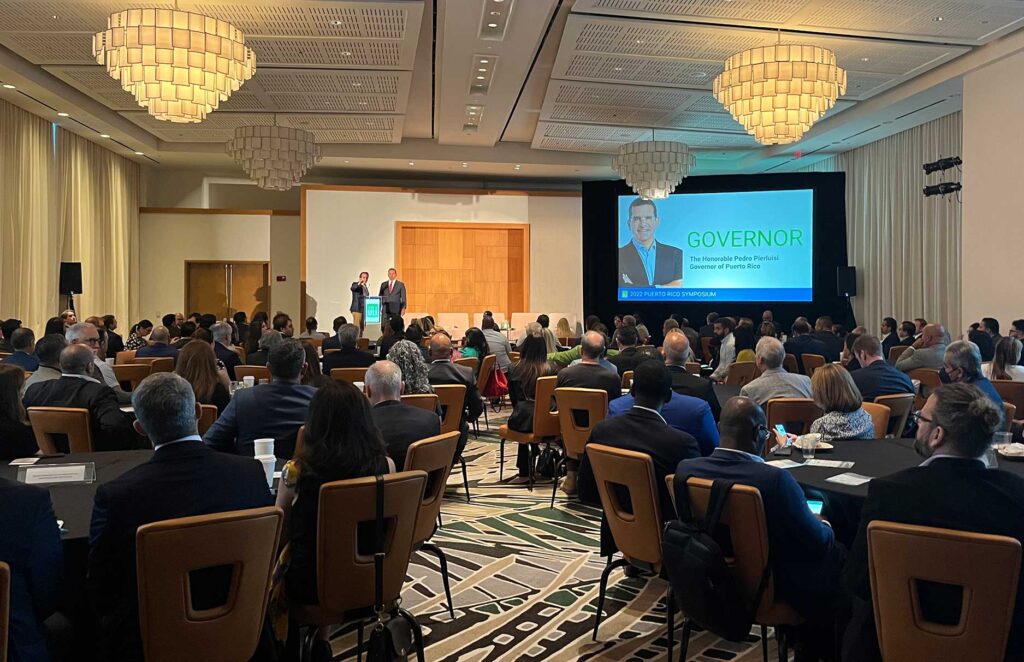
The Governor of Puerto Rico Pedro Pierluisi made the historic announcement at The Puerto Rico Symposium in Miami that Puerto Rico was officially out of bankruptcy. The message was well received by over 250 industry leaders from both the public and private sectors.  The event was organized by The Urban Land Institute South East Florida / Caribbean and The Puerto Rico Builders Association.


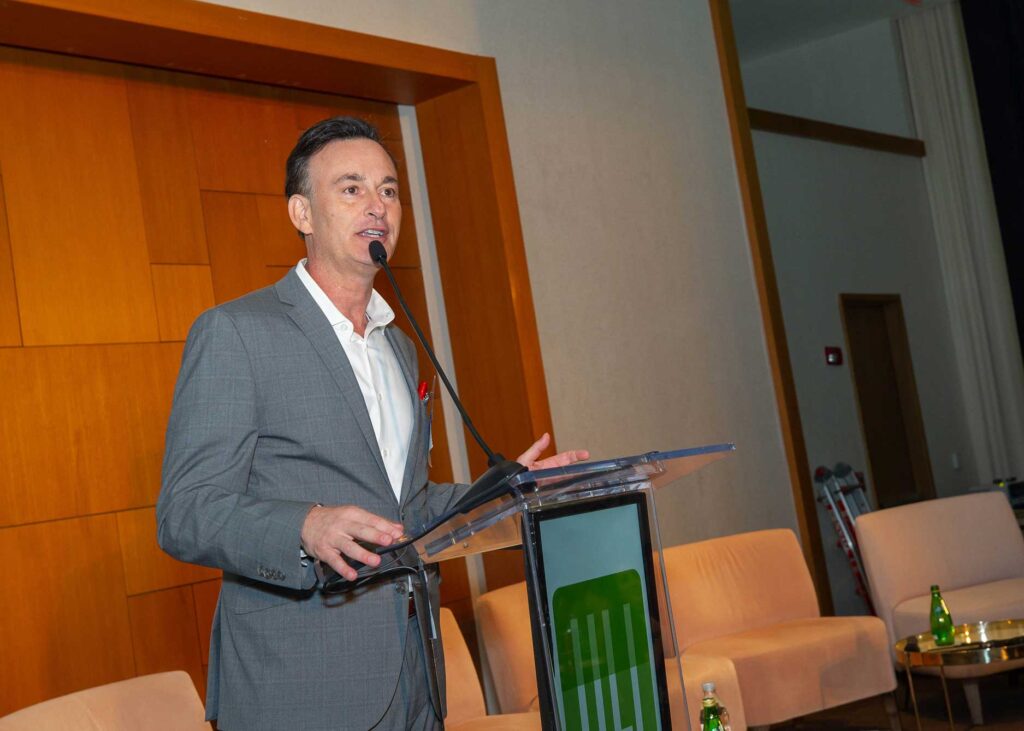
Governor Pedro Pierluisi
Governor Pedro Pierluisi makes historic announcement


The Symposium was kicked-off by Scott McLaren, President ULI SE Florida / Caribbean. Scott spoke about the longstanding relationship and collaboration between ULI and the Puerto Rico Builders Association. He highlighted the work on the ULI National Advisory Services Panel on social, economic, and physical resilience in Toa Baja, Puerto Rico. https://seflorida.uli.org/toa-baja-puerto-rico-panel/

Scott Maclaren finished his remarks by recognizing  Vanessa de Mari, the new President of the Puerto Rico Builders Association and the first women president in the organization’s 70 year history. The Symposium was dedicated to this historic accomplishment. In attendance were some of Puerto Rico’s top government leaders.  This included the Honorable Pedro Pierluisi, Governor of Puerto Rico, Manuel Laboy, COR3 Executive Director,  Maretzie Diaz, Deputy Director PR Housing Department CDBG-DR, Natalia I. Zequeira, Commissioner of Financial Institutions, and in attendance, the Secretary of Housing of Puerto Rico, William Rodríguez Rodríguez. The keynote address by the Honorable Pedro Pierluisi, Governor of Puerto Rico’s highlighted the island’s economic accomplishments, the end of Puerto Rico’s population exodus, and the conclusion of the bankruptcy which was officially announced the day of the Symposium.

https://www.bnnbloomberg.ca/puerto-rico-is-out-of-bankruptcy-after-a-22-billion-debt-exchange-1.1738142

In the private sector, Ricardo Alvarez-Diaz, CEO, Alvarez-Diaz & Villalon discussed some of progress of the island’s rebuilding after the 2017 hurricanes Irma and Maria. The reconstruction of the island was  a constant theme throughout the day with specific examples of over 900 started projects.

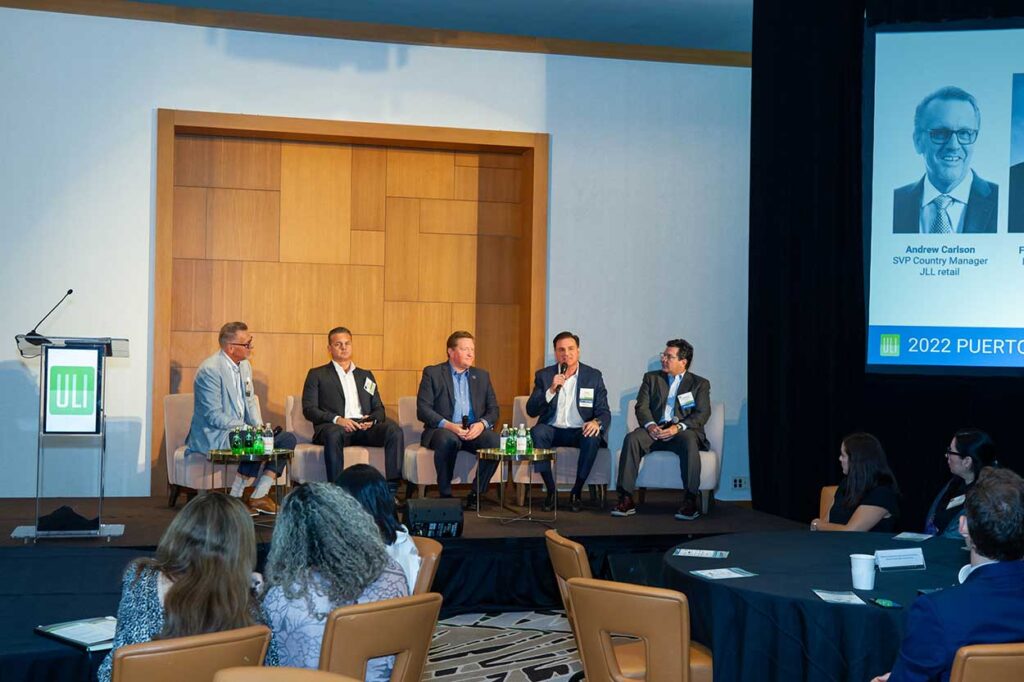
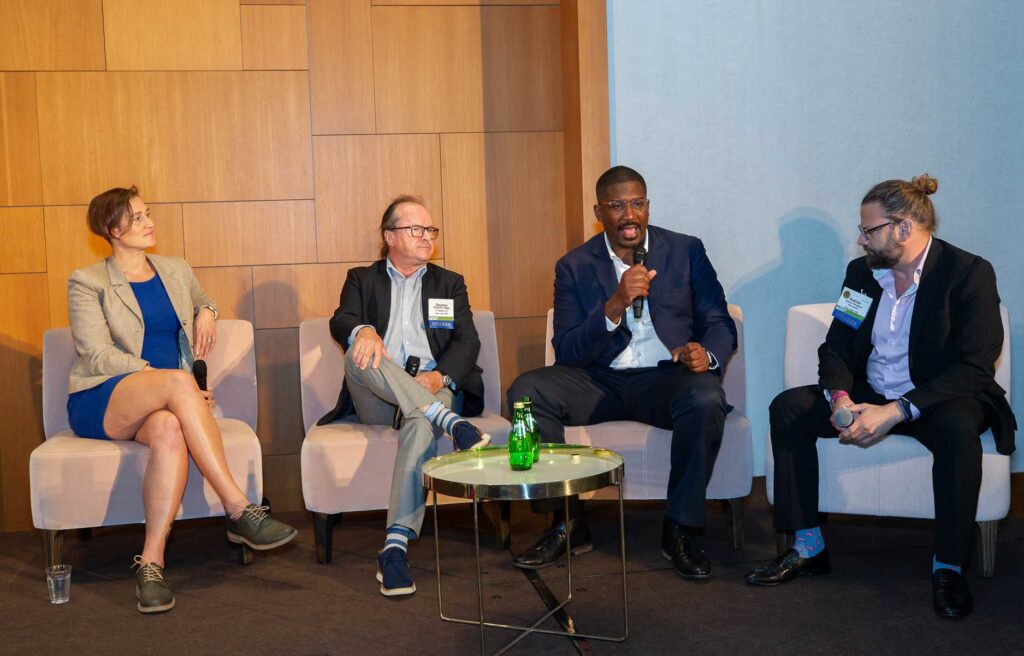
The first panel, “Why Puerto Rico: Stories of Success,  was a testament to the resiliency of the development community. Moderated by Andrew Carlson, SVP Country Manager, of JLL the discussion highlighted the historic growth of the island’s hospitality sector with the construction and/or renovation of over 3,000 new room keys from El Conquistador, Grand Reserve (formerly known as Coco Beach), Sheraton, AC , and many others. The panel included Federico Sanchez, President & CEO, Interlink Group.


Speakers Panel
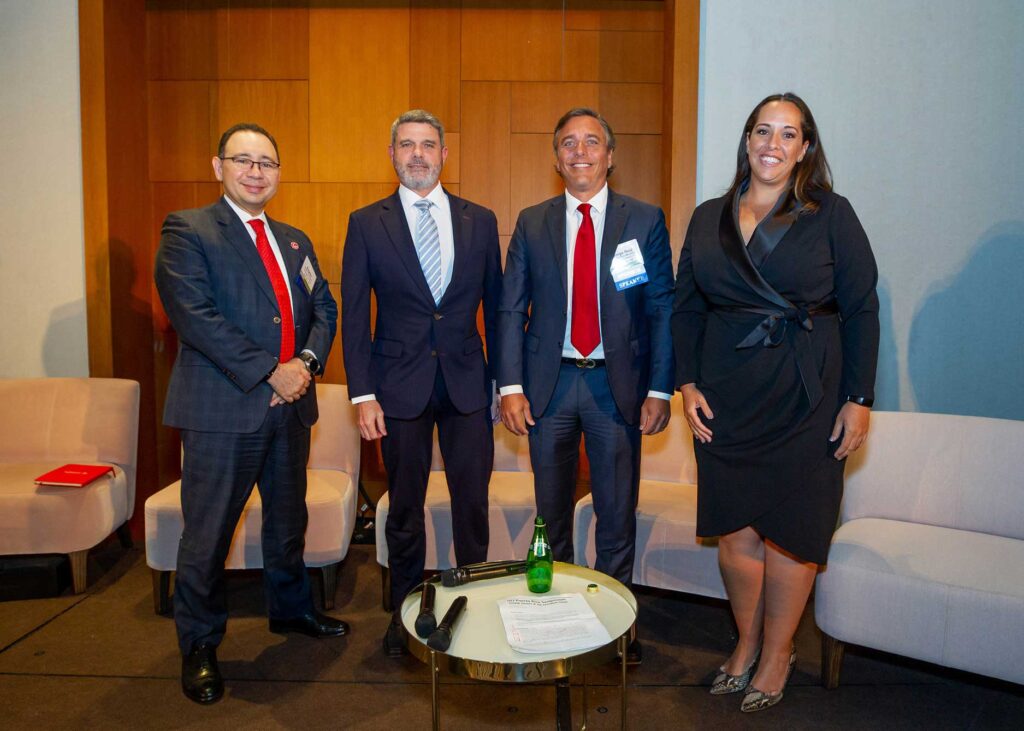
Dan Kodsi, Brad Dean, Rafael Rojo, Andrew Carson


Dan Kodsi, CEO, Royal Palm Companies, Rafael E. Rojo, President & CEO, VRM Companies. Also in attendance was Brad Dean, CEO, Discover Puerto Rico who highlighted the island’s impressive tourism growth (ADR and occupancy rates) during the Covid 19 pandemic and new expansion of tourism throughout all U.S. feeder markets.

As Puerto Rico seeks to build back its tourism and other industries, the financial sector will invariably play a major role. One of the goals of the Puerto Rico Symposium was to facilitate the conversation of growth in both traditional banking as well as new Fintech, IFEs, and other debt/equity players.  Natalia I. Zequeira, Commissioner of Financial Institutions, explained the ease of regulations and process for new financial institutions as Puerto Rico shares many of the same regulations of the U.S. states on the mainland. Ms. Zequeira also mentioned that International Financial Entities (IFE) can now participate in special opportunity projects.

https://www.investpr.org/key-sectors/finance-and-insurance/

Michael McDonnell, Executive Vice President, First Bank, that recently re-opened its  construction division, was bullish on the island’s economic prospects and announced that the Puerto Rico will achieve positive economic growth (GDP) this year– something it has not done in over a decade.  Banesco USA announced the U.S. Department of the Treasury, will invest more than $8.7 billion through ECIP in institutions across the country – Banesco USA is the only bank recipient located in Florida or Puerto Rico.

https://www.prnewswire.com/news-releases/banesco-usa-approved-to-receive-237-5-million-investment-from-the-us-treasurys-emergency-capital-investment-program-301445832.html

Over the last few years, we have all hear about the 80 billion dollars of relief aid that has been allocated to Puerto Rico and is coming. In the “Myth versus Reality panel: Federal Funding Opportunities on The Island,” moderator Ella Woger Nieves of Invest Puerto Rico helped lift-up the proverbial transparency veil. Manuel Laboy, the COR3 Executive Director spoke with detailed facts of the funding by agency with FEMA authorizing 5 billion for temporary work, 21 Billion for 9,000 permanent projects and 800 that are currently under construction today. He also discussed the next wave of over 900 projects that are currently under engineering and design.  Much of this work will be channeled through CDBG-DR and the PR Housing Department. Maretzie Diaz, the Deputy Director PR Housing Department, explained the process for companies wanting to participate in the island’s rebuilding of housing and infrastructure. Mahdu Beriwal, Owner/founder of EIM provided first-hand knowledge of the rebuilding work in Puerto Rico.


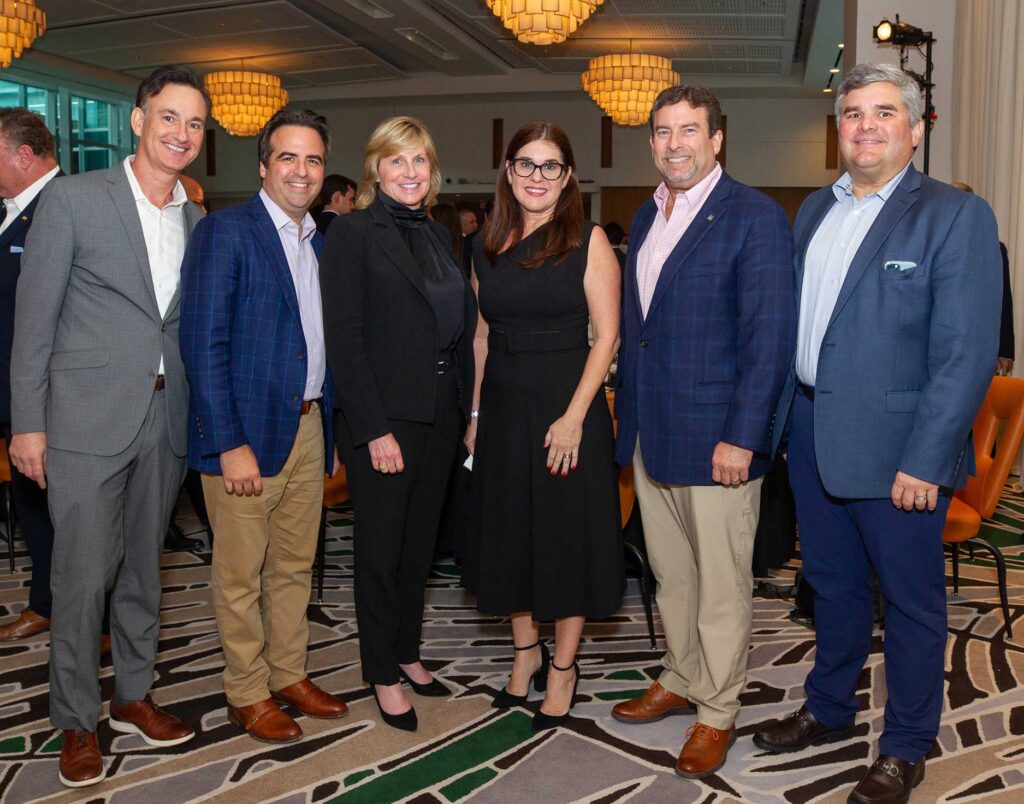
Adam Greenfader, Ricardo Alvarez-Diaz, Pamela Pautenade, Vanessa de Mari, Alfredo Martinez, Emilion Colon


Keynote Speaker Pamela Pautenade, Ex. Deputy Secretary of HUD, was also on hand to share her experiences about the collaboration with the Puerto Rico Builders Association during the 2017 hurricanes crisis. In a moving conversation with Ricardo Alvarez-Diaz, Mrs. Pautenade explained the dedication of the island’s public and private sectors and dispelled any rumors about misuse of relief funds.


Keynote Lunch Address
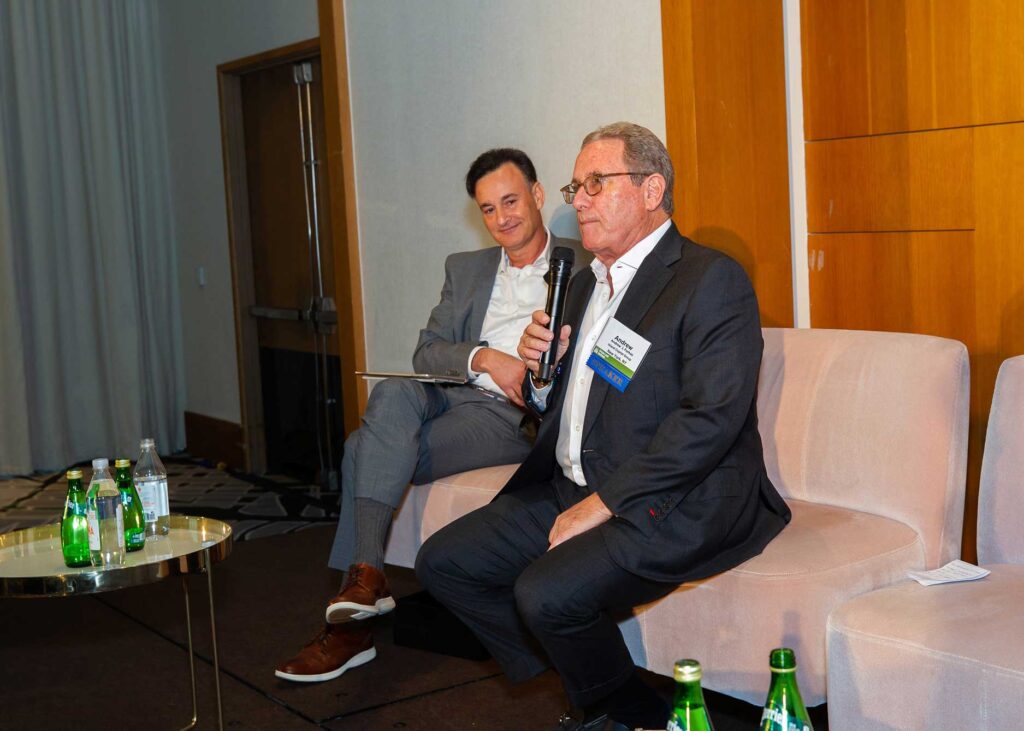
Andrew Farkas, Adam Greenfader


Puerto Rico, like much of the Caribbean is in the process of bouncing back from the Covid 19 pandemic.  Adam Greenfader, who chairs the ULI Caribbean Council had a high level sit down conversation with keynote Speaker Andrew Farkas, CEO Island Capital Group. The conversation was focused on social equity and specifically what  role the financial sector has in supporting the region with a particular focus on sustainability, ESG, and helping economic migrants return back to their island homes.

In the last few years Puerto Rico has become known as blockchain capital of the world. While thousands of tech savvy individuals have moved to the island to take advantage of federal tax incentives they have inadvertently created a new economic driver for the Puerto Rico.

https://www.bloomberg.com/news/features/2021-12-11/crypto-rich-are-moving-to-puerto-rico-world-s-new-luxury-tax-haven


In our “Fintech & Financial Innovation panel in Puerto Rico, Moderator Nathan Whigham, Founder & President, EN Capital discussed the growth of this huge industry. Rodrick Miller, CEO, Invest Puerto Rico, explained what his group is doing to change the paradigm in Puerto Rico from selling tax incentives to focusing on the island’s quality of labor, education system, and proficiency in bio science and other innovations. Stephen Inglis, CEO, Importal explained his new portal to monetize tax credits and  Yael Tamar, CEO & Co-founder, SolidBlock explained how her company is integrating real estate and blockchain.

https://www.prnewswire.com/news-releases/invest-puerto-rico-elevates-the-islands-role-as-a-global-bioscience-rd-and-manufacturing-hub-attracting-two-major-life-critical-investments-228m-in-new-activity-301221471.html

After a marathon day of conversation it was amazing to see the room still full for our last panel “Growth Industries and Tax Incentives” moderated by Carla Campos and an all-star team including  Jorge Ruiz Montilla, McConnel Valdez,  Francisco Luis, of Kevane Grant Thornton and Rogelio “Roy” Carrasquillo, of the Carrasquillo Law Group. In this panel, specific programs like the Tourism Tax Incentive were explained in detail and there was robust conversation regarding how these incentives have created new jobs in manufacturing, life sciences, construction, and agro-science.


On behalf of all of us at the Puerto Rico Builders Association and The Urban Land Institute SE Florida/ Caribbean, thank you to all of the people and sponsors that made The Puerto Rico Symposium possible. We are all hopeful that together both the public and private sector can create long lasting sustainable economic growth.


For more information about investing in Puerto Rico visit our web site or contact us.

AG&T is a real estate development and consulting company founded in 1998 with headquarters in Miami, Florida. Our  track record spans over 55 real estate development projects in Puerto Rico, Sint Maarten, Costa Rica, Panama, Mexico, Dominican Republic, and various other Caribbean islands.


New Hotel Announced in St. Maarten

Site Plan of Hotel

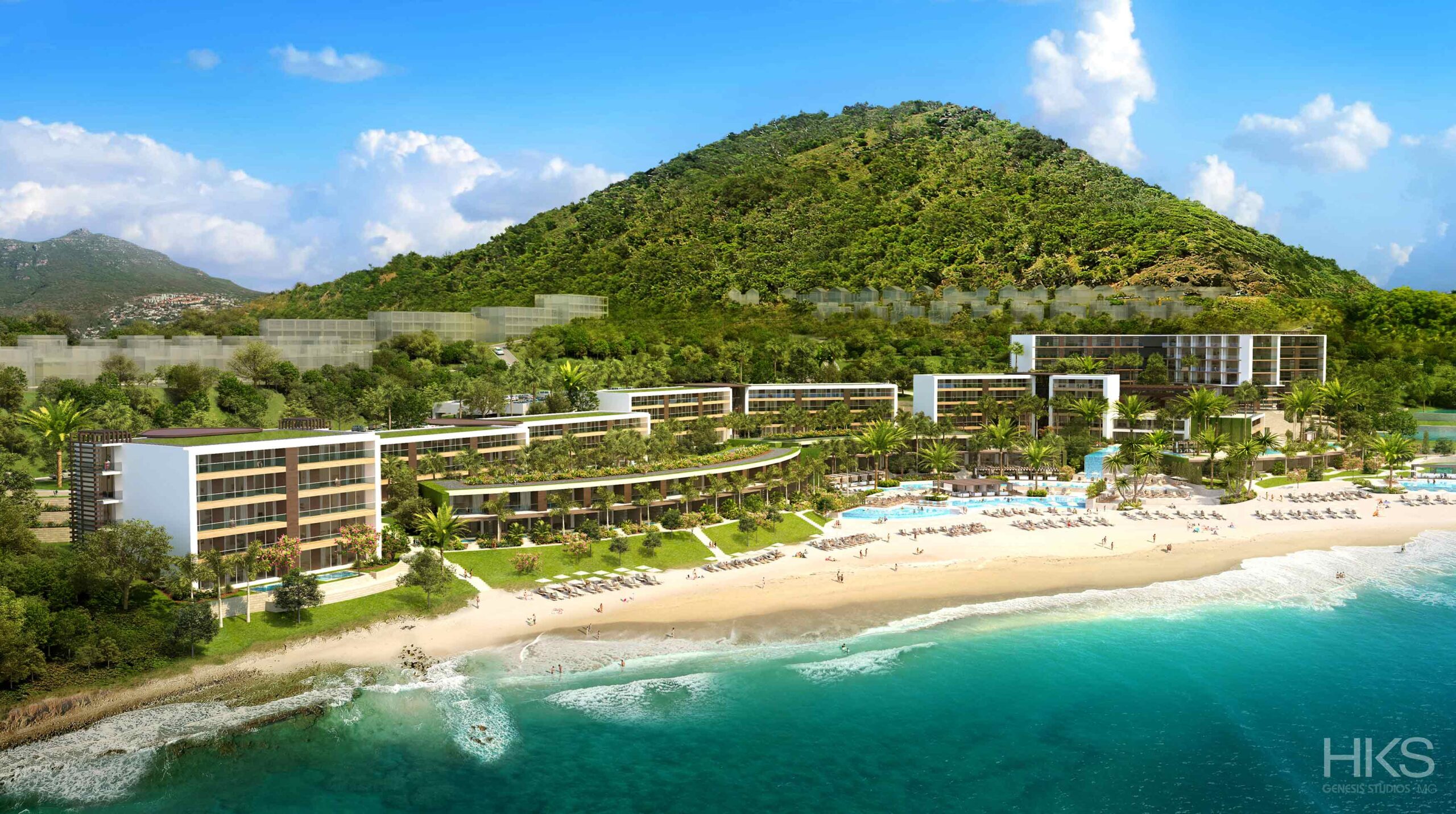
INDIGO BAY–Two prominent real estate development firms have partnered with Cay Bay Development (CBD) NV, the master developer at Indigo Bay Development, to propose the development of a US $220 million luxury hotel resort and condos in St. Maarten.  AG&T provided advisory services and a group of independent real estate brokers led by Adam Greenfader at Oceanfront International Group at Douglas Elliman coordinated the transaction. 


The proposed high-end hotel development at Indigo Bay Development,  is expected to feature certain luxury accommodations and five-star amenities, including 94 hotel rooms and suites, and 130 residential homes. Additionally, the proposed hotel development is expected to feature large water ponds and greenery areas in keeping with its eco-centric vision, as well as an extensive public parking area for public beach access to Indigo Bay.

  “The timing for such a development could not have come at a more opportune time, as country St. Maarten is tasked with creating new and innovative strategies to counter the global economic crisis due to the pandemic,”.

In an economy whereby hospitality and tourism are at the centre of its recovery, it is expected that the development of a high-end branded hotel in St. Maarten would provide an enormous boost to this endeavour by enhancing several areas in tourism.


Hotel Concept at Indigo Bay


According to the release it can enhance St. Maarten’s global attractiveness as a prime tourist destination; increase hotel accommodation by approximately 20 per cent; increase the number of annual visitors to St. Maarten by 32,000 based on hotel occupancy of 65 per cent (double) and an average stay of five nights; and attract high value tourists who may choose St. Maarten as a vacation destination as opposed to accessing surrounding islands through its air and sea ports of entry, it was stated in the release.

The proposed world-class hotel development, once completed, will be managed by an internationally-recognised hotel brand, which will lend itself to greater global recognition, the release said. The projected marketed average daily rate (ADR) for hotel rooms at the proposed new hotel development is expected to be substantially higher than the current average daily rates on St. Maarten.

The CBD and the principals of the proposed hotel development seek to assure that the interest of the citizenry and of the environment are paramount to their endeavor.  Six acres of the overall hotel site of about 18 acres is projected as a green zone, including the retention ponds that were originally constructed at Indigo Bay Development by CBD. 

For more information about Caribbean hotel opportunities contact us 

Caribbean Banking Leadership During the COVID-19 Pandemic

Isabel de Caires

Caribbean Banking Leadership During the COVID-19 Pandemic


During the unprecedented disruption of the COVID-19 pandemic, Caribbean financial institutions faced one of the most significant challenges in their history. With tourism at a standstill, hospitality assets under pressure, and uncertainty across virtually every sector of the regional economy, banks were required to move beyond traditional lending practices and work collaboratively with borrowers to preserve long-term value.

In this exclusive interview, Isabel de Caires of FirstCaribbean International Bank shares how regional lenders responded during the crisis, implementing payment deferrals, restructuring loans, reducing costs, and working alongside clients to help businesses navigate an extraordinary period of uncertainty.

One of the most important lessons from the pandemic was the willingness of Caribbean banks to cooperate—not only with borrowers, but with one another and with governments—to maintain financial stability across the region. That collaborative approach helped many projects survive a period that few could have anticipated.

For AG&T, these conversations reinforced the importance of maintaining strong relationships throughout the Caribbean banking community. Over more than three decades, we have worked closely with regional and international financial institutions, giving our clients valuable insight into evolving lending practices, capital markets, and financing strategies across multiple jurisdictions.

Whether structuring development financing, introducing lending partners, or advising on capital formation, AG&T’s longstanding relationships with Caribbean financial institutions provide clients with access to market intelligence that extends well beyond individual transactions.

Watch the interview with Isabel de Caires to learn how Caribbean banks responded during one of the region’s most challenging periods and how those lessons continue to influence lending and development today.


Hospitality Innovation in Times of Crisis: Lessons from IDB Invest and the Future of Caribbean Tourism

Rogerio Bass

Hospitality Innovation in Times of Crisis: Lessons from IDB Invest and the Future of Caribbean Tourism

Hospitality Innovation in Times of Crisis: Lessons from IDB Invest and the Future of Caribbean Tourism

As the COVID-19 pandemic swept across the globe, few industries were impacted more dramatically than hospitality and tourism. Borders closed, airlines grounded fleets, conferences were canceled, and hotels that once operated at record occupancies suddenly found themselves with little to no demand.

For Latin America and the Caribbean—regions where tourism serves as a critical engine of economic growth, employment, and foreign investment—the implications were profound.

To better understand the challenges facing the industry and the opportunities that could emerge from the crisis, the Urban Land Institute Caribbean Council hosted a conversation between Rogerio Basso, Head of Tourism at IDB Invest, and Adam Greenfader, Chair of the ULI Caribbean Council and Managing Partner of AG&T.

While much of the discussion focused on the immediate impact of the pandemic, the conversation ultimately became a broader examination of innovation, leadership, capital markets, and the future evolution of hotel management throughout Latin America and the Caribbean.

The Tourism Industry Before COVID-19

Before the pandemic, hospitality was experiencing one of the strongest periods in its history.

Global travel demand continued to expand, international tourism arrivals were reaching record levels, and investors remained highly attracted to hospitality assets throughout the Caribbean and Latin America. Major hotel brands were expanding aggressively, new resort developments were under construction, and institutional capital was increasingly targeting hospitality as a long-term growth sector.

Destinations throughout the Caribbean benefited from growing airlift, rising visitor expenditures, and increasing demand for experiential travel, wellness tourism, luxury resorts, and branded residential products.

According to Rogerio Basso, the industry’s fundamentals entering 2020 were exceptionally strong.

What followed was not a traditional economic downturn or cyclical correction. It was a sudden and complete interruption of global mobility.

Why This Crisis Was Different

The hospitality industry has weathered numerous crises over the past several decades, including recessions, geopolitical conflicts, natural disasters, and health emergencies.

COVID-19 was fundamentally different.

Unlike previous downturns that impacted specific regions or market segments, the pandemic affected virtually every tourism destination simultaneously. Hotels were not competing for reduced demand; in many cases, demand simply disappeared.

For owners and operators, the challenge was unprecedented. Revenue declined almost immediately while many fixed costs remained. Management teams were forced to make difficult decisions regarding staffing, operations, capital expenditures, and long-term strategy.

Yet amid the disruption, Rogerio emphasized that hospitality leaders could not simply focus on survival. They also needed to prepare for recovery.

Innovation as a Competitive Advantage

One of the most important themes that emerged during the discussion was the role of innovation in hotel management.

The pandemic accelerated trends that had already begun transforming hospitality, forcing operators to adopt new technologies and rethink traditional business models at a much faster pace.

Hotels across the region began implementing:

  • Contactless check-in and check-out systems

  • Mobile guest communication platforms

  • Digital concierge services

  • Enhanced health and sanitation protocols

  • Flexible staffing models

  • Advanced revenue management systems

  • Data-driven guest personalization

  • Hybrid meeting and conference capabilities

  • Expanded outdoor experiences and wellness programming

Many of these initiatives were initially introduced as crisis-response measures. However, they quickly evolved into permanent operational improvements that enhanced both efficiency and guest satisfaction.

The discussion highlighted an important reality: innovation is often accelerated during periods of disruption.

The hospitality companies that adapted fastest were frequently the ones best positioned to capture demand when travel resumed.

The Evolution of Hotel Management

Perhaps one of the most significant lessons from the pandemic was the changing role of hotel management itself.

Historically, hotel operators focused primarily on maximizing occupancy, controlling expenses, and maintaining service standards. Today’s hospitality leaders must balance a much broader range of responsibilities.

Modern hotel management increasingly requires expertise in:

  • Technology integration

  • Sustainability initiatives

  • Wellness programming

  • Community engagement

The panel discussed how successful operators would need to become more agile, more data-driven, and more responsive to changing guest expectations than ever before.

Hotels are no longer simply places to stay. They are becoming platforms that integrate hospitality, wellness, residential living, experiences, technology, and community.

This transformation is particularly relevant in the Caribbean, where travelers increasingly seek authentic experiences, environmental stewardship, cultural immersion, and personalized service.

The Role of Multilateral Development Banks

A unique aspect of the discussion focused on the role of multilateral development banks (MDBs) in supporting tourism and hospitality during times of crisis.

As Head of Tourism at IDB Invest, Rogerio Basso oversees initiatives that provide financing solutions throughout Latin America and the Caribbean. These include debt, mezzanine financing, equity investments, and other instruments designed to support sustainable development.

Multilateral institutions play a critical role because they often provide patient capital during periods when traditional financing becomes scarce.

Beyond capital, organizations such as IDB Invest contribute technical expertise, environmental standards, governance frameworks, sustainability initiatives, and strategic guidance that strengthen projects over the long term.

The discussion emphasized that recovery would require collaboration among governments, hotel operators, developers, lenders, investors, and development finance institutions.

No single stakeholder could solve the challenges alone.

Three Strategic Actions for Hospitality Leaders

Rogerio outlined several priorities that hospitality companies should consider when navigating periods of uncertainty:

1. Preserve Liquidity

Cash management becomes paramount during periods of disruption. Organizations must maintain financial flexibility to withstand market volatility while preserving their ability to invest when opportunities emerge.

2. Continue Investing in Innovation

The temptation during a crisis is to cut spending across all areas. However, technology, operational improvements, and guest experience enhancements often generate long-term competitive advantages that outlast the crisis itself.

3. Focus on Long-Term Demand Drivers

While short-term conditions may fluctuate, the fundamental drivers of tourism—human connection, exploration, business travel, leisure experiences, and cultural exchange—remain intact.

The strongest organizations maintain a long-term perspective even during periods of uncertainty.

Looking Back: From Crisis to Transformation

Several years later, many of the observations discussed during this ULI Caribbean Conversation proved remarkably accurate.

Tourism throughout the Caribbean and Latin America rebounded faster than many analysts expected. Luxury travel accelerated. Wellness tourism expanded. Branded residences became one of the industry’s fastest-growing segments. Technology adoption increased dramatically. Investors returned to the sector with renewed confidence.

Most importantly, hospitality emerged stronger, more resilient, and more innovative than before.

AG&T’s Commitment to Hospitality Thought Leadership

At AG&T, we believe that some of the most important conversations occur during periods of uncertainty. Throughout the pandemic and beyond, we partnered with the Urban Land Institute Caribbean Council to bring together industry leaders, investors, developers, hotel operators, economists, and policymakers to discuss the future of Caribbean real estate and hospitality.

Our conversation with Rogerio Basso was more than a discussion about crisis management. It was a dialogue about leadership, innovation, and the future of tourism in Latin America and the Caribbean. The lessons remain relevant today.

Hospitality is no longer defined solely by buildings, brands, or locations. It is increasingly defined by adaptability, technology, sustainability, and the ability to create meaningful experiences for guests. As the Caribbean continues its hospitality renaissance, innovation in hotel management will remain one of the most powerful drivers of long-term success. At AG&T, we remain committed to advancing the conversations that help shape that future.

Caribbean Hospitality After COVID: Reimagining Travel for a New Era

Headshot of Brad Dean

Caribbean Hospitality After COVID: Reimagining Travel for a New Era

In the spring of 2020, the global hospitality industry came to an abrupt halt.

Borders closed. Airlines grounded their fleets. Cruise ships sat idle. Hotels that had welcomed guests for generations suddenly stood empty. For a region where tourism represents one of the largest contributors to GDP, employment, and foreign investment, the uncertainty was unlike anything the Caribbean had ever experienced.

While much of the industry focused on managing the immediate crisis, AG&T believed it was equally important to begin asking a different question:

What would Caribbean hospitality look like after COVID?

To help answer that question, AG&T partnered with the Urban Land Institute Caribbean Council to launch a series of thought leadership conversations featuring many of the region’s leading voices in tourism, finance, hospitality, manufacturing, and economic development.

One of the most memorable discussions featured Brad Dean, then CEO of Discover Puerto Rico, Puerto Rico’s Destination Marketing Organization.

Rather than focusing solely on the challenges of the pandemic, the conversation explored how the industry could emerge stronger, more resilient, and better prepared for the future.

Brad Dean offered a perspective that has become increasingly relevant in the years since.

“This downtime gives the travel industry our George Bailey moment. We have all seen that without travel it’s pretty ugly. There is far greater value to travel than most of us ever realized. Travel lifts spirits. It connects people. It leads to progress.”

Those words resonated deeply throughout the Caribbean.

Travel is more than hotel occupancy or airline arrivals. It supports small businesses, restaurants, taxi drivers, artisans, tour operators, construction workers, architects, engineers, farmers, entertainers, and countless entrepreneurs whose livelihoods depend upon a vibrant visitor economy.

The pandemic reminded us that hospitality is not simply an industry—it is an ecosystem.

Creating Dialogue During Uncertainty

Throughout the pandemic, AG&T recognized that one of the greatest needs facing the Caribbean was the exchange of ideas.

As uncertainty grew, we brought together leaders from government, international finance, hospitality, manufacturing, infrastructure, and development to discuss not only recovery, but the long-term future of the region.

These conversations explored topics including:

  • The future of Caribbean hospitality

  • Tourism recovery strategies

  • Public-private partnerships

  • Sustainable destination development

  • Capital markets and investment

  • Resilient infrastructure

  • Manufacturing and supply chains

  • Puerto Rico’s role within the U.S. economy

  • The evolution of luxury hospitality

The objective was never simply to host webinars.

It was to create a forum where industry leaders could share ideas, challenge conventional thinking, and help shape the future of Caribbean development.

From Recovery to Renaissance

Looking back, many of the themes discussed during those early conversations proved remarkably accurate.

The Caribbean has experienced one of the strongest tourism recoveries anywhere in the world. Puerto Rico has reached record visitation levels, international hospitality brands continue expanding throughout the region, luxury resort development has accelerated, and institutional investment has returned to Caribbean hospitality with renewed confidence.

Today’s hospitality industry is fundamentally different from the one that entered 2020.

Developers place greater emphasis on wellness, sustainability, outdoor experiences, resilient design, mixed-use destinations, branded residences, and authentic cultural experiences. Investors have also recognized that the Caribbean’s long-term fundamentals—including strong tourism demand, limited luxury inventory, and growing global interest in experiential travel—remain exceptionally compelling.

AG&T’s Commitment to Caribbean Thought Leadership

For AG&T, these conversations reflected our broader mission.

As a Caribbean real estate development and capital advisory firm, we believe that leadership means more than executing successful projects. It means creating opportunities for dialogue, sharing knowledge across markets, and connecting investors, developers, hospitality brands, government leaders, and financial institutions throughout the Caribbean and the mainland United States.

Whether through our work with the Urban Land Institute, partnerships with Bisnow, industry conferences, investor forums, or conversations with leaders such as Brad Dean, AG&T remains committed to advancing ideas that strengthen Caribbean hospitality and encourage long-term investment across the region.

The pandemic tested every assumption about travel.

It also reminded us why travel matters.

Because hospitality is ultimately about people—and the connections that bring communities, cultures, and economies together.


Sustainability at the heart of hotel design in the future

Green Hotels

Sustainability has been a buzzword within the design community, and hoteliers have been latching onto the idea of the past number of years

Sustainability has long been a buzzword within the design community, and hoteliers in particular have been latching onto the idea of the past number of years. Not only is it a response to an increased awareness of climate change and the impact we as humans, especially those working in one aspect of the construction industry, have on the planet, but it is also a response to client demand, with more and more guests desiring sustainable tourism as a requirement in their holidays. An annual competition run by hotel consultancy firm the John Hardy Group called Radical Innovation Award takes submissions for innovative hotel designs that reimagine the hospitality experience, and this year’s entries and winners point to a significant upswing in sustainable hospitality that could well be the future of the industry.

The award has singled out a number of visionary projects as finalists, but many of the entries proposed radical ideas that threw out the rulebook of hospitality design. A common theme was that of sustainability, both in an environmentally friendly sense, but also in a cultural sense, where local culture and art is celebrated and promoted. This also points to recent trends in hospitality where local experiences are being sought by guests wishing to engage more with the place and people they are visiting.

Green or garden hotels were a big feature of a number of entries. Canadian firm Arno Matis Architecture proposed a project entitled the “Vertical Micro-Climate Hotel”, whose concept is to make the outdoor areas of hotels located in the harsh climates of North America habitable all year round. One of the features of this hotel was the use of heliostat technology, a mirroring system which reflects sun back into certain parts of the building as required so as to make them habitable even in colder weather conditions. EoA’s submission involved suspending hotel facilities from a treetop by using a system of cables to hold rooms in tent-form above a trampoline-like platform, giving the hotel a very small footprint above the forest floor and re-orientating the guest’s field of vision to that from the tree canopy. A Dutch architecture student submitted a project that he had built in his mother’s back garden which connects guests to nature while allowing them to sleep in a sustainably built and naturally ventilated structure.

The culturally sustainable aspect came in the form of the currently-operational Play Design Hotel in Taiwan, which champions local artists and designers by installing their creations into hotel rooms and encouraging guest to interact with them. The idea came about after the developer noticed a lot of his artist friends were having to go abroad to showcase their designs, and he thought that it would be better to not only exhibit the work locally in hotels so that international guests could see them, but also to cultivate an environment of design engagement within the hotels themselves. “I want people to experience the culture of this country and played a lot with the idea of using the hotel as a portal for people who want to learn about Taiwanese design, a space that is furnished with all of these local designers’ work. So, their work is not only shown but so it’s experienced. Design isn’t something you only put in a museum or gallery. It should be used. It’s for your everyday use,” says hotelier Ting-Han Chen.


Article by Hospitality.net. 

Puerto Rico Tourism Optimistic in 2017

SAN JUAN – Citing a 96% reduction in the number of new Zika cases since the peak in October, the Puerto Rico Tourism Co. (PRTC) is optimistic heading into 2017. The PRTC launched an educational outreach program in February to dissipate “the fears and communicate the real facts” about Zika, its newest press release reads. Collaborating with the Puerto Rico Hotel & Tourism Association (PRHTA) as well as Meet Puerto Rico, the PRTC presented it “Facts not Fear,” campaign. “Communicating the reality that Zika was not growing nearly as rapidly as the CDC had projected, the PRTC worked to change the Zika conversation, and emphasize the reality that reported cases are a fraction of what was projected. Cases are now at about 1 percent of Puerto Rico’s 3.5 million population versus forecasts that 25% of Puerto Ricans would eventually have the virus by the end of the year,” according to the Tourism Co.’s statement. “The dramatic decrease in the number of Zika cases in Puerto Rico is a testament to our integrated aggressive program to inform and disseminate the facts and allay the fears. The PRTC worked incredibly hard with the industry and health officials to communicate accurate and precise messages about Zika to the public,” Ingrid Rivera Rocafort, executive director of the PRTC, says in the published statement. “Ultimately, our team has been successful in not only educating our residents but protecting our visitors and our critical tourism industry.” Tourism annually contributes nearly $4 billion to Puerto Rico’s economy and was the first industry to come out of the island’s five-year recession, the public corporation explains in its release. “Since the start of Zika, total hotel registrations from Jan.-Sept. in 2016 are 1.6% above 2015 and 10 million passengers are expected to be welcomed by Puerto Rico airports by the end of 2016,” it reads.

Broadway star Chita Rivera, TV host Maía Celeste, baseball stars Carlos Correa and Iván Rodríguez, and Olympic gold medalist Mónica Puig also helped spread the word about how travelers can experience Puerto Rico worry-free. Medical influencers as well delivered the PRTC’s message. These included the late epidemiologist Dr. D.A. Henderson, scholar at the UPMC Center for Health Security in Baltimore, Maryland; Dr. Jason James, chief of obstetrics and gynecology at Baptist Hospital in Miami; and Dr. Joseph Rosado, a primary care and emergency care physician in Orange City, FL. In addition, the World Health Organization declared in November that the Zika virus was no longer considered an international public health emergency, the PRTC adds in its release. “Our collaborative efforts to date in 2016 have been effective in allaying fears, controlling Zika and the data backs it up,” notes Clarisa Jimenez, president and CEO of the PRHTA, assures in the written statement. “It is imperative that we keep our foot on the gas pedal and aggressively continue Tourism Co.: