Are Hotels Coming Back to The Caribbean?

Are Hotels Comming Back Caribbean

The Future of Caribbean Hospitality: Are Hotels Coming Back?

The COVID-19 pandemic brought the global hospitality industry to an unprecedented standstill. International travel halted almost overnight, hotel occupancies reached historic lows, and owners, operators, lenders, and investors were forced to rethink nearly every aspect of the business. For the Caribbean—a region where tourism is one of the primary drivers of economic growth—the stakes could not have been higher.

Recognizing the need for informed dialogue during this period of uncertainty, AG&T partnered with the Urban Land Institute (ULI) Caribbean Council to convene some of the hospitality industry’s most respected leaders for an important discussion: “Are Hotels Coming Back to the Caribbean?”

The objective was not simply to forecast a recovery, but to examine how the hospitality industry was adapting, where capital was flowing, and what opportunities would emerge as travel eventually returned.

The panel brought together an exceptional group of industry leaders representing every major segment of the hospitality ecosystem:

  • Adam Greenfader, Managing Partner, AG&T

  • Alejandro Zozaya, Executive Chairman, Apple Leisure Group

  • Christian Charre, Senior Vice President, CBRE Hotels

  • Chris Cylke, Chief Operating Officer, REVPAR International

  • Nicholas Hecker, Executive Managing Director & Chief Investment Officer, Sculptor Real Estate

Together, the panel offered perspectives from development, hotel operations, institutional investment, brokerage, valuation, and lending—providing one of the most comprehensive discussions on the future of Caribbean hospitality during one of the industry’s most challenging periods.


Three Questions That Defined the Recovery


1. What hotel transactions were taking place during the pandemic?

While many investors initially adopted a wait-and-see approach, the panel observed that sophisticated capital was already positioning itself for the recovery. Institutional investors, private equity firms, and opportunity funds were actively evaluating distressed assets, recapitalizations, and long-term acquisition opportunities throughout the Caribbean.

Rather than signaling a collapse in the hospitality sector, transaction activity reflected a repricing of risk and the belief that Caribbean tourism fundamentals would ultimately remain strong.

2. Would the industry experience widespread defaults, acquisitions, and repurposing?

The discussion acknowledged that financial stress was inevitable across portions of the market. However, the panel emphasized that not every hotel would face the same outcome.

Well-capitalized owners, strong brands, and institutional-quality assets were expected to recover more quickly, while other properties would require recapitalization, repositioning, or new ownership. Some hotels would be converted to alternative uses, while others would emerge stronger through strategic renovations and operational improvements.

History has since shown that many of these observations proved remarkably accurate. Although select assets changed hands, the Caribbean avoided the wave of distressed sales that many had feared, as tourism rebounded faster than most analysts had predicted.

3. How was the hospitality industry preparing for Travel 2.0?

Perhaps the most forward-looking conversation centered on how hotels would evolve beyond the pandemic.

Panelists discussed enhanced health and safety standards, contactless technologies, digital guest experiences, flexible operating models, wellness programming, outdoor amenities, sustainability initiatives, and changing traveler expectations.

The consensus was clear: recovery would not simply mean reopening hotels. It would require reimagining the guest experience.

Many of those innovations—from mobile check-in and wellness-focused programming to experiential travel and flexible resort design—have since become permanent features of the hospitality landscape.


A Defining Moment for Caribbean Hospitality

Looking back, this conversation represented more than a discussion about surviving a crisis. It marked the beginning of a broader conversation about the future of Caribbean tourism.

The region has since experienced one of the strongest tourism recoveries in the world. Visitor arrivals have surpassed pre-pandemic levels in many destinations, international hotel brands continue expanding throughout the Caribbean, branded residences have become one of the fastest-growing hospitality segments, and institutional capital has returned with renewed confidence.

The long-term fundamentals discussed during the panel—limited beachfront supply, strong leisure demand, expanding luxury travel, and the Caribbean’s enduring global appeal—have continued to support investment throughout the region.

AG&T’s Commitment to Industry Leadership

At AG&T, we believe our role extends beyond advising development projects.

For more than three decades, we have worked to convene conversations that bring together investors, developers, hotel operators, lenders, government officials, and industry organizations to address the opportunities and challenges shaping Caribbean real estate and hospitality.

Through our partnerships with the Urban Land Institute, Bisnow, the Puerto Rico Builders Association, universities, and other industry organizations, AG&T has helped create forums where ideas become strategies and relationships become investments.

The discussion, Are Hotels Coming Back to the Caribbean?, reflected that commitment.

It demonstrated that meaningful leadership is not only about responding to change—it is about helping define what comes next.

As Caribbean hospitality continues to evolve, AG&T remains committed to fostering the dialogue, partnerships, and investment strategies that will shape the region’s next generation of world-class destinations.

From Ideas to Action: Helping Rebuild Puerto Rico Through ULI Advisory Services

From Ideas to Action: Helping Rebuild Puerto Rico Through ULI Advisory Services


Thought leadership is important…But real leadership is measured by action.

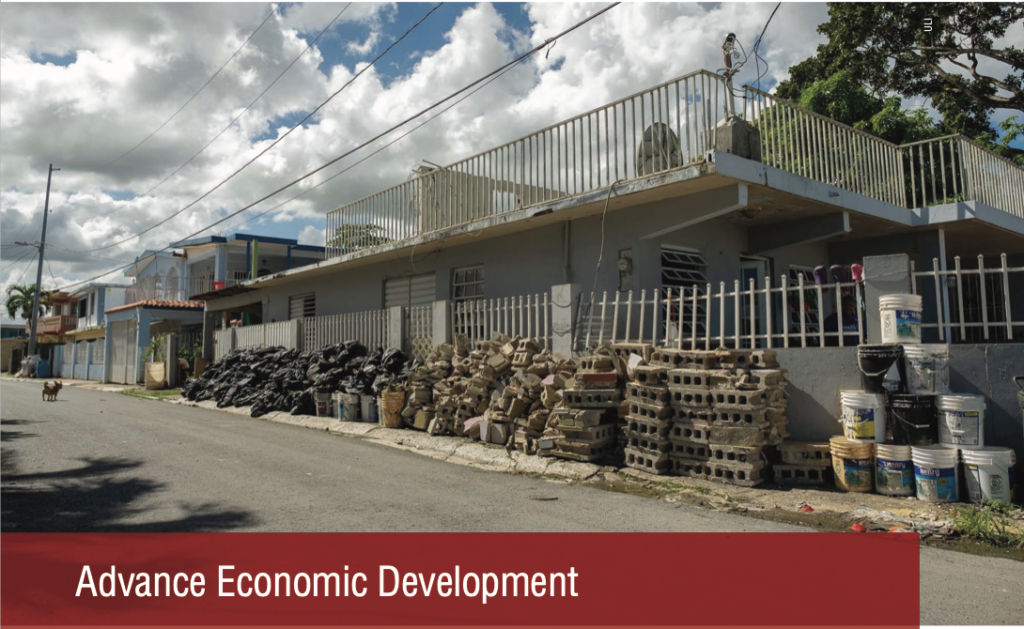
Following the catastrophic devastation caused by Hurricane Maria in 2017, Puerto Rico faced one of the greatest rebuilding challenges in its modern history. Communities across the island were confronted not only with repairing damaged infrastructure and housing, but with a much larger question:

How do we rebuild stronger than before?

Rather than simply discussing resilience from the conference stage, AG&T joined a multidisciplinary team of national experts through the Urban Land Institute (ULI) Advisory Services Program to help answer that question.


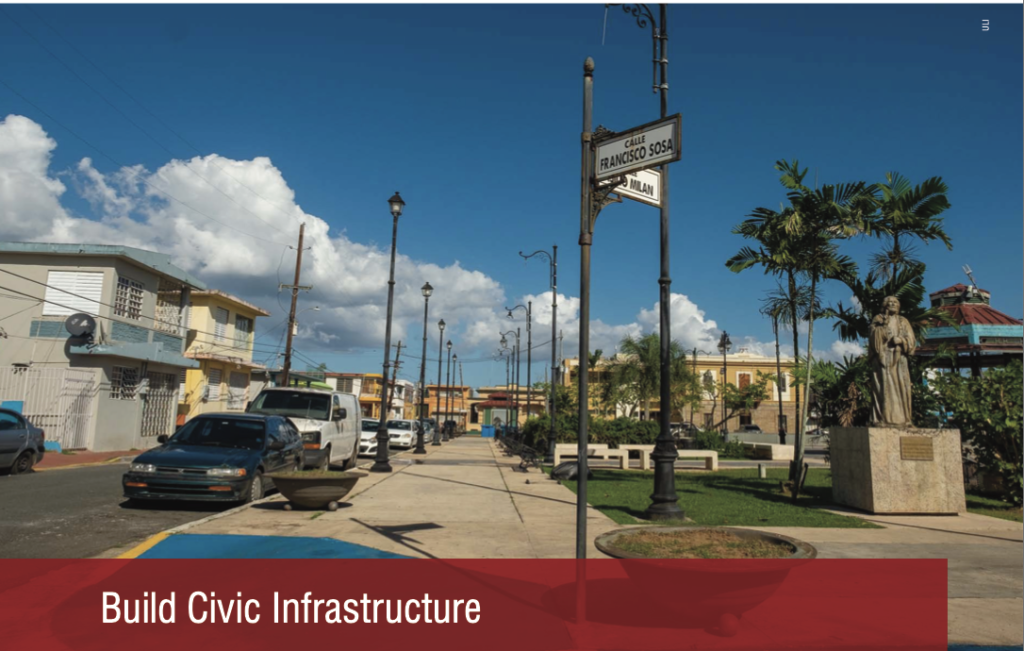
Supported by The Kresge Foundation, ULI Southeast Florida/Caribbean, Alvarez-Díaz & Villalón, and the Puerto Rico Builders Association, the Advisory Services Panel traveled to the Municipality of Toa Baja to work directly with local government, business leaders, community organizations, and residents to develop a practical roadmap for long-term recovery and resilience.

Turning Expertise into Action

ULI’s Advisory Services Panels are among the organization’s highest forms of professional service.

Rather than serving as conferences or academic exercises, these panels assemble nationally recognized experts in planning, architecture, engineering, finance, economic development, housing, resilience, public policy, and real estate to solve complex urban challenges.

For one intensive week, the team immersed itself in Toa Baja meeting with local stakeholders, touring neighborhoods, evaluating damaged infrastructure, reviewing economic data, and identifying opportunities that could strengthen the municipality for generations to come.

For AG&T, organizing and participating in the panel reflected a core belief:

Knowledge creates value only when it leads to action.

The Challenge

Among Puerto Rico’s municipalities, Toa Baja was one of the hardest hit by Hurricane Maria.

The municipality sustained more than $1.3 billion in damages, with widespread impacts to housing, businesses, transportation infrastructure, utilities, and public facilities.

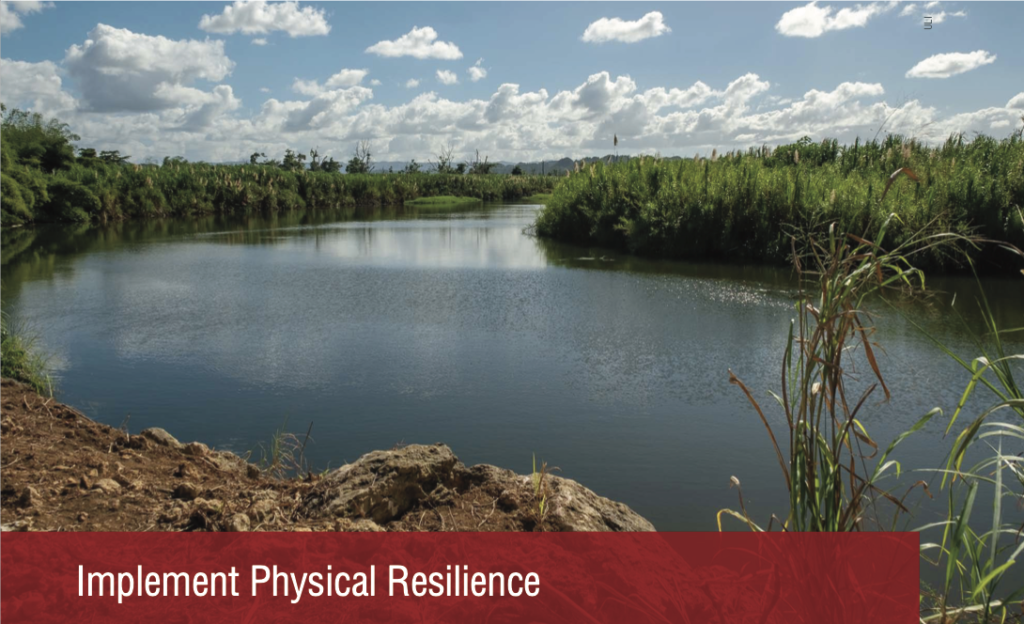
Its geographic location also made it particularly vulnerable to future flooding, storm surge, sea-level rise, and other climate-related hazards.

The challenge extended well beyond reconstruction.

The objective was to create a strategy for a safer, stronger, and more economically resilient community.

Looking Beyond Recovery

The panel’s recommendations extended far beyond repairing damaged buildings.

Instead, the team examined how resilience could become a catalyst for economic development.

Among the key areas explored were:

  • Identifying Toa Baja’s long-term competitive advantages within Puerto Rico and the Caribbean.

  • Strengthening economic drivers capable of creating sustainable employment.

  • Improving land use planning to reduce exposure to flooding and future storm events.

  • Integrating resilience into future housing and commercial development.

  • Leveraging public-private partnerships to accelerate investment.

  • Creating more efficient land development processes.

  • Expanding access to resilient housing for residents across all income levels.

  • Aligning reconstruction efforts with long-term economic growth rather than short-term recovery.

The panel also examined how natural systems, coastal conditions, transportation networks, and infrastructure investments could work together to create a more resilient municipality.


Resilience as Economic Development

One of the panel’s most important conclusions was that resilience should not be viewed simply as disaster preparedness.

Well-designed resilient communities are also stronger economies.

Investments in flood mitigation, resilient infrastructure, modern utilities, housing, transportation, environmental restoration, and thoughtful land planning improve quality of life while making communities more attractive for residents, businesses, investors, and employers.

Today, that philosophy has become increasingly accepted throughout the development industry.

Institutional investors, lenders, insurers, and governments now recognize resilience as a critical component of long-term value creation.

From Recommendations to Lasting Impact

Although the Advisory Services Panel lasted only one week, its influence extended well beyond the final presentation.

The report continues to serve as a strategic resource for municipal planning, resilience initiatives, economic development discussions, and future investment opportunities.

More importantly, it demonstrated what can be achieved when the public sector, private industry, nonprofit organizations, and community leaders collaborate toward a common objective.

The challenges facing island communities require integrated solutions.

No single organization can solve them alone.

AG&T’s Commitment

For AG&T, participating in the Toa Baja Advisory Services Panel reflects the type of work we believe matters most.

Our role extends beyond advising individual developments. We are equally committed to helping strengthen the communities in which those projects exist.

Over the years, AG&T has contributed to numerous initiatives involving the Urban Land Institute, the Puerto Rico Builders Association, universities, government agencies, institutional investors, and nonprofit organizations, all with the shared objective of advancing sustainable economic development throughout Puerto Rico and the Caribbean.

Whether the challenge involves resilience, housing, hospitality, infrastructure, climate adaptation, or economic competitiveness, we believe meaningful progress begins with collaboration.

Because rebuilding communities is about more than replacing what was lost. It is about creating places that are stronger, safer, more prosperous, and better prepared for the future.

That is the kind of work that creates lasting impact.

Download the complete ULI Advisory Services Panel Report for the Municipality of Toa Baja to explore the team’s recommendations for building a more resilient and economically vibrant community.