Travel and Tourism and the COVID19 Pandemic

Headshot of Brad Dean

The Covid 19 pandemic has brought worldwide tourism to a standstill. In this ULI Caribbean Conversation, we speak with Brad Dean, CEO of Puerto Rico’s Destination Marketing Organization (DMO).  Brad shares some insights about what some of the top private and public minds in the industry are thinking, planning, and prepping for travel 2.0.

” I think this down time gives the travel and tourism industry our George Bailey moment. “We have all seen that without travel it’s pretty ugly….there is a lot greater value to travel than most of us ever realized..travel lifts spirits, it connects people, it leads to progress, exclaimed Brad Dean.”[/vc_column_text][/vc_column][/vc_row]

AG&T is a real estate development and consulting company founded in 1998 with headquarters in Miami, Florida. Our  track record spans over 55 real estate development projects in Puerto Rico, Sint Maarten, Costa Rica, Panama, Mexico, Dominican Republic, and various other Caribbean islands.

Manufacturing 2.0 with Manuel Laboy

Join Manuel Laboy, Secretary of Economic Development of Puerto Rico and Adam Greenfader, ULI Caribbean Chair as they discuss “ Bringing Back Manufacturing to USA – Puerto Rico. “

In this in-depth conversation, Mr. Laboy discusses the current opportunities in pharmaceutical manufacturing, Puerto Rico’s history in Life Science,  inventory, infrastructure, and potential pitfalls. Other topics include,  Puerto Rico Tax incentives, HR # 6443,  Opportunity Zones, Public Private Partnerships, and the recently enacted regulations allowing foreign cargo to Puerto Rico; “ a game changer”, according to Manuel Laboy. 


Manuel A. Laboy Rivera is the Secretary of the Department of Economic Development and Commerce (DEDC) in Puerto Rico and Executive Director of the Puerto Rico Industrial Development Company (PRIDCO) with the mission to attract new investment, promote the creation of new jobs and strengthening of small and medium enterprises. He is also responsible for the formulation and strategic implementation of the Puerto Rico economic development plan, including competitiveness-related reform, infrastructure projects and the innovation of technology agenda. Mr. Laboy is a licensed professional engineer with 19 years of experience in various industries and sectors, including manufacturing, chemical production, life sciences (pharmaceutical, biotechnology and medical devices), construction, public utilities, export services, renewable energy, infrastructure, technology and project management.

Manuel Laboy has a Bachelor’s Degree in Chemical Engineering from the University of Puerto Rico-Mayagüez Campus, a Master’s in Business Administration from the University of Turabo in Puerto Rico. He is also a member of the College of Engineers and Surveyors of Puerto Rico, and holds a Certified Safety Professional certification from the Board of Certified Safety Professionals.

To learn more contact  Adam Greenfader Managing Partner of AG&T, a real estate development and advisory services company. 


Making America Safe Again

Ready to Make America Safe Again


In this insightful conversation during the COVID19 pandemic, Adam Greenfader and Rich Holman, Chairman of Lifeafar, explore USA longstanding relationship with Puerto Rico manufacturing, the consequences of the elimination of Section 936, and how 1.2 million Puerto Ricans living in Florida may decide the the 2020 US Presidential election. 

Other topics discussed:

  • Act 20/20 Tax Incentives

  • Puerto Rico Opportunity Zones (98% of the island)

  • The positive consequences of Hurricanes Irma and Maria

The Elimination of Section 936

Zaida Feliciano Queens College

The repeal of Section 936 resulted in lost manufacturing jobs for the USA and a 15 year economic crisis for Puerto Rico. 

As we sit today in the middle of a world pandemic, a few things seem certain. COVID 19 is a health crisis that has forever changed our relationship with globalism. It is time for a new understanding of how manufacturing keeps us all safe. This is especially true of the pharmaceutical industry. With shortages of basic supplies, medicines and protective gear, is it time to bring critical manufacturing back to the United States?

In this AG&T Thought Leadership conversation, we speak with economics professor Zadia Feliciano (see bio)of Queens College and explore the consequences for the USA and Puerto Rico of eliminating the manufacturing tax incentives –  Section 936.

In her groundbreaking work on Section 936, entitled, “US Multinationals in Puerto Rico and the Repeal of Section 936 Tax Exemption for U.S. Corporations“, professor Feliciano and Andrew Green, “analyze the effects of the phase out and elimination of Section 936 on the number of establishments, value added, employment, and wages in Puerto Rico’s manufacturing.  

Unfortunately, the elimination of Section 936 helped push critical manufacturing AWAY from the USA. Critical manufacturing left Puerto Rico (USA) and  sought cheaper markets in Mexico, Ireland, Latin America and China.

Moving Forward.

The Food and Drug Administration has for some time been expressing concern that the United States is too dependent on China within the medical supply chain. Puerto Rico has 49 FDA-approved pharmaceutical plants in place, and produces not just one quarter of all U.S. pharmaceutical exports, but also significant amount of medical devices.

Puerto Rico’s manufacturing industry is in need of support, but is also in a position to blossom, similar to other areas of the country that used to have a strong manufacturing base. In the area of pharmaceuticals, Puerto Rico has the advantage of an educated workforce and many people experienced in the industry. Puerto Rico produces 25% of the pharmaceuticals exported by the United States. This is more than any State. The Island has the cold chain logistics for pharmaceuticals in place. The learning curve would be lower for Puerto Rico than for many other U.S. regions. The time to act is now.

To learn more about how Puerto Rico can help USA manufacturing. 

Time to Bring Critical Manufacturing Back To Puerto Rico?

Luis Fortuno

ow.

As we sit today in the middle of a world pandemic, a few things seem certain. The Corona Virus health crisis has forever changed our relationship with globalism and our new understanding how manufacturing keeps us all safe. This is especially true of the pharmaceutical industry. With shortages of basic supplies, medicines and protective gear, is it time to bring critical manufacturing back to the United States

The answer seems to be a resounding, “how fast.” But how do we do this, now that most of our manufacturing has been shipped to foreign locations? The answer might be right here at home. 

Puerto Rico has played a historic role in America’s manufacturing since the 1940’s.  In this conversation with Luis Fortuño, partner at Steptoe and Johnson (Governor of Puerto Rico 2009-2013), it is clear that since Operation Bootstrap, Puerto Rico has been a major contributor to The United State’s pharmaceutical manufacturing. 

The island has three key elements that make it very attractive for manufacturing.

  1. Puerto Rico has a vast network of exsisting mission ready manufacturing plants.
  2. The manufacturing work force on island has decades of proven track record.
  3. The universities (RUM in particular) develops top recruits for international firms in engineering, life science and technology

So what happened? 

“Well, it was really a confluence of many events, some global and others local”, according to Mr. Fortuño. The North American Free Trade Agreement (NAFTA) created incentives for companies to move to Mexico and Canada. Countries like Ireland and China created elaborate tax and other incentives to attract business. Section 936 of the Tax code expired – which was a critical component of incentivizing manufacturing on the island. To learn more, read Why Puerto Rico Now. 

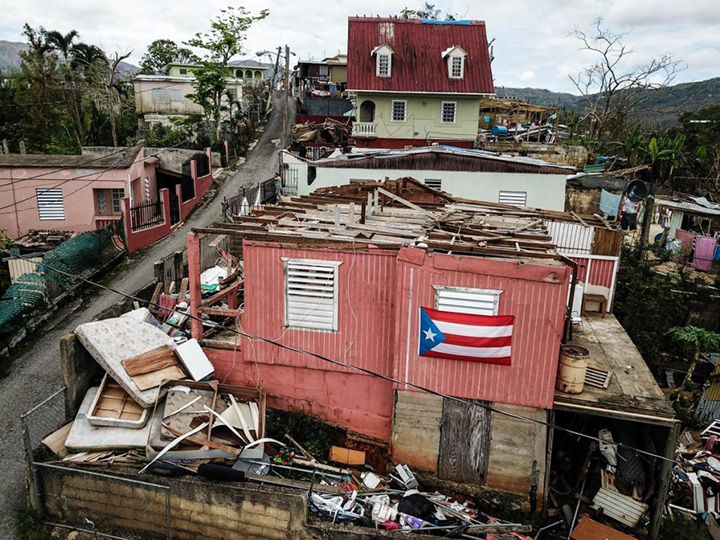
Notwithstanding, Puerto Rico’s economic crisis, the island’s antiquated energy grid, and a wasteland of destruction caused by hurricanes in 2017, Puerto Rico is still in an ideal position to help USA quickly ramp up critical manufacturing production.  In fact, the island today currently out preforms States like California, Indiana, North Carolina, and Pennsylvania.  

Are there any Potential Roadblocks?

As part of the 2017 Tax Act, the new tax on Global Intangible Low-Taxed Income (GILTI) was proposed as a way to target profitable firms that are based abroad – known as controlled foreign corporations. For tax purposes, Puerto Rico is treated as a foreign jurisdiction and the 2017 Tax Act is bad news for companies doing business on the island. Patent-dependent sectors like pharmaceuticals and medical equipment and supplies account for nearly 35 percent of the total employment in manufacturing. Pharmaceutical companies alone employ approximately 90,000 Puerto Rico residents. 

Where do we go from here?

Today there are several initiatives to help bring manufacturing back to the United States, Puerto Rico and other economically depressed areas. One such initiative is HR 6443, authored by Puerto Rico’s Resident Commissioner, Jenniffer González-Colón and sponsored by Donna Shalala (D-FL), Representatives Rob Bishop (R-UT), Darren Soto (D-FL), Ruben Gallego (D-AZ), and Peter King (R-NY).  

See article below. 

Puerto Rico’s Resident Commissioner leads bipartisan legislation that would secure the National Supply Chain

Together we will get through these very challenging times. This too shall pass.

Interested in telling your story about Puerto Rico or the Caribbean? Join us at AG&T Network. 

Historic Times

Dear Clients and Friends,

We are living in historic times, challenges…and opportunities. While we are sure you have received many notes like this, we wanted to share that AG&T remains healthy and available to help or to listen when and if the need arises. We intend to respect social distancing yet will be steadfast to remain virtually close. We want to invite you to our webinar where we will expand on the notes below. Keep an eye out for an invitation to the virtual seminar coming your way soon.

How Are We Making Business Decisions?

This is new territory for all of us. While we do not possess the proverbial “crystal ball”,  our world view, and the planning framework we are suggesting to our clients, is that while this interruption is likely to be quite profound and deeply impactful, it should prove to have been temporary. Our planning framework contemplates a recovery of the US economy during the second half of 2020.  Delaying projects and investments already in the pipeline should be carefully considered, and everyone should keep a keen eye for opportunities driven by distress. We are already seeing some signs of distress, and expect much more in the weeks to come. AG&T is not fundamentally altering our long-range plans, our team structure, or making other rash changes.

We revisit this outlook weekly, and will communicate updates as we go along. We are participating fully in global efforts to “flatten the curve” in terms of the virus’ spread. AG&T  is fortunate that our travel schedules and cross office staffing processes – in place for years – have made it relatively easy for us to transition further to a virtual workplace. Every AG&T team member has full technological and practical abilities to work remotely and this transition has been relatively seamless for us.

What Are We Working On?

AG&T remains fully engaged and doing value add work for our clients. This includes:

Management Consulting. One of the hallmarks of AG&T’s strategy planning work is to achieve maximum value and mitigating risk at all stages of the development life cycle.  We are helping our clients implement and adjust their strategy plans, understand changing market conditions, and helping firms think through cash management and risk mitigation practices. Fortunately, most of our clients in the middle of strategy planning or development consulting engagements have chosen to continue working on them, which we believe is prudent.

Acquisition and Disposition Services. Our large institutional clients are asking us to review and revise investment velocity, provide real time feedback on development risks, highest and best use valuations, and evaluate viable capital stacks for acquisitions. As you would expect, many large investors are thinking through buy opportunities that may emerge as the markets normalize and how they might respond to them.

Market Research. Many of our clients understand that to be in business in the spring and summer, or when transaction activity resumes, they will need up-to-date market research, and an even more cogent formal discussion of the market rationale for a proposed investment or development, including a discussion of the impact and long-term effects of the interruption and/or the virus.

How Are We Living Out Core Values?

Tough times reveal the strength of a company. These are some of the ways we are putting our values into action:

1. Putting Families First.

Above all else, we are doing all that we can to support the health and emotional well-being of our team and their loved ones. This requires a lot of work and flexibility, but to date we are heartened to see the enhanced team spirit and discipline of mutual support that we believe is the hallmark of our culture.

2. Being Generous.

AG&T is committed to a belief that we can be a force for good at least in small ways. We realize that the impact of this disruption will be felt unequally across our communities; especially in small islands where medical systems are poorly funded. As one example, AG&T’s mission is to make a meaningful difference in the practice and policy of sustainable development. We will continue to work in facilitating the construction of resilient communities, sustainable hotels, and promoting thought leadership with our network of top professionals worldwide.

3. Help Where We Can.

Above all else we will honor our commitment to help our clients whenever and however we can, and to honor those relationship as long-lasting bonds based on trust. When our phones ring, we answer.  We are available for guidance, for ideas, or just to listen.

Expect to hear from us in the days and weeks to come. And expect to be business partners with us for years to come after this. We hope for a speedy recovery from the challenges at hand, and are confident that our team, our friends and our clients, collectively the Best Minds in Real Estate, will be bold in charting the way forward. We may not know exactly what the journey holds, but we will come out on the other side. As the Coronavirus is novel, so will come creative solutions, new approaches and innovative ways of surviving together. For tomorrow will return to normal someday.

As always, we welcome your thoughts and comments, and wish you and yours all the very best. Stay healthy, safe, and positive.

Mixed-use project delivers on wellness in Puerto Rico


AS PUBLISHED IN HOTEL BUSINESS  BY  ON

PONCE, PUERTO RICO—Ponce Paradise—a 900-acre resort, healthcare village and marina located here—is giving guests all the conveniences and amenities of mixed-use, but with a twist.

Adam Greenfader, managing partner, AG&T, the development firm behind Ponce Paradise, said, “There is a trend in hospitality development for travelers searching for a destination that offers a wellness package or amenities.”

Conceptualized by LandDesign and Winstanley Architects & Planners along with AG&T, the teams consulted engineering and aquatic architecture professionals to make the vision a reality, bringing together a mixed-use development and a wellness destination.

“Economies of scale seem to indicate mixed-use projects will be getting larger. The live-work-play concept is really taking hold as more people want to be in the center of it all,” Greenfader said.

Ponce Hospital and Wellness City

Still in its early design and community involvement phase, Ponce Paradise will comprise a hotel and spa, wellness community, farm-to-table agricultural setup, a micro-grid, residential neighborhoods, a town square and a university medical center, with a total investment of approximately $1 billion.

Specifically, the 166-acre Wellness City will have research, university and care facilities, which will include a branded hospital, rehabilitation centers, outpatient, recovery rooms, assisted living facilities, nursing home, short-term residential units and condominiums. The wellness lagoon will have restaurants and retail, and a plaza will be home to a worship center, park and entertainment venue. 

The development will not only promote health and wellness but sustainability as well. About 60% of the site is untouched and will remain in its natural state, according to the Puerto Rico Conservation Easement Law. Additionally, the developed area has acres of green space, waterways and parks.

“Wellness tourism has been estimated as a $563 billion industry in 2018,” Greenfader said. “Puerto Rico is ideally situated to capture a large part of this market due to its central location, airlift and cruise traffic, U.S. medical doctors and great infrastructure.

“There are many medical treatments that can be done in Puerto Rico for a fraction of the cost—and you get to enjoy an amazing Caribbean vacation experience,” he added.

There are, of course, some challenges. “Less than 7% of Puerto Rico’s GDP is tourism based. For a Caribbean island with great beaches, people and infrastructure, this in incredibly low. The city of Ponce, in particular, has a convention center, port and airport that are highly underutilized,” Greenfader said, highlighting the project’s necessity.

He said the first challenge is to get the Municipality of Ponce and the Fiscal Board controlled by the U.S. Congress to fully use its assets. The second challenge—which is common in any large mixed-use project—is to provide the right combination of uses.

“The last challenge is financing,” he said. “In Puerto Rico, there are $20 billion of Community Development Block Grants for Disaster Relief. We trust some of that will be allocated to critical projects such as Ponce Paradise.”

Following meetings with the municipality, major medical associations, cruise lines and community leaders—each with their own concerns—Greenfader is confident that they will be able to address each group while also honoring Ponce’s natural surroundings.

Master Plan for Wellness City and Hospital


“Our job as project sponsors is to balance the concerns of each group with the stewardship of the environment,” he said. “The project must make economic sense but also be a valuable contributor to the local region, protecting and enhancing natural assets.”

Greenfader said that as hospitality as a whole faces its own challenges, differentiators like mixed-use developments are gaining more momentum.

“Airbnb and other disruptors have proven that the market is changing and that guests are seeking new experiences. Budget allocations, the desire to be together in large groups and ease of booking a reservation are just a few reasons the hotel industry is adding more residential units,” he said.

According to Greenfader, residential space generates revenue that can assist with the financing capital stack, while also creating a rental pool of additional units for the high seasons.

Ponce Paradise plans to offer three residential options: single-family homes, smaller vacation rentals and affordable “shotgun-style” housing, all with their own facilities and security.

Its attention to health, however, is the real differentiator, with nature serving as both the basis for its design and Ponce Paradise’s mantra.

“Everyone realizes that wellness is holistic; we don’t just treat the physical but the whole mind, body and spirit,” Greenfader said. “Doctors know that a patient’s success rate is often a result of a positive mental attitude. A cold, sterile room doesn’t necessarily lend itself to great health. Great architecture, beautiful landscaping, water vistas, amazing smells, community, etc., can make the difference between success and failure in a person’s treatment.”

Wellness extends far beyond simple offerings here. “Doing yoga with goats may not prove to have ‘legs,’ but resort wellness has just begun to take off. The reasons are simple: Industrialized nations are getting older, people are living longer, and with two billion new tourists coming from India and China, there are many more potential people for this market niche,” he said. “Some experts say the wellness resort industry is expected to double within the next 20 years and become a $1-trillion industry.”

The sustainability factor is also attracting hoteliers, especially in an area that’s been struck by natural disasters.

“Developers are starting to realize that a weather-related crisis can have a devastating effect on operational risk,” he said. “If a hotel cannot withstand hurricane-force winds, floods and mold, then it will suffer huge downtimes and repairs. In fact, hotels may not ever come back online at all.”

Greenfader said that hotel buyers are now evaluating their portfolios for climate risk and realizing that initially spending 15-20% more in construction costs to make a project resilient and sustainable makes good business sense.

“Developers also realize that if they can stay open during a crisis, their occupancy will be 100% or more,” Greenfader said. “During a relief and rebuilding period, hotels host thousands of relief workers, insurance adjusters and other critical workers. It’s a win-win to be resilient and sustainable.”

This couldn’t be more clear than at the current time, when Puerto Rico is beginning to recover from a series of earthquakes, which Greenfader noted had hit the south particularly hard—especially structures built before 1990, when codes were updated to bolster construction for seismic activity.

“The earthquake reaffirms that a project like Ponce Paradise needs to build a resilient infrastructure into its master plan and be forward-looking in its design,” he said. HB

ULI Roundtable on Climate Resilience in The Netherlands

ULI Roundtable on Climate Resilience in The Netherlands


ULI Climate Resilience Roundtable


The ULI Roundtable on Climate Resilience in The Netherlands was held to discuss how hurricane destruction in the Caribbean (and specifically Puerto Rico, Sint Maarten in 2017 and the Bahamas in 2019), reveals an urgency to rethink urban resilience and regeneration in the Caribbean. The ULI Roundtable brought together Dutch planners, designers, architects, engineers, financial institutions, developers, and investors to discuss new solutions and share global best practice. Specific issues focused on the Dutch knowledge and leadership on climate mitigation across urban design, development and investment. The two speakers included: 

Mr. Adam Greenfader, Chair of the ULI SE Florida/Caribbean Council – shared experiences and outcome advice from the ULI Advisory Services Panelists in the Municipality of Toa Baja, Puerto Rico after the catastrophic and deadly 2017 Hurricane Maria.

Mr. Henk Ovink, Dutch special envoy to the United Nations on Water, and flood expert shared insights into global climate change challenges and the Dutch resilience plans for both the Netherlands and Dutch Caribbean.

Some of the works discussed:


AG&T is a real estate development and consulting company founded in 1998 with headquarters in Miami, Florida. Our  track record spans over 55 real estate development projects in Puerto Rico, Sint Maarten, Costa Rica, Panama, Mexico, Dominican Republic, and various other Caribbean islands.

The Future of Tourism and Hospitality Panel

San Juan- “The Future of Tourism and Hospitality: Increasing Capacity and Competing in a New Caribbean Market”, will be the main topic to be discussed by a panel of experts on the subject, each one representing a sector in the ever-changing world of tourism and hospitality.

The chairman of the board of the PRBA, Eng. Emilio Colón- Zavala, stated that: “Through this panel, the Puerto Rico Builders Association (PRBA) will provide the space for a wide and varied discussion, which will cover the new trends in the Modern Tourism industry, as well as the importance of efficiently positioning Puerto Rico as a competitive destination in the Caribbean. Tourism with less than 7% of the islands GDP, is slated to become one of the pillars of our economic development and it is urgent to incorporate into our offer all new trends that continue to develop and evolve in the Hospitality Industry”.

The panel moderated by Adam Greenfader, Managing Partner of AG&T, will have the participation of:

  • Carla Campos- Executive Director, Puerto Rico Tourism Company
  • Pablo Maturana- Managing Director Development South America & The Caribbean, Hilton International
  • Rachel DeLevis- Policy Associate, AirBnB
  • Federico Stubbe- President, PRISA Group
  • Federico Sánchez- President and CEO, Grupo Interlink
  • Eric Berman- Chief Investment Officer, Lifeafar


This panel will be held on October 30, as part of the Forty-Sixth Annual Convention of the Puerto Rico Builders Association: “A Challenge to Build the Future”, which will take place at the Puerto Rico Convention Center on October 29 and 30.


###

About the PRBA

The Puerto Rico Builders Association is a private, non-profit organization.  Established in 1951, its main purpose is to represent leading developers and investors of housing, commercial, office, industrial and tourism projects. The Association also represents investors, suppliers, banks professionals and companies associated with development and construction in Puerto Rico. Its main objective is to promote and lead the planned, safe and sustainable development in order to serve as the island’s economic engine, in collaboration with Puerto Rico’s public and private sector.