
In 2018, less than a year after Hurricanes Irma and Maria devastated Puerto Rico, the headlines focused almost exclusively on destruction, migration, and uncertainty.
At AG&T, we saw something different. While acknowledging the immense humanitarian and economic challenges facing the island, we believed Puerto Rico was entering a period of profound transformation. The combination of federal reconstruction funding, economic reform, tax incentives, private investment, and long-overdue infrastructure modernization created the foundation for what could become one of the island’s most significant economic renaissances in decades.
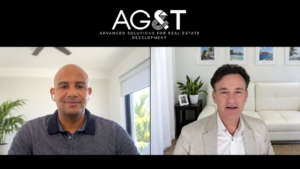
That perspective was featured in an interview with Bisnow South Florida, where Adam Greenfader discussed Puerto Rico’s long-term outlook, the rebuilding process, and why the island’s greatest opportunities still lay ahead.
Several of the themes discussed in the interview have proven remarkably accurate. Puerto Rico experienced one of the largest reconstruction efforts in modern U.S. history, supported by tens of billions of dollars in federal investment for housing, infrastructure, utilities, schools, healthcare facilities, and resilience projects.
- Tourism reached record levels.
- Luxury hospitality investment accelerated.
- New residents, entrepreneurs, family offices, technology companies, and investment funds relocated to the island, strengthening sectors ranging from real estate and finance to life sciences and technology.
The discussion also anticipated the growing importance of Puerto Rico’s tax incentive programs, Opportunity Zones, and the island’s role as a gateway between the United States, Latin America, and the Caribbean.
At the same time, many of the challenges identified remain part of Puerto Rico’s ongoing conversation, including housing affordability, infrastructure modernization, energy resilience, insurance costs, population dynamics, and creating economic growth that benefits all Puerto Ricans.
AG&T’s Perspective
For more than three decades, AG&T has believed that Puerto Rico’s future extends far beyond disaster recovery. The island possesses exceptional long-term advantages, including its strategic location, U.S. legal and financial framework, highly educated bilingual workforce, manufacturing base, expanding hospitality sector, and unique tax and investment incentives.
Our work has consistently focused on helping connect these strengths with responsible private investment while promoting resilient, sustainable, and inclusive economic development.
The interview below captures an important moment in Puerto Rico’s history when rebuilding was just beginning and the island’s future remained uncertain.
Looking back today, it serves as a reminder that meaningful transformation often begins long before the results become visible.
The following article originally appeared in Bisnow South Florida and is reproduced here with permission/summary for historical context.
Puerto Rico After The Hurricanes: Investors And Bitcoin Cowboys Are Circling
By Deirdra Funcheon as Published in Bisnow South Florida
Puerto Rico has been desperate for aid that has been too slow and insufficient following hurricanes Irma and Maria in 2017. But a few on the island say the attention followed might ultimately be a net positive for the commonwealth. “The bottom line is that Puerto Rico in the next two to three years is expected to see strong growth — 3 to 3.5% of GDP,” said Adam Greenfader, principal of Miami-based AG&T Development and Advisory Services. “It hasn’t had growth in 12 years. A depression is defined as negative economic growth for three quarters, so for all intents and purposes, Puerto Rico has been in a depression for 12 years.”
Greenfader married into a family that facilitates Section 8 housing throughout Puerto Rico. He then became a developer there himself. Currently, he serves as the liaison to the Puerto Rico Builders’ Association and the chair of the Urban Land Institute’s Caribbean Council. Greenfader points out that while last summer’s hurricanes devastated the commonwealth, jobs had already been scarce for more than a decade as the government faced a crippling debt crisis, owing $123B and declaring bankruptcy last spring. Though an estimated 150,000 Puerto Ricans fled to the U.S. mainland after the hurricanes, between 60,000 and 70,000 residents had already been leaving each year of the crisis. Puerto Rico’s current population is about 3.5 million, down from a peak of about 4 million, Greenfader said.
Turnaround efforts began years ago. Reforms enacted in 2012 enticed businesses and high net worth individuals to relocate to Puerto Rico by taxing corporate profits at a flat 4% and eliminating taxes on dividends, interest and capital gains for anyone who resided at least half the year in Puerto Rico. For anyone selling a company or large amounts of stock, these measures could result in saving millions of dollars on taxes. Famously, Putnam Bridge Funding CEO Nicholas Prouty invested more than $100M and relocated his family. Billionaire John Paulson bought several hotels. Michael E. Tennenbaum founded Caribbean Capital & Consultancy Corp. Goldman Sachs and various hedge funds moved in and bought distressed mortgages for pennies on the dollar.
Greenfader said that about 1000 high net worth individuals moved to the island, and about 200 are coming each year. Cottage industries sprung up to cater to these ultra-wealthy. Then last year’s hurricanes blew through, knocking out power and killing 64 people directly and 4,645 in total, according to Harvard University. Though the U.S. government responded painfully slowly, $18B in aid has been approved from the Department of Housing and Urban Development, and billions more are expected, Greenfader said.
Recovery is slow, but happening. Tesla built a solar array to power a children’s hospital. Doctors are being offered tax incentives to stay in Puerto Rico. Private insurance companies have started to pay claims, so 60% of hotels are now operational, Greenfader said. He believes that when the economy improves, exiles will move back.
Publicity around the hurricanes certainly brought attention to the commonwealth. Immediately after the hurricanes, only about half of Americans knew that Puerto Rico was part of the United States; that number has since risen to 76%. Following the disaster, dozens of cryptocurrency entrepreneurs relocated to San Juan to buy hundreds of thousands of acres of land, take advantage of the tax structure and set up a “crypto utopia.” Greenfader suggested there is more opportunity for economic recovery: Puerto Rico’s tourism industry makes up only 6.5% of gross domestic product, whereas on many Caribbean islands, that figure is 50% or more. That is by design, he said; in the 1950s and ’60s, laws were structured to keep out the Mafiosos who ran Cuba. It could be increased substantially.
Furthermore, the island has long had a mishmash system of collecting property taxes, partly because so many homes are built informally or illegally — “People get a paycheck, buy [a] few beers, invite their friends and family over to build a wall at a time,” Greenfader said — and partly because the tax code hasn’t been revised since 1950s. “A property worth a million dollars might pay no more than $2K, $3K in taxes for a year,” Greenfader said. A better system of collecting taxes could be implemented to make the government more solvent. Although he is optimistic, Greenfader acknowledged the challenges.
While Puerto Rico is a diverse society, where rich and poor have long mixed freely, the influx of people taking advantage of the tax breaks is “adding an upper class the island never had before,” he said, and there has been some blowback. Workaday employees are facing pension cuts and austerity measures as Puerto Rico grapples with its debt. Currently, according to Democracy Now, 55,000 residents are in foreclosure and the government is turning to privatization as the solution for economic woes, which will enrich investors but hurt the working class. In a Bloomberg article Monday about the search for someone to buy the country’s beleaguered electric company, which goes so far as to ask potential buyers how they would like to be regulated, a Puerto Rico resident said, “We are tired of people coming here to get rich and take advantage of us.” Some grass-roots organizations have taken shape to resist Wall Street — forces that author Naomi Klein explores in a new book, “The Battle for Paradise: Puerto Rico Takes On the Disaster Capitalists.”
Greenfader noted that insurance premiums will likely continue to rise, and the Jones Act, a shipping law that requires goods to stop in a mainland port, makes commodities expensive. Whatever economic policies prevail, at least new construction on the island should be more resilient. Greenfader said builders already adhere to codes that mirror Miami-Dade’s, which were made stronger after Hurricane Andrew in 1992. They use reinforced concrete and no wood. Going forward, he said, there is a commitment to using more sustainable designs, particularly in the energy space, such as solar power arrays and micro electric grids. Today, about 10,000 customers in Puerto Rico who lost electricity after last year’s hurricanes are still without power.