ULI CARIBBEAN ROUNDTABLE


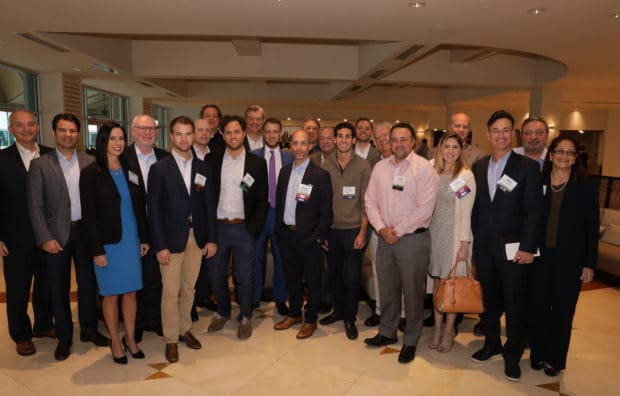
On May 8th,  the ULI CARIBBEAN ROUNDTABLE celebrated its second ROUNDTABLE meeting of the year.  The turnout at Wework in Brickell City Centre was large and enthusiasm for the region palpable.  Present at the event were industry leaders in finance, debt lending, construction, architecture, affordable housing, hotels and green building.      

Big shout out to the Kresge Foundation (https://kresge.org) and all who participated in the Toa Baja Puerto Rico Resiliency Panel. The panel was but another example of the  capacity of ULI to bring real solutions to real world problems.    

Special thanks to our two speakers at the ULI CARIBBEAN ROUNDTABLE -Mr. Rogerio Basso, Head of Tourism at IDB Invest and Mr. Andrew Dicky – Executive VP JLL Hospitality. Financing projects in the Caribbean brings its own set of challenges and opportunities. It was great to look under the proverbial “hood” and examine how capital approaches Caribean hospitality lending. 

Save the Date –On August 1, 2019, The Puerto Rico Builders Association will be hosting its 3rdAnnual Bisnow Caribbean Hospitality Investment Summit in Miami. If you are interested in Speaking/Sponsoring there are a few spots available please reach out to Jorge Montilla jmrm@mcvpr.comfor more details.

You can also see a full list of ULI Events at: https://seflorida.uli.org/events/


Caribbean Investment Summit- Boca Raton

The Agency Summit

 The Agency’s kicks off its first annual summit which will bring together key insiders, legal experts, developers, and market analysts ready to engage and share their knowledge on investing, business, and selling in the Caribbean.  Adam greenfader to speak on new hotel development in the Caribbean.


To learn more about AG&T, click here. 


Plan Your Day


AG&T Congratulates UM 2019 Thought Leaders

Thought leadership

We welcome this year’s class of great thought leadership to AG&T.    Each with a very unique set of skills, languages, and impressive backgrounds…all expanding their knowledge base at the University of Miami Master of Real Estate Development Program

Big things to come from this amazing group and lots of hope for our industry.  


Caroline Cozzi – See Linkedin Profile 

Francisco Masso –  See Linkedin Profile

Xiaoyun Jiang 


If you are interested in joining our internship program contact us


Strong turnout at the first 2019 ULI Caribbean Roundtable Panel

Strong turnout at the first 2019 ULI Caribbean Roundtable Panel.
Presentations by Emilio Colon Zavala, President of the Builders Association of Puerto Rico, Ricardo Alvarez Diaz of AD&V, Robbie Karver of EY and chaired by Adam Greenfader of AG&T. Big Shout out to Julie Medley, Mallory Baker, Max Helden and the whole ULI Southeast Florida team for putting this amazing event together.


Some of the biggest takeaways:

  • Growth is forecasted at a 8.1% with growing airlifts. In spite of the tumultuous 2017 hurricane season, the occupancy rates were around 65% in 2018 and should peak back up to 70% across the region in 2019.
  • Access, Access, and Access continues to be the principal driver for hospitality. 
  • “The Caribbean region today is seen as a maturing destinations with more diversified land offerings”, quoted Robbie Karver.
  • Looming recession talks in US was downplayed for the Caribbean region as the lack of a significant of new supply (compared to 2008) should help bolster the region.
  • Caution was noted about citizenship programs (CIP) for several Caribbean governments not necessarily generating revenues as expected.
  • Smart money is looking at Puerto Rico with lots of incentives for tourism development, tax benefits for those wanting to move/start business on the island (law 20/22), and billions of dollars of recently approved US Federal grants. 95% of Puerto Rico is an Opportunity Zone. 
  • Institutional capital seeking better rates than on the US mainland although Caribbean hospitality lending is ‘cautiously optimistic’ with focus on shorter ramp up period of less than three (3) years.
  • There is strong demand for world class Marinas and for Big-Big yachts.
  • Resiliency is getting into new developments and is having very little negative effect on the IRR.

Other Events 

The roundtable conversation highlighted a series of events that will be taking place in 2019 (email adam@agandt.net for a full schedule).

  • MAY 2, ULI MEMBER APPRECIATION SOCIAL & POST TOA BAJA PANEL UPDATE (Puerto Rico).
  • AUG 1 CARIBBEAN HOSPITALITY SUMMIT – PR BUILDERS (Miami)
  • OCT 23-25 ULI Mexico – Latin America Conference (Cancun)
  • NOV 14 PUERTO RICO BUILDERS ASSOCIATION CONFERENCE (Puerto Rico)

Vision Awards

ULI will be highlighting development projects of excellence at its Annual Vision Awards Event which will be held on September 5that the JW Marriott Marquis. If anyone would like to submit a Caribbean project please contact Mallory.Barker@uli.org

Coming Next

For the next roundtable the following items were discussed as potential areas of interest:

  1. To discuss a list of hospitality projects that are getting funded in the Caribbean Region, share details on projects and the funding
  2. Bahamar project and case study
  3. Sources of hotel financing and the interplay of mezzanine financing
  4. The synergy of luxury cruise ships and private islands
  5. The business of Cannabis in the Caribbean
  6. The effect of Hurricanes on hotel supply and competition
  7. Sargassum seaweed and its adverse effects on the region

This first meeting was open to ULI members and guests.  Subsequent roundtables will require membership for participation.  Please email Max.Helden@uli.orgif you need details on joining.

ULI Panel To Advise Puerto Rico on Hurricane Resilience

The Urban Land Institute to Advise Toa Baja, Puerto Rico on Hurricane Preparedness and Resilience

POSTED ON NOVEMBER 29, 2018 BY JUSTIN ARNOLD

https://americas.uli.org/advisory-service-panels/toa-baja-puerto-rico-resilience-advisory-services-panel/

Nationally Renowned Panel of Land Use and Urban Planning Experts to Visit Area December 3-7.

For more information contact Adam Greenfader at adam@agandt.net.

WASHINGTON (November 29, 2018) – A group of nationally renowned land use, real estate, and urban planning experts representing the Urban Land Institute (ULI) will be providing strategic recommendations and advice next week to the municipality of Toa Baja, Puerto Rico, on how to best improve preparedness for extreme weather events and ensure all residents benefit from investments in resilience.

ULI is a global, multidisciplinary real estate organization whose work is driven by 42,000-plus members dedicated to responsible land use and building thriving, sustainable communities. The ULI representatives, convened through ULI’s renowned Advisory Services program, will be visiting Toa Baja, Puerto Rico from Sunday, December 3 through Friday, December 7. The panel will provide strategic advice on resilience, economic development, housing, and land use protocols. Items to be addressed include:

  • implementing land use processes to mitigate environmental risks,
  • securing access to partnerships and investment opportunities, and
  • leveraging competitive economic advantages and drivers to ensure all residents benefit from improved resilience.

During the week, the panelists will tour the study area and spend two days meeting and interviewing stakeholders from the public and private sectors, including Toa Baja Municipality leadership and Mayor “Betito” Marquez. After carefully analyzing the site and completing the interviews, the panelists will then frame their recommendations and draft a presentation that will be made to the public at the end of the visit.


The panel’s upcoming visit was initiated when the Urban Land Institute Advisory Services team was invited by ULI SE Florida/Caribbean, Puerto Rico’s Builder’s Association and the municipality of Toa Baja leadership in late August 2018 to discuss the opportunity to provide technical assistance to enhance the community’s economic and climate resilience. The team received context of Hurricane Maria and Irma’s impacts as well as a guided tour of areas the municipality identified in need of reinvestment.

“This is a unique opportunity to showcase a community that represents a microcosm of the entire Island of Puerto Rico,” said ULI Foundation Governor and ULI Puerto Rico Co-Chairman Ricardo Alvarez-Diaz, who is chief executive officer and president of Alvarez-Diaz & Villalon. “Our goal is to take the panel’s recommendations and implement them not only in Toa Baja but throughout the whole island.”

The chairman of the panel is ULI Life Trustee James DeFrancia, president of community development at Lowe Enterprises in Denver, Colorado. “We are excited to bring the expertise of our members to Toa Baja,” DeFrancia said. “The strength of the Advisory Services program lies in ULI’s unique ability to draw on the substantial knowledge of members representing all aspects of the real estate industry. The independent views of the panelists bring a fresh perspective to land use challenges. The advisory services program is all about offering creative, innovative approaches to community building.”

DeFrancia will be joined on the panel by Sarah Sieloff, executive director, Center for Creative Land Recycling, Oakland, California, who will serve as vice chairman, and panel members Michael Bloom, department manager, sustainability practice, R.G. Miller Engineers, Inc, Houston, Texas, Trini Rodriguez, principal, ParkerRodriquez, Inc., Alexandria, Virginia, Thomas Roth, principal, Grass River Property, Coconut Grove, Florida, Don Edwards, chief executive officer and principal, Justice & Sustainability Associates, Washington, D.C., Chris Calott, LaLanne Chair – R.E. development, architecture and urbanism and associate professor of architecture, University of California, Berkley, California, Jessica Boehland, senior program officer, environment, The Kresge Foundation, Detroit, Michigan, and Bob van der Zande, director of residential markets, City of Amsterdam, Metropolitan Region.

The assignment for Toa Baja is part of a series of advisory panels being supported by a generous grant from The Kresge Foundation to advance the Institute’s promotion of urban design and development practices that are more resilient and adaptable to the impacts of climate change. With Kresge’s support, ULI is leveraging the substantial expertise of its members to provide guidance on community building in a way that helps to preserve the environment as well as boost prosperity and foster a high quality of life.

Now in its 71st year, ULI’s globally renowned advisory services program assembles experts in the fields of real estate and land use planning to participate on panels worldwide, offering recommendations for complex planning and development projects, programs and policies. Panels have developed more than 700 studies for a broad range of land uses, ranging from waterfront properties to inner-city retail.

Past sponsors of ULI advisory service panels include: federal, state and local government agencies; regional councils of government; chambers of commerce; redevelopment authorities; private developers and property owners; community development corporations; lenders; historic preservation groups; non-profit community groups; environmental organizations and economic development agencies.

NOTE TO REPORTERS AND EDITORS: Members of the public and media are invited to a reception on Monday, December 3rd, from 5:30 pm – 7:00 pm at the Centro Las Dos Fuentes, 867 Carr Rio Hondo, Toa Baja, PR. The panel will provide its recommendations at a public presentation on Friday, December 7th at 9:00 am at the Centro Comunal Rafael “Pipo” Negron Calle Aetria Ingenio in Toa Baja, Puerto Rico.

About the Urban Land Institute
The Urban Land Institute is a nonprofit education and research institute supported by its members. Its mission is to provide leadership in the responsible use of land and in creating and sustaining thriving communities worldwide. Established in 1936, the institute has more than 40,000 members worldwide representing all aspects of land use and development disciplines.


Sponsor thanks:

 Kresge Foundation, ULI Southeast Florida,  Puerto Rico Builders Association.

For more information: adam@agandt.net


ULI Hospitality and Recreation Council – Puerto Rico

The ULI Hospitality and Recreation Council met this month to discuss some of the recent trends and opportunities in the hotel industry.  Big shout out to the whole leadership team – to Robbie Carver and Ari Tenzer specifically for putting together an amazing panel of speakers.  

Puerto Rico this year was top of mind at ULI Hospitality and Recreation Council. Several speakers highlighted new opportunities in hotel investment and other tourism activities.  While it is part of the HRDC guidelines to keep specific project information confidential, I would like to shed some color on recent events happening in Puerto Rico that is leading to this renewed interest and demand.  

  1. Limited Tourism Supply – to date there are about 14,000 hotel keys in Puerto Rico. Most of the supply that was damaged in the hurricanes has been improved. Occupancy rates hover 80% and ADRs have been increasing every year for the last five years.  A recent market study by the Puerto Rico Builders Association,  shows a demand for 30,000 keys in next decade.   
  2. Liquidity – in the last six months the resolution of Puerto Rico debt has made significant progress with better than expected returns on the top tier bonds of  Geo & Cofina.  
  3. Pro-Business Government – For the first time in almost two decades, the island has a government that is actively seeking private investment. 
  4. Tax Incentives– The Tourism Hospitality tax incentive provides up to 40% back on capital investment for hotel and other tourism related projects. 
  5. Other Tax Incentives– Law 20/22 has has resulted in 1,200 high net worth families moving to the island as well as 175 service companies, and 75 independent financial corporations. 
  6. Better branding – In 2018 the DMO (Destination Marketing Organization)  was  launched with the goal of bringing better and more consistent messaging  to Puerto Rico’s tourism and industry.  
  7. Puerto Rico USA – After the 2017 hurricanes, 82%  of the US recognizes Puerto Rico as being “part of the United States.” 
  8. 80+ Billions of dollars –  This robust allocation will stimulate the economy in the short term and hopefully provide a launching pad for long term economic growth through CDBG-DR, FEMA, HUD, LHTC, SBA, and other programs.
  9. Opportunity Zones – applies to approximately 97% of the island of Puerto Rico.  This should de-risk equity investment and reduce the gap in cap rates between stateside and island investment opportunities. 
  10. Public-Private Partnerships – The P3 laws in Puerto Rico are some of the most modern in the world allowing direct pass-through of payment from consumer to sponsor. The current administration has placed a strong reliance on unsolicited P3 bids – in other words it is recommend that you submit your own idea of a tourism related project.  
  11. New Infrastructure – The soon to come sale of the electrical authority (PREPA) and other antiquated government facilities will dramatically reduce costs across the entire economy. This will make the hospitality sector in particular more competitive. 
Florida Product Councils (FPCs) are small groups of ULI members that commit to meet at least two times per year with fellow real estate professionals to share best practices, grow their network and discuss development practices that influence and change our communities.
If you wish to get involved: https://northflorida.uli.org/get-involved/florida-product-councils/hrdc-membership/

Big Stock Windfall? New Rule Defers Taxes With Real Estate Investment

Big Stock Windfall? New Rule Defers Taxes With Real Estate Investment – WSJ

U.S. aiming to attract $100 billion in development with ‘opportunity zones’ created by tax overhaul 

 Billions of dollars have started piling into new real-estate funds targeting disadvantaged U.S. neighborhoods, as investors line up to capitalize on a section of last year’s tax overhaul. 

The tax bill created more than 8,000 tax-advantaged “opportunity zones.” They range from parts of New York, Los Angeles and Washington, D.C., to rural areas and the entire U.S. territory of Puerto Rico. On Thursday, Treasury Secretary Steven Mnuchin predicted the zones will attract over $100 billion in private capital. 

Opportunity-zone investments could be “the biggest thing to hit the real-estate world in perhaps the past 30 or even more years,” says Bruce Stachenfeld of law firm Duval & Stachenfeld. 

Treasury Secretary Mnuchin speaks during a working session on opportunity zones in February. On Thursday, Mr. Mnuchin predicted the zones will draw more than $100 billion in private capital to disadvantaged areas.  

The zones have multiple tax benefits. Anyone with capital gains—from real estate, Amazon shares or most any other source—can defer taxes on them until 2026 if they roll those gains into investments in these designated zones. Investors can also get a discount of up to 15% on those taxes when they eventually pay them. And capital gains from qualified investments in the zones that are held for at least 10 years won’t be taxed at all. 

“Billions of dollars, maybe more, will be coming into the market, with the investors saying, ‘We only want to put this money into these communities because of these tax benefits,’” said Seth Pinsky, executive vice president of New York developer RXR Realty, which is exploring creating an opportunity-zone fund. 

So many investors are expected to take advantage of the tax break and invest in these zones that it will cost the government $7.7 billion between 2018 and 2022. The cost will shrink to $1.6 billion over 10 years as deferred taxes are paid, according to the Joint Committee on Taxation. Unrealized capital gains on stocks and mutual funds held by U.S. households alone total about $2.3 trillion, according to a report by the Milken Institute’s Center for Financial Markets, citing research from the Economic Innovation Group. 
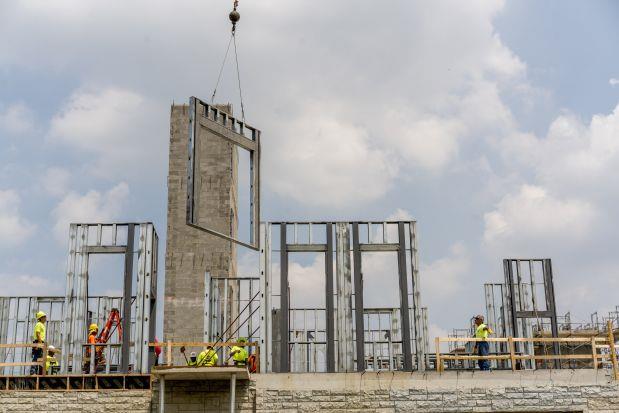
 

The tax benefits apply to most equity investments in the zones, including real-estate development and operating businesses such as restaurants, stores and technology startups. But most of the initial investments are expected to be in real estate, partly because opportunity-zone tax law provides the most benefits to investors who can quickly deploy a lot of capital. 

“Doing a $300-million real-estate development project is so much easier than 300 different $1-million operating-company investments,” said Aron Betru, managing director with the Milken center. 

Developers and investors say there are still many unanswered questions, including whether the tax breaks will produce the intended benefits for targeted neighborhoods. They’re hoping for more clarity when the Internal Revenue Service issues further guidance, which is expected to happen any day. 

The program—which was partly conceived by Sean Parker, the entrepreneur who helped launch Facebook and Napster—has raised concerns among community groups about the impact on existing residents of low-income areas. “There’s a tipping point where the people who were there before get pushed out, and the people who come in are the people who are benefitting,” said Mr. Pinksy. 

But real-estate investment firms, developers and others are already vying for positions at the starting line. Mr. Betru says he has heard about close to 20 firms that have either started raising or are planning to raise funds ranging from $100 million to $500 million. 

James Lang, a tax attorney in Greenberg Traurig’s Tampa, Fla., office, says he has fielded 10 to 15 calls each day on the topic since July and his firm has assembled about 45 lawyers to focus on opportunity-zone investing. 

Some developers that happen to be working on projects inside zones already find themselves in prime positions. Florida-based firm Waypoint Residential was planning a 250-unit rental apartment project in the suburbs of Louisville, Ky., before the area was designated an opportunity zone. 

Raising capital turned out to be a breeze, said Scott Lawlor, Waypoint’s chief executive. “We were 50% oversubscribed within two weeks.” 

Developers are aware that opportunity-zone investments will be risky despite the tax benefits. To qualify, real-estate investments have to be ground-up projects or major rehabilitations. 

“When this much dough forms this quickly with this much of a buzz around it, you just have to step back” and be careful, said Mr. Lawlor. 

The zones could be a major boon for real-estate fundraising, which has been getting tougher. A total of 48 private real-estate funds closed globally in the second quarter of 2018 for a combined $23 billion, down from $38 billion raised by 75 funds in the first quarter, according to data firm Preqin. 

Small-to-midsize firms with experience investing in disadvantaged areas have largely been the first movers in the opportunity-zone business. Firms that announced plans to raise funds include Youngwoo & Associates, of New York, whose current projects include redeveloping the historic Bronx Post Office into a retail and office project, and Washington, D.C.–based Fundrise, which is considering possible investments in Los Angeles, Oakland, Dallas and Seattle. 

Jessica Millett, co-chair of Duval & Stachenfeld’s Tax Practice, said that in addition to real-estate developers, she has also received interest in opportunity zones from investment bankers, advisers representing technology executives and other investors. 

Some large banks already involved in economic development have also become active in the zones. For example, Goldman Sachs Group Inc.’s urban investment group has already made $70 million worth of deals in opportunity zones in 2018 and has over $1 billion of possible transactions in the pipeline, according to Margaret Anadu, the group’s head. 

Other big names in real-estate investment, such as Blackstone Group ,KKR and Apollo Global Management LLC, are expected to sit on the sidelines for now, according to people close to the firms. These firms tend to make larger investments than the deals that will likely be made in opportunity zones. 

“Deals will happen, but I don’t think it will be billions of dollars of equity from one manager,” said Ralph Rosenberg, KKR’s global head of real estate. 

By Peter Grant and Gregory Zuckerman WSJ Updated Oct. 2, 2018 11:43 a.m. ET

Ruth Simon contributed to this article. 

Join us at the CUNY Reconstruction Conference – Puerto Rico 10.5.18


Reconstruction Conference Puerto Rico 

October 5, 2018, 

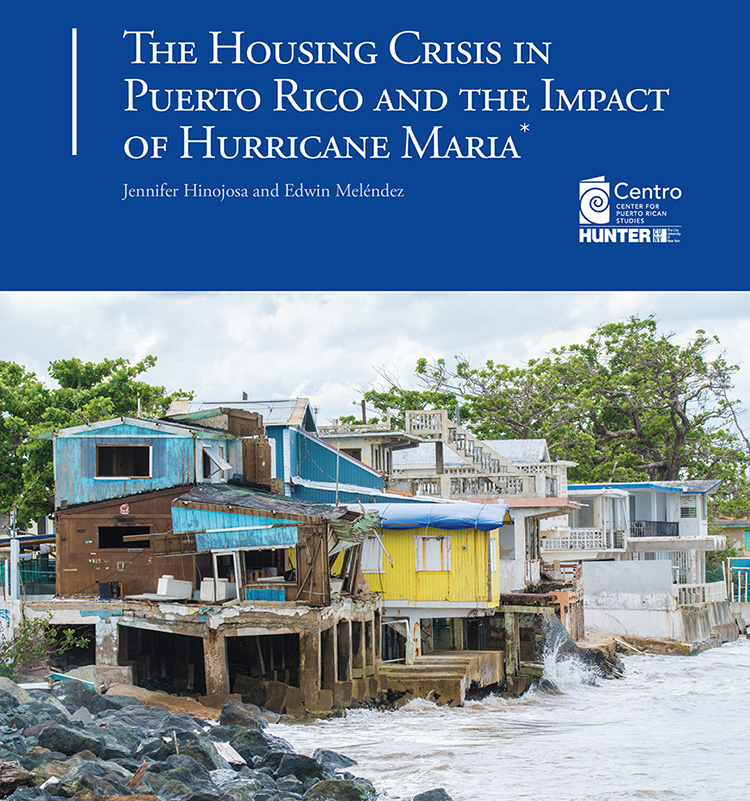
As of today, supplemental appropriations for disaster relief add up to a total of $136.1 billion, The Center for Puerto Rican Studies at Hunter College, CUNY, the UPR Graduate School of Planning will convene an event to discuss these opportunities. Currently, an estimated $30 billion of these funds has been distributed, allocated, or obligated for recovery efforts in Puerto Rico. In addition to funds earmarked for disaster relief, there are other federal programs that provide financial support to economic development and could be combined with disaster relief funding to make feasible economic development projects. 

Core federal programs supporting economic recovery in Puerto Rico after the catastrophic impact of Hurricanes Irma and Maria include: 

1. CDBG-DR: The Community Development Block Grant (CDBG-DR) Program may fund a broad range of recovery activities. As of today, $1.5 billion have been allocated as part of the first CDBG-DR grant. The period for public comments to the CDBG-DR Action Plan ended on May 25, 2018 and HUD will respond to public comments by August 1, 2018. A similar process will take place for the other CDBG-DR funds awarded to Puerto Rico totaling $18 billion. 

2  Opportunity Zone: Puerto Rico has been designated as an opportunity zone. Investor in Qualified opportunity funds intended to target economic development and job creation in poverty areas are offered partial exemption for short and long-term capital gains taxes, full exemption of all capital gains if investments are maintained for 10 years. 

3. HubZones: The HUBZone program, run by the Small Business Administration, allows small businesses to obtain government contracts without the “full and open competition” normally required, gives preferential consideration to those businesses in full and open competition and makes businesses eligible to compete for set-aside contracts. On a per capita basis, the total dollar value of federal contracts performed in Puerto Rico is less than in any U.S. jurisdiction, other than American Samoa. Additionally, 6 out of 10 federal contracts performed in Puerto Rico are awarded to firms outside of Puerto Rico rather than local businesses. 

4. Low Income Housing Tax Credits (LIHTC): The LIHTC program is one of the largest sources of new affordable housing in the United States. The program provides tax incentives to encourage private and nonprofit developers to create affordable housing projects. The Puerto Rico Housing Finance Authority (PRHFA) announced a total estimated annual allocation for 2018 to 2020 of $16,038,934 with set-asides of $2,353,698 for nonprofit and $13,685,035 for other projects. 

5. New Markets Tax Credit (NMTC): The NMTC program incentivizes community development through the use of tax credits to attract private investment to qualified low-income communities. Financial intermediaries such as banks, developers, and local governments can qualify to become Community Development Entities (CDE). NMTC investors receive a tax credit against their federal income tax in exchange for making an equity investment in a CDE. 91% of Puerto Rico’s census tracts are NMTC eligible, and 44% of those are also designated “Hot Zones.” However, the program is not heavily utilized in Puerto Rico. Prior to 2016, NMTC investment in Puerto Rico totaled around $110 million dollars, approximately .3% of the total NMTC investment. 

6. USDA Rural Development Programs: The US Department of Agriculture offers several programs to facilitate and fund development of rural areas. Rural communities are often affected by geographic isolation, low-density settlement, and limited investment activity from the private sector. The USDA offers grants and loans, and these could be combined with other federal programs to make rural housing and community development programs financially feasible. USDA programs are underutilized in Puerto Rico. 

Undaunted By Puerto Rico’s Financial Mess, Hospitality Industry Blazes Ahead

Bisnow Article by deirdra.funcheon@bisnow.com July 24

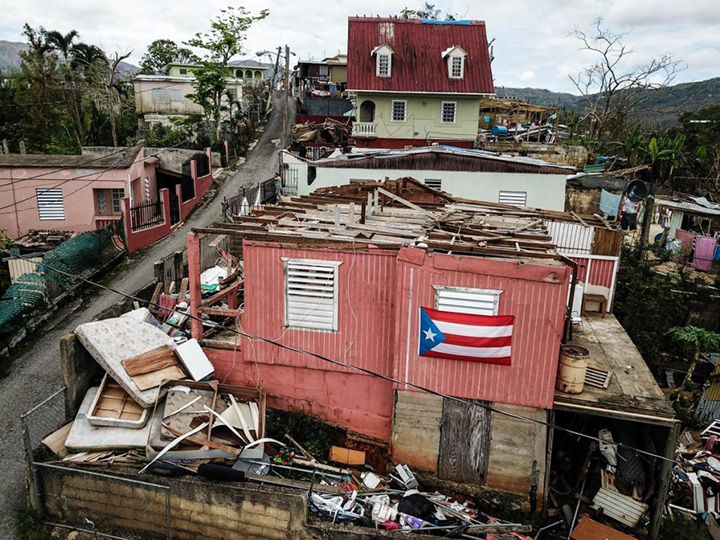
“As you can imagine, things are a bit crazy here,” said Emilio Colón-Zavala, president of ECZ Group and head of the Puerto Rico Builders’ Association, this month — even though it has been almost a year since Hurricane Maria slammed his homeland.Puerto Rico is still recovering from hurricane-related infrastructure failures (the water system was long-neglected and the electric company has had five CEOs in a year) as well as a decade-plus financial crisis.

The commonwealth owes creditors a whopping $124B, and bondholders are fighting over who will be repaid. Investors are looking to scoop up distressed properties or take advantage of generous tax incentives, and cryptocurrency entrepreneurs have invaded with a vision to remake the island and run it on bitcoin. Meanwhile, residents still struggle; the average family income is about $20K.  Amid these challenges, the hospitality industry is putting on its best face and charging sunnily ahead. Most hotels in the commonwealth are back open or will resume operations by the time high season begins in September; some already had record occupancy for spring break.  Colón-Zavala and other experts will discuss these converging factors — and the state of the hospitality industry throughout the Caribbean — at Bisnow’s Caribbean Hospitality and Investment Summit in Miami Aug. 23.

5b55eda63141f_old_san_juan

Carla Campos, executive director of the Puerto Rico Tourism Company (a government agency), said the hospitality industry was seizing this moment to come back better and stronger. As of May, she told Travel Weekly, 12,000 of Puerto Rico’s 15,000 hotel rooms were operational and the other 3,000 were being remodeled. She said the reopening of the St. Regis, El San Juan and the Ritz-Carlton in October would be recovery milestones. The hurricane made Americans more aware that Puerto Rico is “a U.S. territory and you don’t need a passport to go there, that there is easy access from U.S. cities,” Campos said. “That puts us in this position to seize the opportunity to capitalize on this increased awareness and convert it into awareness in travel.” In addition to her agency, a Destination Marketing Organization — a private nonprofit corporation responsible for the promotion abroad of Puerto Rico as a tourist destination — was established with legislation last year and will be funded with $25M annually. Brad Dean, the former head of Myrtle Beach Chamber of Commerce, will run the DMO and recruit both leisure and business travelers. 

Colón-Zavala said in addition to remodels, new construction is on tap. A JW Marriott, Aloft San Juan Convention Center, Aloft Ponce and Four Seasons Cayo Largo are all in the works. “We have already like $1.9B in projects in the pipeline,” Colón-Zavala said. “It’s going to be like a 4,000-room increase — like 5% of hotel inventory. We have 15,000 hotel rooms in Puerto Rico and the pipeline is almost 25% more.” That means builders are in high demand — “You get proposals left and right,” Colón-Zavala said — but contractors are being selective about which jobs to take for fear of not getting paid in a timely manner. Private insurance has been slow to pay claims, and some government agencies don’t have funds due to the commonwealth’s financial crisis. FEMA is still active, and is siphoning workers from other jobs by paying 25% to 50% more, Colón-Zavala said.From an investment standpoint, Colón-Zavala said people from around the world have been interested in Puerto Rico; there is a lot of interest from China. Investors should look not just at hotels and resorts, but also at public-private partnerships in infrastructure, Colón-Zavala said. He said private companies have recently been awarded concessions to run a ferry service, a major highway and airport operations. 

Numerous solar companies have also descended on the region. “A year ago, people would not buy solar with batteries because of the expense that it represented,” he said. “This year, it’s the other way around — you would be crazy not to buy a battery with your solar panels.”    Sion Capital founder Jonathan Kracer, who advises real estate investors and will also speak at next month’s event, wrote recently that there is forward momentum pulsing through the 30 major Caribbean islands. All-inclusive resorts are doing brisk business, and low-cost airlines from all around the world have increased flights to the region. Kracer told Bisnow that following last year’s hurricanes, “I was surprised by the lack of a cohesive communications strategy to change traveler misconceptions about the conditions in the Caribbean. Only about eight islands of the [about] 30 in the Caribbean were most impacted by Hurricane Irma, and the perception of damage impacted demand volumes in the whole region.” Ultimately, though, he said that better construction techniques and stricter building standards would bode well for the region. Right now, he said the best move for investors would probably be “acquiring older independent assets or damaged properties from the recent hurricanes, and renovating and professionally managing them … As tourism is the most important economic driver for the region, the Caribbean is very resilient and will bounce back.”  

Another panelist, Rogerio Basso, principal investment officer for multilateral development bank IDB Invest, said “We have a heightened appetite to explore greenfield operations in the Caribbean and are also seeing growing interest from regional banks to fund hospitality transactions. Rising interest rates, however, are putting pressure on developers to not overextend themselves on debt and ensuring projects have sound fundamentals to withstand market trepidations.”

Hear more about tourism, hotels and investment in the Caribbean at Bisnow’s Caribbean Hospitality and Investment Summit Aug. 23. 

Puerto Rico After The Hurricanes: Investors And Bitcoin Cowboys Are Circling

By Deirdra Funcheon as Published in Bisnow South Florida

Puerto Rico has been desperate for aid that has been too slow and insufficient following hurricanes Irma and Maria in 2017. But a few on the island say the attention followed might ultimately be a net positive for the commonwealth. “The bottom line is that Puerto Rico in the next two to three years is expected to see strong growth — 3 to 3.5% of GDP,” said Adam Greenfader, principal of Miami-based AG&T Development and Advisory Services. “It hasn’t had growth in 12 years. A depression is defined as negative economic growth for three quarters, so for all intents and purposes, Puerto Rico has been in a depression for 12 years.”

59d50743d6093_PR2

Greenfader married into a family that facilitates Section 8 housing throughout Puerto Rico. He then became a developer there himself. Currently, he serves as the liaison to the Puerto Rico Builders’ Association and the chair of the Urban Land Institute’s Caribbean Council. Greenfader points out that while last summer’s hurricanes devastated the commonwealth, jobs had already been scarce for more than a decade as the government faced a crippling debt crisis, owing $123B and declaring bankruptcy last spring. Though an estimated 150,000 Puerto Ricans fled to the U.S. mainland after the hurricanes, between 60,000 and 70,000 residents had already been leaving each year of the crisis. Puerto Rico’s current population is about 3.5 million, down from a peak of about 4 million, Greenfader said.

Turnaround efforts began years ago. Reforms enacted in 2012 enticed businesses and high net worth individuals to relocate to Puerto Rico by taxing corporate profits at a flat 4% and eliminating taxes on dividends, interest and capital gains for anyone who resided at least half the year in Puerto Rico. For anyone selling a company or large amounts of stock, these measures could result in saving millions of dollars on taxes. Famously, Putnam Bridge Funding CEO Nicholas Prouty invested more than $100M and relocated his family. Billionaire John Paulson bought several hotels. Michael E. Tennenbaum founded Caribbean Capital & Consultancy Corp. Goldman Sachs and various hedge funds moved in and bought distressed mortgages for pennies on the dollar. 

Greenfader said that about 1000 high net worth individuals moved to the island, and about 200 are coming each year. Cottage industries sprung up to cater to these ultra-wealthy.  Then last year’s hurricanes blew through, knocking out power and killing 64 people directly and 4,645 in total, according to Harvard University. Though the U.S. government responded painfully slowly, $18B in aid has been approved from the Department of Housing and Urban Development, and billions more are expected, Greenfader said.

Recovery is slow, but happening. Tesla built a solar array to power a children’s hospital. Doctors are being offered tax incentives to stay in Puerto Rico. Private insurance companies have started to pay claims, so 60% of hotels are now operational, Greenfader said. He believes that when the economy improves, exiles will move back. 

Publicity around the hurricanes certainly brought attention to the commonwealth. Immediately after the hurricanes, only about half of Americans knew that Puerto Rico was part of the United States; that number has since risen to 76%. Following the disaster, dozens of cryptocurrency entrepreneurs relocated to San Juan to buy hundreds of thousands of acres of land, take advantage of the tax structure and set up a “crypto utopia.” Greenfader suggested there is more opportunity for economic recovery: Puerto Rico’s tourism industry makes up only 6.5% of gross domestic product, whereas on many Caribbean islands, that figure is 50% or more. That is by design, he said; in the 1950s and ’60s, laws were structured to keep out the Mafiosos who ran Cuba. It could be increased substantially. 

Furthermore, the island has long had a mishmash system of collecting property taxes, partly because so many homes are built informally or illegally — “People get a paycheck, buy [a] few beers, invite their friends and family over to build a wall at a time,” Greenfader said — and partly because the tax code hasn’t been revised since 1950s. “A property worth a million dollars might pay no more than $2K, $3K in taxes for a year,” Greenfader said. A better system of collecting taxes could be implemented to make the government more solvent.  Although he is optimistic, Greenfader acknowledged the challenges.

While Puerto Rico is a diverse society, where rich and poor have long mixed freely, the influx of people taking advantage of the tax breaks is “adding an upper class the island never had before,” he said, and there has been some blowback. Workaday employees are facing pension cuts and austerity measures as Puerto Rico grapples with its debt. Currently, according to Democracy Now, 55,000 residents are in foreclosure and the government is turning to privatization as the solution for economic woes, which will enrich investors but hurt the working class. In a Bloomberg article Monday about the search for someone to buy the country’s beleaguered electric company, which goes so far as to ask potential buyers how they would like to be regulated, a Puerto Rico resident said, “We are tired of people coming here to get rich and take advantage of us.”  Some grass-roots organizations have taken shape to resist Wall Street — forces that author Naomi Klein explores in a new book, “The Battle for Paradise: Puerto Rico Takes On the Disaster Capitalists.”

Greenfader noted that insurance premiums will likely continue to rise, and the Jones Act, a shipping law that requires goods to stop in a mainland port, makes commodities expensive. Whatever economic policies prevail, at least new construction on the island should be more resilient. Greenfader said builders already adhere to codes that mirror Miami-Dade’s, which were made stronger after Hurricane Andrew in 1992. They use reinforced concrete and no wood. Going forward, he said, there is a commitment to using more sustainable designs, particularly in the energy space, such as solar power arrays and micro electric grids. Today, about 10,000 customers in Puerto Rico who lost electricity after last year’s hurricanes are still without power. 

 
Read more at:https://www.bisnow.com/south-florida/news/economy/puerto-rico-hurricanes-john-paulson-nick-prouty-89403?be=rudecourt%40gmail.com&utm_source=Newsletter&utm_medium=email&utm_campaign=wed-13-jun-2018-000000-0400_south-florida-re