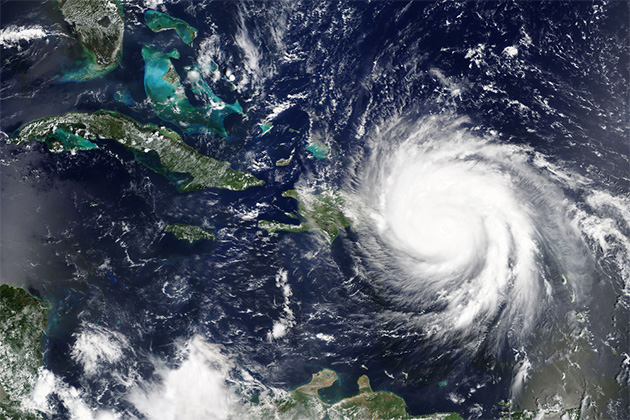
The region and its hotel sector was significantly impacted by two, back-to-back, Category-5 hurricanes that tore through the northern Leeward Islands in September. Hurricane Irma had the greatest effect on the islands of Barbuda, St. Barth, Anguilla, St. Maarten/St. Martin, St. Thomas (USVI) and most of the BVI; while two weeks later Hurricane Maria mostly bashed Dominica, St. Croix (USVI) and Puerto Rico.
In Anguilla, it is reported that Four Seasons will re-open April, 2018, CuisinArt in the summer, and Cap Juluca in November of next year. Ce Blue and Frangipani can open as early as next month, and Zemi Beach is ready to open as soon as there is electric power.
In the BVI, damaged hotels with scheduled re-open dates include Scrub Island (February, 2018), Sebastian’s on the Beach (Q2, 2018) and Peter Island Resort (December, 2018). Other properties such as Maria’s, Village Cay and Nanny Cay are all already partially open. On the other hand, some of the major properties such as Rosewood Little Dix Bay (this resort was already closed for renovations), Long Bay Beach Resort and Bitter End Yacht Club are all closed until further notice.
In Puerto Rico there are many well-known tourist hotels already open for business or opening in early December, such as Ritz Carlton Dorado Beach, San Juan Marriott, Condado Vanderbilt and La Concha. Others with scheduled opening dates in January include Caribe Hilton, Condado Plaza, St. Regis Bahia Beach, Sheraton Old San Juan and Sheraton Puerto Rico. The Ritz Carlton San Juan is scheduled to re-pen in April. San Juan’s hotel inventory is therefore in relatively good shape compared to many smaller islands in the region. In the USVI, most of the larger hotel resorts were damaged. Those scheduled to open in 2018 include Renaissance Carambola (March), Bolongo Bay (June), Ritz Carlton (October), Marriott Frenchman’s Cove (December), and Westin St. John (November). Those that are closed indefinitely include Marriott Frenchman’s Reef, Caneel Bay and Sugar Bay.
In St. Maarten/St. Martin, all three Sonestas are closed until further notice, as is the Westin Dawn Beach, Divi Little Bay and Flamingo Beach, amongst others. St. Maarten’s hotel inventory appears to be the hardest hit overall in terms of percentage of rooms out of commission for the long term.
Conclusions and Forecasts
It appears that there will be a significant reduction in available rooms in this part of the Caribbean through the peak of tourist season 2018 due to hurricane damage, which will likely result in lower arrivals, but buoyed occupancy rates and average daily rates. We estimate approximately 5,000 rooms that were previously open will be closed throughout the primary tourist season of 2018 (at least through April) because of hurricane damage. Otherwise, the year 2017 was turning out to be relatively consistent with the prior year in terms of hotel statistics. Arrivals were continuing to grow, showing evidence if greater usage of nontraditional lodging options such as Airbnb, VRBO and other villa rental alternatives. There remains to be some concern with the growing number hotel rooms in inventory and the number of new projects being announced, and there is a significant increase in the number of rooms currently under construction (which are generally outside the hurricane affected areas). Growth in supply could result in a longer term decline in occupancy, especially if growth in arrivals begins to slow.
Real estate and art have been linked for some time, but recently the two have been linked in new ways. Real estate agencies are now beginning to partner with art galleries to include fine art in the staging process. There are a few reasons why this is beneficial to both. The art adds a certain atmosphere to the home, and creating this atmosphere is essential in the successful sale of a property. In luxury real estate, the buyers are familiar with highly priced items – like the fine art on display. This element of wealth is something that people recognize, and helps to create an appealing space. The art pieces on display are not just for the benefit of the real estate agency, but also for the gallery. The works are on sale, and allows galleries to connect with clients with means. Even if the work does not sell during the showing, many galleries attest that they gain clients from this practice.
The works are carefully chosen in collaboration with art galleries and interior designers, who choose pieces that work within the space, and also have some sort of narrative that will be attractive to buyers. The curation is key, and cannot be too obvious. The precise and smart placement of art around the properties makes buyers spend more time looking – a benefit to the realtors.
Many cities like New York and Miami are booming with luxury developments. One way to increase interest in the properties and to stand out from the many other developments in progress is specially commissioned art by some of the biggest names in the business. Thierry Dreyfus, a light artist, was hired for a permanent 40-story LED installation in Manhattan. In other instances, it is sculpture, like the Anish Kapoor sculpture commissioned for the new Herzog & de Meuron development in TriBeCa. Other pieces by established artists like Jeff Koons sit in apartment lobby. The relationship between high priced real estate and fine art is clear; the buyers of one tend to be buyers of the other.
In a number of projects and proposals, architects and urban planners are working with water instead of against it
In 2003, Jacques Lacour and his brother, Ovide, built a fishing lodge on a sliver-shaped lake called Old River that was once part of the Mississippi, near Batchelor, Louisiana. Leveraging local knowledge and techniques that had been developed over decades, they hit on an architectural concept that is becoming in vogue as climate change drives flooding events around the world. They made their business, called Old River Landing, amphibious.
Instead of building Old River Landing on a foundation, the Lacour brothers built the whole structure on a base of polystyrene foam—8,100 cubic feet of it. That was enough to float the building in the event of a flood, leaving an extra tolerance for the action of waves from storms or boats. For added stability, sliding sleeves on each corner of the building encircle vertical poles, meaning Old River Landing can go up and down, but it settles back into place, impervious to the water currents and waves that might push it about.
“Old River tends to rise and fall with the Mississippi, which makes the fishing great and terrible. It can change overnight,” says Lacour. “Being able to resume business immediately after a flood recedes was critical in our minds to being successful.”
Batchelor is an agricultural community, specializing in sugar cane. But Old River hosts anglers, who come up from Baton Rouge or Lafayette and stay in private or public lodges called camps. Starting in the late 1970s, some homeowners started making their camps amphibious. Now, when the lake rises, so do the camps.
Architecture firms in the Netherlands and elsewhere are offering upscale versions of these amphibious houses, or even homes that float outright. In the famously vulnerable Lower Ninth Ward of New Orleans, Brad Pitt’s Make It Right Foundation contracted the American firm Morphosis Architects to build an amphibious home called the FLOAT house. And the Buoyant Foundation Project, a nonprofit founded by Elizabeth English, an associate professor at the Waterloo University School of Architecture in Ontario, uses modern engineering techniques to retrofit houses in flood-prone areas.
“We need to acknowledge that the water is eventually going to do what the water wants to do, and shift our approach, as human populations living on the Earth, from one of trying to dominate nature to one that acknowledges the power of nature and works in synchrony with that,” says English. “We’ve already set ourselves down this path of dams and levees and water control systems, and it’s really hard to turn back. But we don’t need to keep replicating that. We don’t need to make the situation worse. It’s time to step back from the approach of control and fortification.”
When Hurricane Katrina flooded 80 percent of New Orleans, displacing a million people and causing more than $100 billion in damages, English was working at the Louisiana State University Hurricane Center on the aerodynamic behavior of windborne debris. The disaster, especially the failure of the levees, made her realize that flooding could do far worse damage than wind ever could. More recent hurricanes, too, have had their effects exacerbated by the design of the cities they have hit. While Hurricane Irma caused less-than-expected flooding in Florida, Hurricane Harvey was catastrophic due to the rainfall it dumped on Houston. City planners have attributed much of the flooding there to the prevalence of blacktop and concrete, which keeps water atop the landscape rather than letting it settle in.
To protect homes from flooding, FEMA encourages static elevation (raised houses) and won’t certify amphibious homes for the National Flood Insurance Program, meaning residents often have to climb stairs and deal with the visual impact of elevated houses. “The response of the Federal Emergency Management Agency was, in my opinion, entirely insensitive to the cultural context of New Orleans in particular, and South Louisiana in general,” says English. The permanent, static elevation was disruptive to the aesthetic feel of the historic neighborhoods there. A student told her about Old River Landing, and she began to discover amphibious homes in other parts of the world.
But there are more ways to work with water than mitigating flood impacts. Architects and urban planners are reevaluating all the ways cities interact with water, from transport to recreation to energy to drinking water, and their ideas have the potential to fundamentally alter cities the way the car did in the 20th century.
“Cities that today start to embrace water and take advantage of the skills of water, will be the cities that have a better performance economically and socially and politically in 20 to 30 years,” says Koen Olthuis, founder of Waterstudio, a Dutch firm that has found designing around water to be more than a niche market. “When situations change—and that’s happening now, the environment is changing, the climate is changing—cities have to react. You have to change the skills and the performance of the city to give a reaction to this situation, and the reaction should be not fighting it, it should be living with it.”
Olthuis calls this idea the Blue City, and sees a coming progression, from green cities (low impact) to smart cities (connected and responsive), to blue cities, which use water to be both of the previous. An ideal city, he says, would accomplish this by using water to achieve three types of goals—to reduce energy needs, to generate energy, and to store energy.
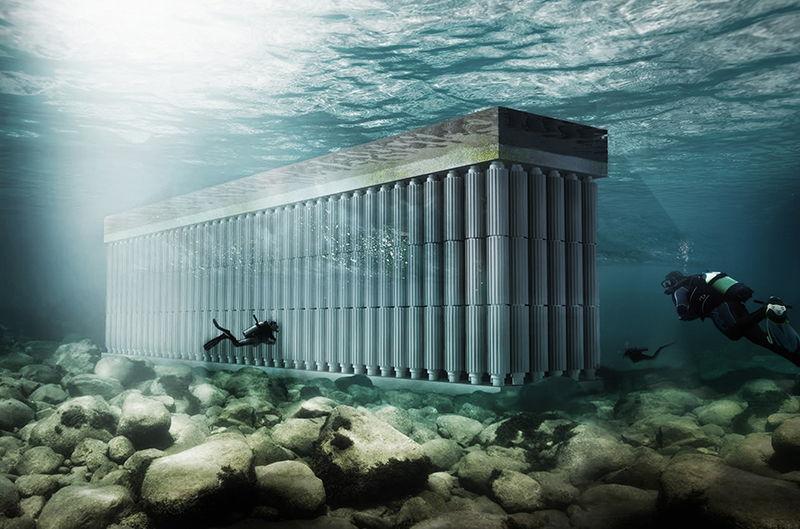
Waterstudio designed this energy-generating seawall, called Parthenon, for Arabian Oddysea. (Waterstudio)
Waterstudio is working with Oddysea Development to showcase these strategies and more in a multipurpose entertainment resort on a one-square-kilometer man-made island in Bahrain. Called Arabian Oddysea, the project is scheduled to break ground in 2019 and be completed in 2023, according to chairperson Dara Young. The estimated $6 to 7 billion project will include shops, hotels and restaurants, as well as an aquatic sanctuary, a man-made mountain and an Arabian horse track. But along with—and integrated into—the entertainment, Arabian Oddysea will incorporate water in ways designed to improve energy efficiency.
“Integrating ways to sustain our needs by channeling energy allows us to lead by example. Bahrain was first to discover oil, so we’d like Bahrain to be the first in the region to introduce architectural hydropower,” says Young. “Over the next five years, the gulf countries are expected to need to generate 40 percent more electricity than they are now … and it’s important to stay ahead of the curve and come up with alternative solutions.”
To do that, Arabian Oddysea is incorporating several Waterstudio-designed elements that each use water in a different way. One is a sea wall, but it’s not designed like normal sea walls, which tend to be big chunks of concrete that waves smash up against and eventually demolish. Called Parthenon, the seawall is made of columns of turbines hanging underneath like the pillars of its namesake. As waves flow in and out, they drive the turbines, which generate enough energy for about 50 houses, but also reduce the action of the water so that behind the wall, the water remains calm.
Another feature is an array of floating solar panels that lie just beneath the surface of the ocean. In hot climates, exposed directly to sunlight, solar panels quickly exceed the optimal operating temperature. But when water is allowed to flow over them, they absorb sunlight at a balmy 80 degrees.There will be floating solar panels just offshore of the man-made island in Bahrain. (Waterstudio)
All that energy needs to be stored, somehow, and batteries are expensive. Arabian Oddysea plans to use it to pump water into tanks housed high in tall buildings called blue batteries, and then let it flow back down to run turbines once the sun is down. According to Young, 25 percent of off-peak energy needs will be housed in the blue batteries.
Another element of the Oddysea is a system of water-filled tubes running through walls and floors in buildings, squares and city streets. The water pumped through helps cool the city, reducing load on air conditioning.
Even the entertainment will incorporate water, says Young. The horse track will be suspended over water features. The water drained from the blue batteries will tumble down 200-foot “hydrokinetic waterfalls” that house the turbines.
Othuis’ vision doesn’t stop with the Bahrain project. He speaks of floating museums or stadiums that could be shared between cities across bodies of water, or even whole cities that move, or expand and contract, with the seasons, increasing density to maintain warmth and opening like a flower in the summer. A true blue city would incorporate these designs and more to treat water like a tool, rather than a threat.
“There are many things that won’t work, [and that] will maybe always be part of a futuristic scope or vision,” Othuis says. “But you see that some of these ideas in the end will be part of the next generation of cities.”
Oddysea is somewhat unique in its scope, its price tag, and its virgin landscape. But there are many other ongoing projects and proposals that tap specific innovations to address smaller aspects of water management. A permeable concrete from a UK company called Tarmac can absorb 600 liters of water per minute per square meter. A Danish architecture firm has designed a parking garage that sits atop a water reservoir and rises atop floodwaters as they drain into the reservoir. Dikes in The Netherlands now house sensors that can give managers advance notice of overloading, allowing them to evacuate or divert water when one part is getting too much stress. In San Francisco, new developments over 250,000 square feet are required to install and operate grey water recycling systems.
Danish architectural group THIRD NATURE has designed this parking garage that sits on top of a reservoir. In heavy rain, the reservoir fills with storm water and the garage rises. (THIRD NATURE)
With the Bahrain project, Waterstudio has the benefit of working on a new development, where designs aren’t constrained by what’s there already. Much of our waterways, however, already share coastlines with buildings or other structures that would need to be adapted or discarded. That is what Baca Architects and H+N+S Landscape Architects, are doing on the Waal River in the Netherlands. A 1995 flood led to the development of that nation’s Room for the River program, which seeks to accommodate the changes to the rivers there, and the Waal River is a flagship project for the program.
At a bend in the river, near the German-Holland border, the town of Lent was at risk. A low-lying area just inside a higher peninsula, sort of a short cut for the river flow, was liable to flood. Over the last decade and a half, the city relocated around 50 dwellings and farmsteads, and H+N+S dug out a channel, turning the peninsula into a seasonal island. Now, the river would have space to flow, alleviating flooding not just in Lent, but downstream as well.
“This marks a fundamental shift in thinking, to date, in Holland, Germany, the UK, who have consistently built … with the presumption in terms of policy is we hold water out,” says Richard Coutts, director of Baca Architects.
The landscaping has been completed, and bridges to the new island of Veur-Lent have been built. Now, Baca Architects are working on designs for the space. It’ll include parks, a campground, and an equestrian center. New homes will be developed based on the flood risk of their location. Those on the water will float, able to rise and fall with the tide each day. Those vulnerable to the expected seasonal variation of up to 12 meters will be amphibious in a similar manner to Old River Landing. Higher still, houses will be built with a flood-resilient lower floor, to minimize damage in the case of larger floods.
If the Veur-Lent project goes well, it could serve as a model for other cities and riverways. But there are still regulatory hurdles to building in a style that’s unfamiliar. FEMA’s National Flood Insurance Program denies coverage to floating homes, while extending it to houses that are on the ground and likely to flood. Amphibious buildings, like Old River Landing, are ineligible at any price. Just like many of their neighbors, the Lacours built it anyway.
“It’s a way of life that we’re all accustomed to,” says Lacour. “Growing up on the river, there’s nothing like firsthand experience of seeing what water can do, and if you try to, you may find a solution for those situations. I think we’ve adapted to the changing conditions of our rivers.”
While the scale of destruction and suffering caused by Hurricanes Harvey and Irma is staggering, history suggests the local economy and housing markets in the affected areas will bounce back relatively quickly.
Each natural disaster is tragic in its own way, but some commonalities are apparent. Generally, natural disasters don’t permanently change underlying housing market fundamentals; they just disrupt things for a number of quarters, including causing sudden price hikes in less-affected communities as a result of the influx of displaced people. After an initial dip, the economy gets a near-term boost from reconstruction, before things return to normal.
How might economic activity, specifically housing, be affected by these storms?
The delinquency rates will spike locally due to employment disruption, but will not cause distress in the banking sector due to record levels of high-quality capital and strong and improving performance in the rest of the country. Some bond or portfolio investors will be affected, but the overall impact will be manageable.
With respect to economic activity, past severe weather impacts on job growth were short-lived, with an immediate drop in employment followed by three months of significant bounce-back, according to research by Keith Phillips and Christopher Slijk at the Dallas Federal Reserve. Understandably, numbers for Irma are still being calculated, but Harvey and Irma are projected to reduce third-quarter GDP growth for the United States between one-quarter and one-half of a percentage point and then similarly boost GDP growth in the fourth quarter, then more modestly in early 2018.
While fires and tornadoes make the news, the greatest share of losses from natural disasters is generated by hurricanes. Hurricanes also have the highest average loss per event and are the most frequent large-dollar disaster event, which can be sobering, given that we had an active hurricane season. The impact of climate change is beyond the scope of this article, but it’s worth noting that loss estimates seem to double every 10 years as cities expand and storm intensities increase.
Similarly, impacts on home prices have typically been short in duration. In fact, home price trends do not appear to change fundamentally, suggesting people rebuild and get on with life. Research by Eli Beracha and Robert S. Prati found that “one full year following a hurricane, little evidence emerges suggesting a lingering effect on residential real estate prices.”
Researchers at the Dallas Federal Reserve similarly stated, “The typical hurricane strike raises real house prices for a number of years, with a maximum effect of between 3% to 4% three years after the occurrence. There is also a small negative effect on real incomes.”
Federal Housing Finance Agency researchers who looked at the impact of Hurricane Andrew specifically observed that “price appreciation rates were positively affected by Hurricane Andrew. After about two years, appreciation patterns in all of the regions fell to rates close to pre-hurricane levels.”
While home prices per se seem unlikely to be significantly affected in the long term, the scale of these storms suggests we could see some impact to the housing market. For example, housing starts could be delayed, as builders must wait for the saturated ground to dry out. The lack of flood insurance coverage for many residents affected by Harvey may also have an impact. Fewer than one in six residents of Harris County, home to Houston and the nation’s third-largest county, have flood coverage according to the National Flood Insurance Program. This will partially hinder the boost to the economy from rebuilding and make federal loans more important.
Finally, where we are in the business cycle affects markets and our ability to bounce back. The recovery from Hurricane Ike in 2008 was delayed because of the deep national recession, while Harvey struck when the construction industry was already experiencing shortages of labor and materials. Thus, we can expect to see a rise in the cost of construction materials and possibly even slight slowdowns nationally in new home builds as construction workers are diverted to rebuilding.
Sustainability has been a buzzword within the design community, and hoteliers have been latching onto the idea of the past number of years
Sustainability has long been a buzzword within the design community, and hoteliers in particular have been latching onto the idea of the past number of years. Not only is it a response to an increased awareness of climate change and the impact we as humans, especially those working in one aspect of the construction industry, have on the planet, but it is also a response to client demand, with more and more guests desiring sustainable tourism as a requirement in their holidays. An annual competition run by hotel consultancy firm the John Hardy Group called Radical Innovation Award takes submissions for innovative hotel designs that reimagine the hospitality experience, and this year’s entries and winners point to a significant upswing in sustainable hospitality that could well be the future of the industry.
The award has singled out a number of visionary projects as finalists, but many of the entries proposed radical ideas that threw out the rulebook of hospitality design. A common theme was that of sustainability, both in an environmentally friendly sense, but also in a cultural sense, where local culture and art is celebrated and promoted. This also points to recent trends in hospitality where local experiences are being sought by guests wishing to engage more with the place and people they are visiting.
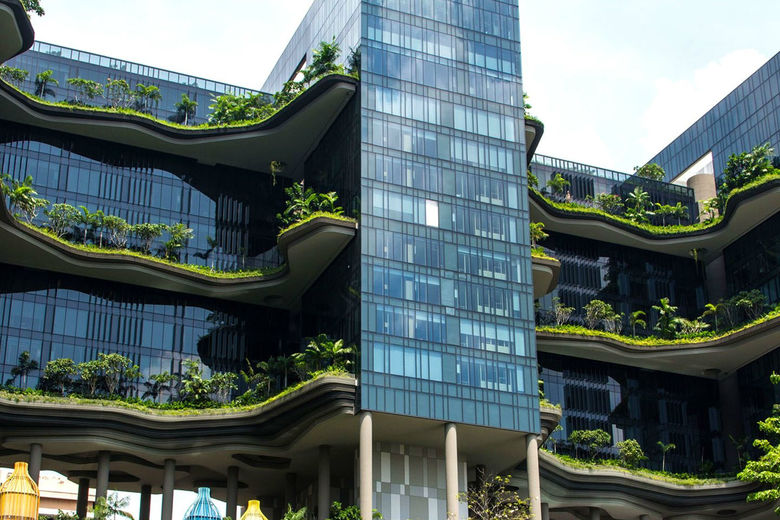
Green or garden hotels were a big feature of a number of entries. Canadian firm Arno Matis Architecture proposed a project entitled the “Vertical Micro-Climate Hotel”, whose concept is to make the outdoor areas of hotels located in the harsh climates of North America habitable all year round. One of the features of this hotel was the use of heliostat technology, a mirroring system which reflects sun back into certain parts of the building as required so as to make them habitable even in colder weather conditions. EoA’s submission involved suspending hotel facilities from a treetop by using a system of cables to hold rooms in tent-form above a trampoline-like platform, giving the hotel a very small footprint above the forest floor and re-orientating the guest’s field of vision to that from the tree canopy. A Dutch architecture student submitted a project that he had built in his mother’s back garden which connects guests to nature while allowing them to sleep in a sustainably built and naturally ventilated structure.
The culturally sustainable aspect came in the form of the currently-operational Play Design Hotel in Taiwan, which champions local artists and designers by installing their creations into hotel rooms and encouraging guest to interact with them. The idea came about after the developer noticed a lot of his artist friends were having to go abroad to showcase their designs, and he thought that it would be better to not only exhibit the work locally in hotels so that international guests could see them, but also to cultivate an environment of design engagement within the hotels themselves. “I want people to experience the culture of this country and played a lot with the idea of using the hotel as a portal for people who want to learn about Taiwanese design, a space that is furnished with all of these local designers’ work. So, their work is not only shown but so it’s experienced. Design isn’t something you only put in a museum or gallery. It should be used. It’s for your everyday use,” says hotelier Ting-Han Chen.
The batteries resemble outdoor neighborhood junction boxes and can be put inside the house
Developers are getting ready to cut the cord on electricity, and a battery may take its place, according to the Wall Street Journal. Homes are incorporating batteries that resemble modern versions of outdoor neighborhood junction boxes, but these can be put inside the house, according to the Journal.
Up to 4,000 energy-efficient homes planned by real estate developer Mandalay Homes will use 8 kilowatt-hour batteries from German maker Sonnen, according to the Journal. The majority will be in Prescott, Arizona.
In Vermont, a partnership with Tesla Energy and Green Mountain Power is offering 2,000 of its customers a 13.5 kilowatt-hour battery called the Tesla Powerwall for $15 a month. The batteries cost $5,500, according to the Journal, but GMP CEO and President Mary Powell said the utility can afford to put them in homes because it helps the company save on grid infrastructure. GMP also uses batteries from Sonnen, SimpliPhi and Sunverge.
The shift toward renewable energy is a trend among builders and developers as more residential buyers slowly consider environmentally-friendly options, despite the added cost. Popular states looking to revamp their grids include New York, California, Massachusetts, Hawaii, Vermont and Arizona.
Prices for solar panels in Florida have fallen by 64 percent over the past five years, according to the Solar Energy Industries Association. South Miami recently became the first Florida city to mandate the installation of solar panelson all new homes. [WSJ] – Amanda Rabines
Hurricanes Irma and Maria devastated Puerto Rico and left millions seeking a new place to call home. Now the effects are about to significantly impact Florida and be felt throughout New York, Illinois, Pennsylvania and other states across America.
With nearly 3.5 million Puerto Ricans planning on leaving the island (many already are here or on their way), U.S. cities undoubtedly will face a short-term burden. However, businesses could turn this into long-term advantages if they learn how to embrace the already flourishing Hispanic segment.
Due to the proximity to the island, Florida will see the biggest influx of new residents comprised of families, business owners, doctors, nurses, lawyers, executives and other professionals, university students and more. With so many migrating within such a short timeframe, yes, it will challenge the local infrastructure, educational systems, employment rates, housing market and more. However, these fellow hard-working American citizens very quickly will begin fueling local economies, bringing more businesses and increasing diversity. They immediately will increase sales across nearly every industry — restaurants, grocery stores, retail outlets, car dealerships, banks, hospitals, colleges and so many more.
Could this swing sales as early as this holiday season? That depends on how you already view the Hispanic segment and if your marketing campaigns have been developed and executed through a culturally relevant strategy verses simple translations. Think about the significance of so many families and business owners rebuilding their lives and all the needs associated with it. If your company does not have multicultural messaging ready to embrace this market, your business surely will miss out.
Earlier in the year, hopes were not high for fourth-quarter sales due to the perceived sluggish growth of the economy and a controversial leadership in the nation. The good news is that according to the latest report from ThinkNow, a leading Hispanic research company, Hispanics already were planning to spend 33 percent more this holiday season over last year, due to greater disposable income and better anticipated deals on technology and innovation. That number could go up, especially now with the addition of more relatives and friends from Puerto Rico moving in with or close by them.
Approximately 1 million Puerto Ricans already live in Florida. After the disaster brought by the recent hurricanes, Puerto Ricans are projected to pass Cubans soon as the largest group of Hispanics in Florida.
By 2030, there will be a population increase of 6 million in Florida, and Hispanics will represent 30 percent of the state, according to Augusto Sanabria, president of Prospera, an economic development, nonprofit organization providing bilingual assistance to Hispanic entrepreneurs. Hispanics now constitute more than 20 percent of the state. It is estimated that 57 percent of the expected population growth will happen in counties such as Orange, Osceola, Hillsborough, Miami-Dade, and Broward, all of which already have a fast-growing Hispanic population.
“These numbers confirm that our services are going to continue to be essential to ensure that Hispanics entering our market not only assimilate faster, but also increase their chances of succeeding in business,” said Sanabria. “These numbers don’t reflect the expected influx of business owners from Puerto Rico.”
For a successful fourth quarter and beyond, focus on the benefits of this changing market and implement these 3 key tips:
Embrace diversity: Over the decades, many corporations have thrown diversity under the rug. Is it because they are ignoring the statistics or do they think every segment responds to the same messaging? How are you planning to increase sales and assure a sustainable growth if you are neglecting the business impact that minorities, especially Hispanics, are bringing to the market place? This is a lucrative market that could enable your company to obtain a sustainable growth in the years to come.
Understand the differences: Many executives still identify the Puerto Rican community as the Mexican immigrant population. Puerto Ricans are Americans. They have U.S. passports and represent over 46 percent of the Hispanic population in Central Florida. You must get to know the new markets affecting our economy and ultimately your business. How much profit could you gain with a little extra knowledge?
Be prepared:It is estimated that 100,000 to 200,000 Puerto Ricans potentially could relocate, at least temporarily, to Florida. I strongly believe that based on the Hispanic market composition, Orlando and Tampa will be impacted the most. Puerto Rican entrepreneurs and business owners will begin fueling the local economy soon. How can you gain this loyal market?
If the Hispanic market was not on your priority list, it is time to rethink and reevaluate your marketing plan now. There is still a large population of foreign-born Hispanics, many of whom use advertising as an information vehicle to learn about brands and share their findings with others. Remember, diversity is a strong growth component of any modern city. And being adaptable is a strong asset to any successful company.
Hernan Tagliani , Contributing writer, Orlando Business Journal, Oct 11, 2017
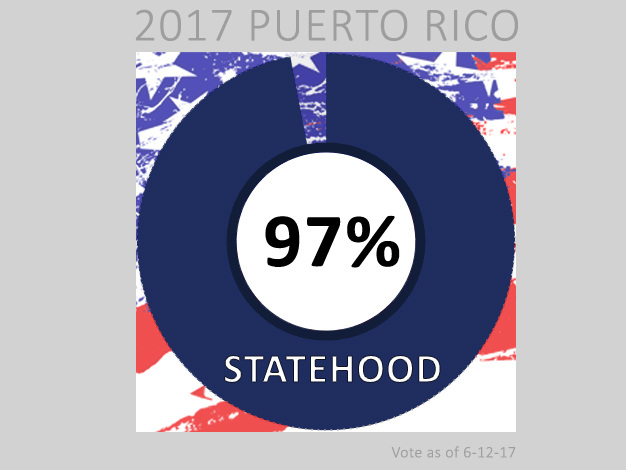
The current territorial status received 1.3% (6,820) votes, independence 1.5% (7,773) votes, and 97% (502,375) votes for Statehood, according to the State Election Commission.
This is the first time in Puerto Rico history that a Statehood referendum receives such an overwhelming majority of voters.
“The votes are what dictate what the steps to follow will be; in this case, a strong majority determined that we would reject the colony and favor statehood,” governor Ricardo Rosello said.
This process of petitioning Statehood will be effected under the “Tennessee Plan” whereby the governor will designate seven members to go to Congress and request Puerto Rico to become the 51st State.
According to Resident Commissioner Jennifer González, the June 11, 2017 turn-out of 23% of registered voters (516,968) is in line with several states that were the last to achieved admission.
Arizona – In 1911, a participation of 15,489 voters of a population of 217,000, for a 7% electoral participation.
Hawaii – In 1940, 35% electoral participation.
Alaska – In 1946, a participation of 16,375 voters of a population of 75,000, for a 21% electoral participation.
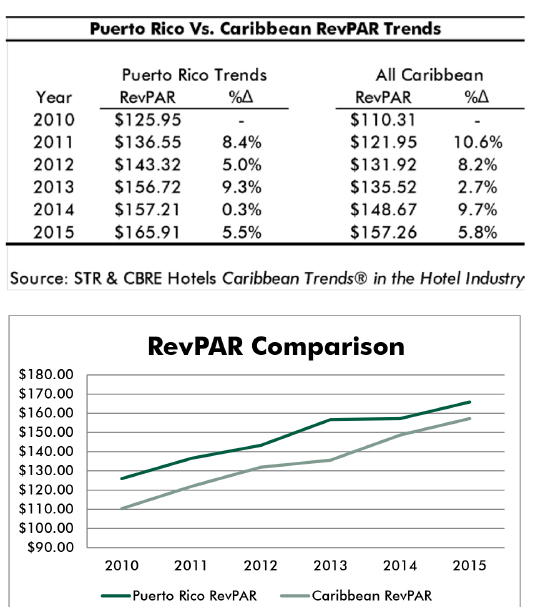
The Caribbean has seen five consecutive years of growth in occupancy, ADR, and RevPAR. The U.S. remains the largest feeder market.
It appears that even with the Puerto Rican debt crisis well underway, tourism has not been negatively impacted. This no doubt results from the economic strength of the mainland and its status as the primary source of Puerto Rico’s visitors.
The next charts display historical data for Puerto Rico and the overall Caribbean hotel market from 2010 to 2015, the most recent annual data available. General trends in occupancy, ADR, and RevPAR can be observed from these comparisons.
The past recession impacted the Caribbean and Puerto Rico to a significant degree. Declines were visible through 2010, but the market has seen strong gains since.
According to STR and CBRE Report, Puerto Rico followed this trend, with ADR growth fueling RevPAR gains in 2013, negating a slight decline in occupancy.
Puerto Rico Vs. Caribbean RevPAR Trends
Conversely, Puerto Rico’s RevPAR gain in 2014 was driven by occupancy. It is important to note that Puerto Rico generally has higher overall ADR and occupancy than the Caribbean market average.
As Puerto Rico continues to work around the $70B public debt crisis that threatens its economy, the commonwealth’s governor, Ricardo Rossello Nevares, and another key economic development official are pushing for private development that could help tip the economic scales. Gov. Ricardo Rossello said the island nation is pushing public-private partnerships to help various redevelopments in the country that will ultimately lead to job creation. With the economic crisis, Puerto Rico’s unemployment rate topped 12% as of January.
“Open for business means we are going to foster economic growth and private investment,” said Manuel Laboy, secretary of economic development and commerce of Puerto Rico, during a Bisnow event focused on Latin American investment and development last week in Miami. “It means that the government needs to be out of the way.” Laboy said the government has targeted to grow tourism from being 7% of the total economy to 15% within five years. “That means that we’ll need more hotels. That means that we’ll need more facilities,” he said.
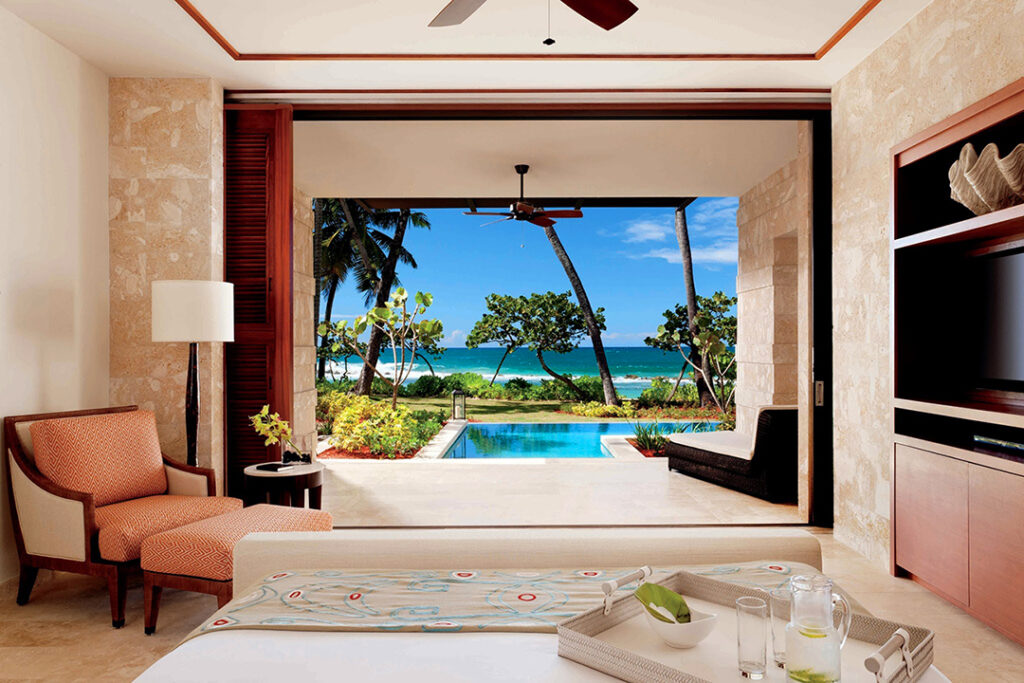
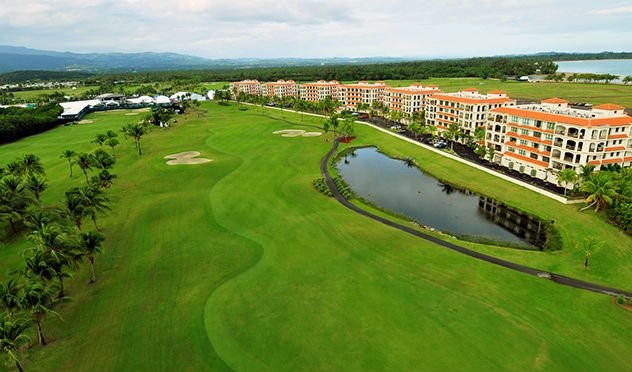
Coco Beach Residences
Jay Smith, president of nFusion Consultancy, already is a believer in the Puerto Rico recovery story. His firm specializes in “broken” projects for a value-add play. “Those opportunities in the United States are virtually gone,” Smith said. “They are very thin.” The firm invested in Coco Beach, a 1000-acre oceanfront project that holds a 36-hole golf course that hosts the PGA tour. Smith told Bisnow in a previous interview that nFusion is marketing a development plan for a hotel and up to 1,000 homes as well as a small town center for a mixed-use community. “Ultimately, we’ll sell it or partner with a developer, most likely from the United States,” he said.
Because of the bond crisis, Smith said real estate values have bottomed out and are ripe for investing. That is helped by Puerto Rico having a seamless regulatory environment, much of which is run by U.S. government entities. “It’s a very similar and, seems to me, much less risky environment,” he said.