Puerto Rico China Investment Summit

Over the past decade, China has become an increasingly integral source of aid and foreign direct investment (FDI) for Latin America and the Caribbean. Rising levels of FDI and trade over time reflect deepening relationships between China and the Caribbean. 


On March 1 to March 13, 2017, a large group of business owners and senior executives from China and top regional and local stakeholders from Puerto Rico were brought together in San Juan, Puerto Rico. “It was an honor to present two of the most exciting resort projects in Puerto Rico; Royal Isabela Resort and Coco Beach Golf and Residences”, noted Adam Greenfader.

During the China-Puerto Rico Investment Forum held at the Convention Center, investors had questions not only about business opportunities but also about costs, incentives and the opportunity of being able to launch their products in the U.S. market. At a time when federal funds from Washington, D.C., are being limited and the island has been cut off from the markets, Puerto Rico’s economic development will depend heavily on its ability to attract foreign investment, Putnam Bridge CEO Nicholas Prouty explained while noting Puerto Rico’s numerous benefits as a U.S. jurisdiction.


Photos Below: Adam Greenfader with Governor Ricardo Rosselló, Li, and Luguang Yang Carter

Puerto Rico Opens For Business


The Puerto Rico Builders Association and top Puerto Rican government officials present, “Puerto Rico is Open For Business” at recent ULI event in Miami. Pictured from left to right – Adam Greenfader– Principal AG &T, Ricardo Alvarez – President of Álvarez-Díaz & Villalón| President of the ACPR, Manuel Laboy – Secretary of the Puerto Rico Department of Economic Development and Commerce Denisse Flores – Director of BDO Puerto Rico, Daniel Acosta – Daniel Acosta: Senior Vice PresidentMcCormack, Baron, Salazar Inc., José Izquierdo – Executive Director of the Puerto Rico Tourism Company. #PuertoRico#UrbanLand Institute#PuertoRicoOpenForBusiness

In an afternoon lunch session almost half of the audience had either been to PR or was doing business on the island. The message from the speakers was clear. The time is now. After almost a decade of crisis, consensus is clear, “the bottom has been hit”, and now the island is in a position to grow due to three key elements:

  1. The approval of the US Congress’ Fiscal Committee
  2. Ricardo Rosello’s local government’s clear and present focus on growing the economy
  3. Some very lucrative tax incentives like law 20/22  that has drawn over 1,000 investors


Puerto Rico Tourism Optimistic in 2017

SAN JUAN – Citing a 96% reduction in the number of new Zika cases since the peak in October, the Puerto Rico Tourism Co. (PRTC) is optimistic heading into 2017. The PRTC launched an educational outreach program in February to dissipate “the fears and communicate the real facts” about Zika, its newest press release reads. Collaborating with the Puerto Rico Hotel & Tourism Association (PRHTA) as well as Meet Puerto Rico, the PRTC presented it “Facts not Fear,” campaign. “Communicating the reality that Zika was not growing nearly as rapidly as the CDC had projected, the PRTC worked to change the Zika conversation, and emphasize the reality that reported cases are a fraction of what was projected. Cases are now at about 1 percent of Puerto Rico’s 3.5 million population versus forecasts that 25% of Puerto Ricans would eventually have the virus by the end of the year,” according to the Tourism Co.’s statement. “The dramatic decrease in the number of Zika cases in Puerto Rico is a testament to our integrated aggressive program to inform and disseminate the facts and allay the fears. The PRTC worked incredibly hard with the industry and health officials to communicate accurate and precise messages about Zika to the public,” Ingrid Rivera Rocafort, executive director of the PRTC, says in the published statement. “Ultimately, our team has been successful in not only educating our residents but protecting our visitors and our critical tourism industry.” Tourism annually contributes nearly $4 billion to Puerto Rico’s economy and was the first industry to come out of the island’s five-year recession, the public corporation explains in its release. “Since the start of Zika, total hotel registrations from Jan.-Sept. in 2016 are 1.6% above 2015 and 10 million passengers are expected to be welcomed by Puerto Rico airports by the end of 2016,” it reads.

Broadway star Chita Rivera, TV host Maía Celeste, baseball stars Carlos Correa and Iván Rodríguez, and Olympic gold medalist Mónica Puig also helped spread the word about how travelers can experience Puerto Rico worry-free. Medical influencers as well delivered the PRTC’s message. These included the late epidemiologist Dr. D.A. Henderson, scholar at the UPMC Center for Health Security in Baltimore, Maryland; Dr. Jason James, chief of obstetrics and gynecology at Baptist Hospital in Miami; and Dr. Joseph Rosado, a primary care and emergency care physician in Orange City, FL. In addition, the World Health Organization declared in November that the Zika virus was no longer considered an international public health emergency, the PRTC adds in its release. “Our collaborative efforts to date in 2016 have been effective in allaying fears, controlling Zika and the data backs it up,” notes Clarisa Jimenez, president and CEO of the PRHTA, assures in the written statement. “It is imperative that we keep our foot on the gas pedal and aggressively continue Tourism Co.:

A Fiscal Plan Towards Economic Recovery

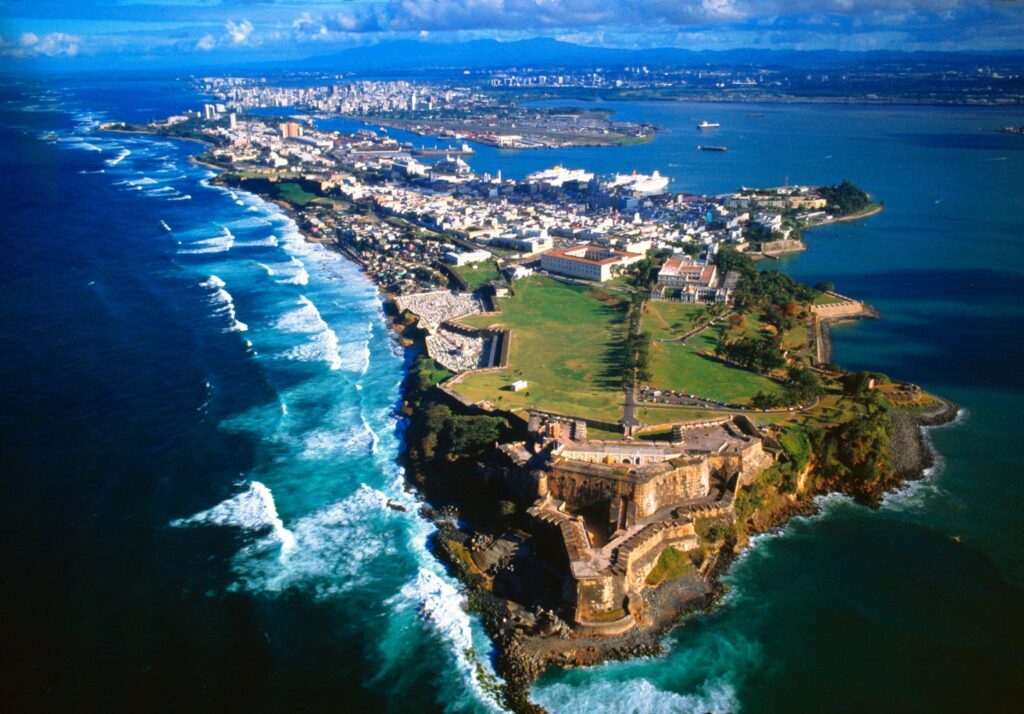
Old San Juan


On October 14, the Commonwealth of Puerto Rico submitted its Fiscal plan. Here is my summary: 

Only with a change in federal policy and a change in the trajectory of the island’s economy toward real growth, will there be money for  debt service – while not jeopardizing the Commonwealth’s ability to provide essential services. 


  • U..S. citizens living in Puerto Rico must receive the same level of healthcare funding as citizens living in the 50 statesThe Commonwealth Can Achieve Efficiency Gains by Consolidating Overlapping Agencies and by Further Centralizing Procurement to Capture Cost Savings
  • Complete large-scale strategic projects to improve accesses and competitiveness including the Northwest Corridor (PR-22 highway from Hatillo to Aguadilla), the redevelopment of Roosevelts Roads, and the Caguas Commuter Rail
  • Position Puerto Rico as one of the premiere travel destinations of the world for local, domestic and foreign travelers by supporting the financing of 9 hotel construction projects currently on hold
  • Attract economic development, private investment, and tourism by expanding the Port of the Americas value added zone, improving the Aguadilla airport, and expanding the Panamericano docks to attract Quantum-like mega cruise ships.


Click here to see the Commonwealth of Puerto Rico Fiscal Plan : https://issuu.com/adamgreenfader/docs/fiscal_plan_v_final

Follow the Money: Paulson Compares Puerto Rico Today to Miami in the 1980s

Hedge fund billionaire John Paulson has been buying a lot of sand lately — specifically, Puerto Rican sand. Despite Puerto Rico’s massive debt crisis, Paulson sees big profits ahead. He has plowed “quite a bit” — an estimated $1.5 billion — of his personal wealth into buying hotels, a resort and office buildings on the island. Paulson compares Puerto Rico today to Miami in the 1980s.”It’s similar to that period in Miami’s history,” Paulson said Thursday at the Puerto Rico Investment Summit. “There was a lot of real estate on the beach, lots of abandoned buildings and vacant lots. That was definitely the best time to buy [in Miami].”

Below are some selected articles: 

http://caribbeanbusiness.com/paulson-buys-harbour-lakes-in-palmas-del-mar/

Paulson & Co. Inc., a New York-based investment firm, has acquired Harbour Lakes in the Palmas del Mar resort community located in the municipality of Humacao, Puerto Rico, the firm announced Thursday. The acquisition consists of 149 condominium units offered for sale, from 1,637 square feet (sq. ft.) to 2,045 sq. ft., 3 bedrooms, 2.5 bathrooms.

http://money.cnn.com/2016/02/12/investing/puerto-rico-john-paulson/

Despite Puerto Rico’s massive debt crisis, Paulson sees big profits ahead. He has plowed “quite a bit” — an estimated $1.5 billion — of his personal wealth into buying hotels, a resort and office buildings on the island. Paulson compares Puerto Rico today to Miami in the 1980s. “It’s similar to that period in Miami’s history,” Paulson said Thursday at the Puerto Rico Investment Summit. “There was a lot of real estate on the beach, lots of abandoned buildings and vacant lots. That was definitely the best time to buy [in Miami].” 

The hedge-fund manager said he’s still considering moving to the Caribbean island from New York after flirting with the idea in 2013. Beautiful weather, real-estate opportunities and tax breaks have resulted in Paulson buying luxury hotels and a 326,000 square-foot (30,286 square-meter) office building in San Juan’s financial district, he said during the 2016 Puerto Rico Investment Summit in San Juan on Thursday. He plans to expand his St. Regis Bahia Beach Resort and develop new condominiums in the Condado neighborhood of San Juan. He already owns a home and an apartment on the island.

http://www.bloomberg.com/news/articles/2016-02-11/john-paulson-says-he-s-still-considering-move-to-puerto-rico-ikiv6c1w

“I came here because I think they’ve hit bottom,” said Tennenbaum, 80, who manages assets of over $6 billion and moved to the island two months ago on Paulson’s urging. “In a democracy, it takes a crisis for change to take place.”Tennenbaum plans to form a corporation under Puerto Rico’s Act 20, which gives businesses that move to the island a 4 percent corporate tax rate and exemptions on dividends and property taxes. He also plans to create a merchant bank. On Thursday, the island received a lift from one of its biggest cheerleaders, John A. Paulson, the billionaire hedge fund manager, who is investing $20 million for the San Juan Beach Hotel.

http://www.nytimes.com/2014/09/07/realestate/puerto-rico-luring-buyers-with-tax-breaks.html

And it is true that Puerto Rico is a bargain. At the St. Regis Bahia Beach, for example, arguably some of the most expensive real estate in Puerto Rico, condos with oceanfront views are priced at around $600 a square foot; in Miami, a similar unit would cost around $2,000 a square foot.Over the last 10 months, the St. Regis Bahia Beach sold nine condos, priced at $800,000 to $1.6 million, all to American buyers, according to Paulson & Company. The resort is also constructing six oceanfront villas, priced at $10 million to $12 million; two have already sold.

http://www.nytimes.com/2015/07/24/business/dealbook/john-paulsons-hedge-fund-to-buy-another-puerto-rico-hotel.html?_r=0

Paulson & Company, Mr. Paulson’s $20 billion hedge fund, has agreed to renovate the San Juan Beach Hotel and turn it into an “ultraluxury boutique hotel” over the next few months, the Puerto Rico Department of Commerce and Economic Development said. Mr. Paulson has been buying real estate on the island for years. He is building a home there and has acquired some of the island’s most exclusive hotels, including the Condado Vanderbilt Hotel, La Concha Renaissance Hotel and Tower, and the St. Regis Bahia Beach Resort.

http://www.wsj.com/articles/some-investors-bet-on-puerto-rico-hotels-1438092464

Some Investors Bet on Puerto Rico Hotels. Fund manager John Paulson boosts his stakes; Blackstone cuts back. Puerto Rico’s worsening debt crisis only seems to whet the appetite of a small but devoted group of distressed investors.

http://www.bloomberg.com/news/articles/2014-06-26/paulson-s-puerto-rico-paradise-lures-rich-fleeing-taxes

Paulson is betting that millionaires will come in droves. In his presentation, in which he forecast that Puerto Rico would become “the Singapore of the Caribbean,” he said he plans to develop residential and office properties to go beyond the current high-end offerings. Since the first homes were built in 2007 by BBP Partners (BBP) – a joint venture between two of Puerto Rico’s leading real estate developers, Interlink Group and Muñoz Holdings – more than $125 million worth of residences have been sold at the resort and the $150 million St. Regis Bahia Beach Resort opened in 2010. Paulson is acquiring a majority interest in Bahia Beach through a comprehensive recapitalization. The firm has roughly $18 billion under management and has offices in New York, London and Hong Kong.

http://www.reuters.com/article/usa-puertorico-paulson-idUSL2N0QL20Q20140815

U.S. hedge fund Paulson & Co is upping its bet in Puerto Rico real estate with the purchase of an office building in San Juan’s financial district from American International Group Inc .The 326,000 square-foot building is the latest real estate purchase for the $23 billion hedge fund on the Caribbean island where Paulson & Co is betting on an economic turnaround. He owns 8.6% of Banco Popular, the island’s largest bank.

$100 Million in Foreign Investment In Puerto Rico Stimulated By EB-5 Program

The Four Seasons EB-5 project in Cayo Largo raises over $100 million dollars in EB-5 financing principally from China & Brazil.

The Commonwealth of Puerto Rico Regional Center Corporation received its United States Citizenship and Immigration Services (USCIS) designation on December 22, 2014. As of August 3, 2015, USCIS had approved 7 of these Regional Centers are based in Puerto Rico:

  1. Caribbean USA Economic Development Regional Center
  2. Iconic Caribbean EB-5, LLC
  3. Omega Puerto Rico Regional Center, LLC
  4. Puerto Rico Provident Regional Center, LLC
  5. Reside in America Puerto Rico, LLC
  6. Caribbean Regional Center, LLC
  7. Commonwealth of Puerto Rico Regional Center Corp

The EB 5 program allows foreign investors to “buy” residency in the United States and ultimately apply for full U.S. citizenship. The investment requirement is typically US $1,000,000 per foreign investor. Under the USCIS rules, the Economic Development Administration of the Commonwealth of Puerto Rico has been designated a high unemployment area. This means that a foreign investor interested in making a qualifying investment in Puerto Rico may apply to have Puerto Rico as the geographical area thus lower the amount of capital required to $500,000.

It is also worth noting that an immigrant investor that becomes a United States citizen upon naturalization in Puerto Rico after residing in Puerto Rico for the required time period will be treated as nonresident aliens for United States estate and gift tax purposes. Consequently, such investor will enjoy the Puerto Rico income tax exemptions granted by Act. No. 22 on his or her investment income; and will not be subject to United States estate or gift tax, unless he invests in property located in the United States.

This combination of EB-5 plus Act 20/22 Tax Incentives is starting to see some significant interest particularly from Chinese investors.

Contact us to learn more.

Puerto Rico offers the most robust development tax incentives in all Caribbean

Puerto Rico’s tax incentives package offers hotel developers a competitive advantage over other destinations. The “Tourism Development Act of Puerto Rico” – Act No. 74 of 2010 depicts the parameters of such benefits. The benefits under this law will remain valid for a period of 10 years from the starting date of the eligible tourism-related project, and the business operation will be entitled to a 10 year extension.

“Tourism Development Act of Puerto Rico” – Act No. 74 of 2010 facilitates the establishment of tourism projects on the island. Following are details of requirements, eligibility and benefits under this Act.

To request benefits under this act, the business must engage in tourism-related activities using:

New facilities Existing facilities that have not been in use for three or more years Existing facilities where substantial renovations or expansion will take place The following business activities qualify as tourism-related activities:

Ownership or administration of:

Hotels, condo-hotels, timeshares/vacation clubs, hostels, guesthouses, excluding the operation of casinos
Theme parks, golf courses, marinas for tourism purposes, port facilities in areas that promote tourism activities Natural Resources as a source of entertainment value

Other entertainment or recreational tourism-related facilities
A business operation dedicated to renting or leasing to an exempt business dedicated to tourism-related activitiesBenefits under this law will remain valid for a period of 10 years from the starting date of the eligible tourism-related project, and the business operation will be entitled to a 10-year extension:

Tax credit of 10% of the total project cost, or 50% of cash from investors

(whichever is lowest)
100% exemption on municipal construction excise tax
100% exemption on taxes on imported goods and sales tax
100% exemption on municipal licenses
90% exemption on income tax
90% exemption on property tax

Attracting capital investment for ambitious tourism projects, particularly in highly competitive markets, requires appropriate economic incentives. This Act, known as the “Tourism Incentives for the Economic Development of Municipalities Act” – Act No. 118 of 2010 shall be a key tool in the economic development of tourism in Puerto Rico, with an emphasis on developing tourism projects in the municipalities that are most in need and in places that offer new opportunities to develop economic activity. The Act intends to facilitate the development of world-class resorts in strategic locations.

The main criteria for eligibility under this act include:

Being a world-class hotel with at least a 4-star rating
Planning for diverse commercial and recreational establishments
Other tourist attractions and facilities typical of 4-star hotels, including casinos
The project must be developed exclusively with private capital
This act will grant a rebate on net income tax payment rates from tourist facilities gambling operations according to the following scale:

Investment of $500 MM – fixed tax rate of 25%
Investment of $750 MM – fixed tax rate of 15%
Investment of $1.0 B – fixed tax rate of 10%
Investment of $1.25 B – fixed tax rate of 8%
Contact us to learn all about hospitality and hotel development incentives.


Urban Land Institute SE Florida and Builders’ Association of Puerto Rico Join Forces

June 2016 – The Urban Land Institute (ULI) and the Builders’ Association of Puerto Rico (ACPR) met to discuss their new alliance for the South East Florida and Caribbean Region during the annual ULI Conference in Aventura, Florida.

“We are very excited to have the ACPR become part of our group. “Members of The Builders’ Association of Puerto Rico (ACPR) have for years taken leadership roles in both local and national committees”, expressed Julie Medley, Executive Director of The Urban Land Institute – SE Florida/Caribbean.

The ACPR has been Puerto Rico’s preeminent real estate organization for developers, investors and builders since 1951. The president of the Builders’ Association of Puerto Rico, Arch. Ricardo Alvarez Díaz, sees great opportunities in Puerto Rico today and is enthusiastic about this new alliance.   “The ULI is such an important organization in our industry and we are very enthusiastic about its incredible vision and resources,” expressed Arch. Alvarez Díaz.

“We are very committed to helping our members on both sides of the “pond” learn and be able to seize these opportunities, and it was for these reasons that we created the Florida Liaison Committee,” expressed Adam Greenfader, chairperson of the committee.

The ULI will be holding its Latin America Conference on October 5-7, 2016 for those interested in development in Puerto Rico and the Caribbean-LATAM region as whole. It will host top leaders and decision makers from hundreds of its ULI members and non-members who are active in the land use and real estate industry in South America, Mexico, the Caribbean, and Puerto Rico.

Please contact Adam Greenfader managing partner at AG&T for more information at 305.363.8833.

Does eco-tourism have a sustainable future?

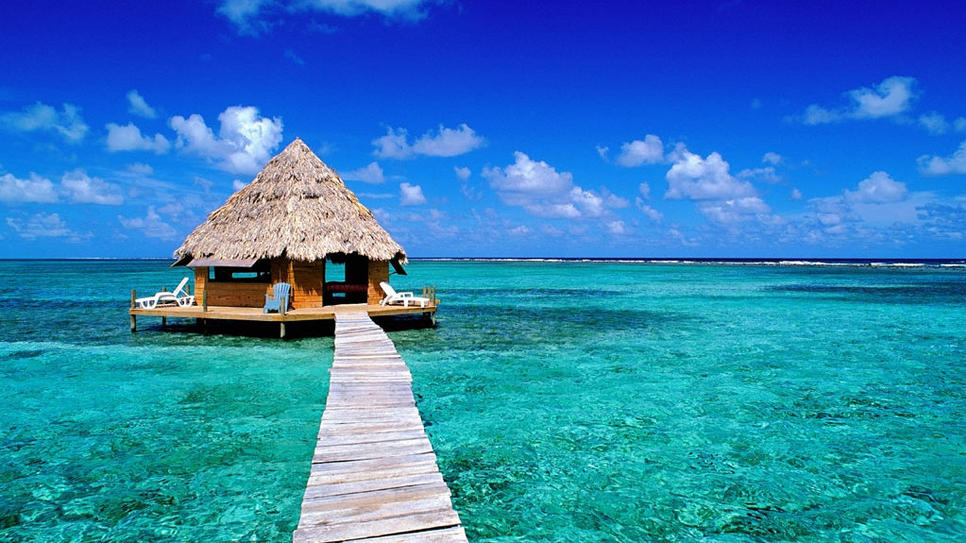
belize-real-estate-dock-on-beach


Does eco-tourism have a sustainable future?
by Lois Avery

Leonardo DiCaprio is almost as well known for environmental activism as he is for acting so it comes as no surprise that his luxury resort venture in Belize is creating a new vision for eco-tourism.

He first set eyes on Blackadore Caye, his 104-acre unpopulated island off the coast of Belize, a decade ago and bought it with a partner for a reported US$1.75 million. Once work is complete in 2018, it will house luxury villas and all the frills associated with five-star hospitality in one of the most beautiful corners of the globe.

But there appears to be more to this venture than financial gain. “The main focus is to do something that will change the world,” DiCaprio says in press reports. “I couldn’t have gone to Belize and built on an island and done something like this, if it weren’t for the idea that it could be ground breaking in the environmental movement.”

Plans for Restorative Island, as it will be known, show a large raised platform that stretches in an arc over the water, with artificial reefs underneath. The island will grow indigenous plants to support a manatee conservation area, and mangrove trees will be replanted. This vision is the result of 18-months of work from a team of designers, scientists, engineers and landscape architects but this labour of love extends beyond the last year-and-a-half. Apparently, DiCaprio spent a decade searching for the perfect hotel operator to partner with and he settled on Restorative Islands L.L.C., which is owned by Paul Scialla, founder of Delos, a global company known for its work on ‘well building’ designs.

“Delos, the partner in this development is the founder of the WELL building standard – they are positioning this as a rating tool for wellness in the same way that LEED/BREEAM etc. are to environmental sustainability,” says Matthew Clifford, Head of JLL’s Energy and Sustainability Services, Asia Pacific.

He explains that the WELL accreditation is still very new to the hotels industry but its implementation is a growing trend as developers, operators and consumers alike become more conscious of responsible travel.

An eco-tourism choice for all budgets

While the WELL standard may be new, the concept of an environmentally sustainable hotel is not. “Aside from DiCaprio, Marlon Brando conceived something similar in Tahiti and, whilst relatively well-known, we’ve also had the experience of Soneva and Six Senses in Asia for a number of years with their eco-resorts. Australia, Caribbean, Central America, North America, Scandinavia and the Alps are also markets where eco-resorts have been created; in truth, they can be found on all continents,” says Bob Merrigan, Executive Vice President, Hotels Project Services, JLL Asia Pacific.

From luxury resorts championed by wealthy individuals, to the back to basics eco-lodges that promote community living, eco-travel caters to all budgets. Yet it’s affluent travellers who are driving the larger scale resort developments. According to a 2012 Four Seasons survey of luxury travel trends, “the affluent put much more thought into their purchasing decisions to determine whether a product or service will intrinsically improve their lives.”

And when it comes to developing these resorts at the higher end, a significant investment is involved and funding often comes from private wealth.

Clifford adds: “Any development project will focus closely on how they can generate a buzz and, ideally, pre-sales. Developers are pretty smart at lowering their risk, and these days most major projects won’t go ahead without some level of pre-commitment. The celebrity endorsement is another way to generate a lot of interest, and I would be quite surprised if these didn’t sell out in rapid time.”

It’s clear that eco sells but Merrigan maintains that the market remains relatively niche: “There are the savvy entrepreneurs who see opportunity for which some will remain true to the eco-friendly spirit and others will play lip service interested only in the commercial returns.”

Ultimately, the hotels industry is driven by consumers. “Overall, environmental and sustainability issues continue to grow across all property types – it is not uncommon for guests to check the carbon footprint of their air travel to a destination,” Merrigan says. “Others may favour green policies such as obtaining all consumables within a specific radius of a property.”

A recent TripAdvisor study found that the ‘green’ travel trend is gaining momentum among its members; 71 percent said they plan to make more eco-friendly choices in the next 12 months compared with 65 percent who said the same a year earlier.

“There has been a growing consciousness of the need to protect these beautiful locations, rather than paving them all over, or ruining them with cookie cutter, or environmentally destructive resorts,” adds Clifford.

“Perhaps this is a way to avoid this destructive trend, by developing these beautiful locations, but in a way that keeps it beautiful and special for the long term.”

What makes a hotel ‘eco’?

• A carefully selected site: It must take advantage of positive local features, such as proximity to sustainable transport, rather than requiring people to fly in. Eco-sites mustn’t destroy areas with endangered species, high value agricultural land etc.

• A holistic design and delivery: the process must consider the full life cycle costs, not just up-front costs. For example, it may cost more up front to make the building efficient in terms of water, waste, recycling and energy, but these can pay for themselves over the lifecycle of the asset. Something which takes into consideration other macro-trends like climate change. What happens to your luxury resort if hurricanes, floods, coastal erosion, or sea level rise continue? And the project must be managed well to maintain the design goals. For example, don’t design an eco-hotel and then serve unsustainably fished seafood in the restaurant.

• A positive impact on the community: This might include helping to bring renewable energy investment to a remote area, which may not otherwise happen without the support of a developer. Or to create jobs for locals.