The Intersection of Fine Art and Luxury Real Estate

Real estate and art have been linked for some time, but recently the two have been linked in new ways. Real estate agencies are now beginning to partner with art galleries to include fine art in the staging process. There are a few reasons why this is beneficial to both. The art adds a certain atmosphere to the home, and creating this atmosphere is essential in the successful sale of a property. In luxury real estate, the buyers are familiar with highly priced items – like the fine art on display. This element of wealth is something that people recognize, and helps to create an appealing space. The art pieces on display are not just for the benefit of the real estate agency, but also for the gallery. The works are on sale, and allows galleries to connect with clients with means. Even if the work does not sell during the showing, many galleries attest that they gain clients from this practice.

The works are carefully chosen in collaboration with art galleries and interior designers, who choose pieces that work within the space, and also have some sort of narrative that will be attractive to buyers. The curation is key, and cannot be too obvious. The precise and smart placement of art around the properties makes buyers spend more time looking – a benefit to the realtors.

Many cities like New York and Miami are booming with luxury developments. One way to increase interest in the properties and to stand out from the many other developments in progress is specially commissioned art by some of the biggest names in the business. Thierry Dreyfus, a light artist, was hired for a permanent 40-story LED installation in Manhattan. In other instances, it is sculpture, like the Anish Kapoor sculpture commissioned for the new Herzog & de Meuron development in TriBeCa. Other pieces by established artists like Jeff Koons sit in apartment lobby. The relationship between high priced real estate and fine art is clear; the buyers of one tend to be buyers of the other.

Puerto Rico China Investment Summit

Over the past decade, China has become an increasingly integral source of aid and foreign direct investment (FDI) for Latin America and the Caribbean. Rising levels of FDI and trade over time reflect deepening relationships between China and the Caribbean. 


On March 1 to March 13, 2017, a large group of business owners and senior executives from China and top regional and local stakeholders from Puerto Rico were brought together in San Juan, Puerto Rico. “It was an honor to present two of the most exciting resort projects in Puerto Rico; Royal Isabela Resort and Coco Beach Golf and Residences”, noted Adam Greenfader.

During the China-Puerto Rico Investment Forum held at the Convention Center, investors had questions not only about business opportunities but also about costs, incentives and the opportunity of being able to launch their products in the U.S. market. At a time when federal funds from Washington, D.C., are being limited and the island has been cut off from the markets, Puerto Rico’s economic development will depend heavily on its ability to attract foreign investment, Putnam Bridge CEO Nicholas Prouty explained while noting Puerto Rico’s numerous benefits as a U.S. jurisdiction.


Photos Below: Adam Greenfader with Governor Ricardo Rosselló, Li, and Luguang Yang Carter

Urban Land Institute SE Florida and Builders’ Association of Puerto Rico Join Forces

June 2016 – The Urban Land Institute (ULI) and the Builders’ Association of Puerto Rico (ACPR) met to discuss their new alliance for the South East Florida and Caribbean Region during the annual ULI Conference in Aventura, Florida.

“We are very excited to have the ACPR become part of our group. “Members of The Builders’ Association of Puerto Rico (ACPR) have for years taken leadership roles in both local and national committees”, expressed Julie Medley, Executive Director of The Urban Land Institute – SE Florida/Caribbean.

The ACPR has been Puerto Rico’s preeminent real estate organization for developers, investors and builders since 1951. The president of the Builders’ Association of Puerto Rico, Arch. Ricardo Alvarez Díaz, sees great opportunities in Puerto Rico today and is enthusiastic about this new alliance.   “The ULI is such an important organization in our industry and we are very enthusiastic about its incredible vision and resources,” expressed Arch. Alvarez Díaz.

“We are very committed to helping our members on both sides of the “pond” learn and be able to seize these opportunities, and it was for these reasons that we created the Florida Liaison Committee,” expressed Adam Greenfader, chairperson of the committee.

The ULI will be holding its Latin America Conference on October 5-7, 2016 for those interested in development in Puerto Rico and the Caribbean-LATAM region as whole. It will host top leaders and decision makers from hundreds of its ULI members and non-members who are active in the land use and real estate industry in South America, Mexico, the Caribbean, and Puerto Rico.

Please contact Adam Greenfader managing partner at AG&T for more information at 305.363.8833.

The Climate Ribbon: An Environmental Solution (Video)

climate 2


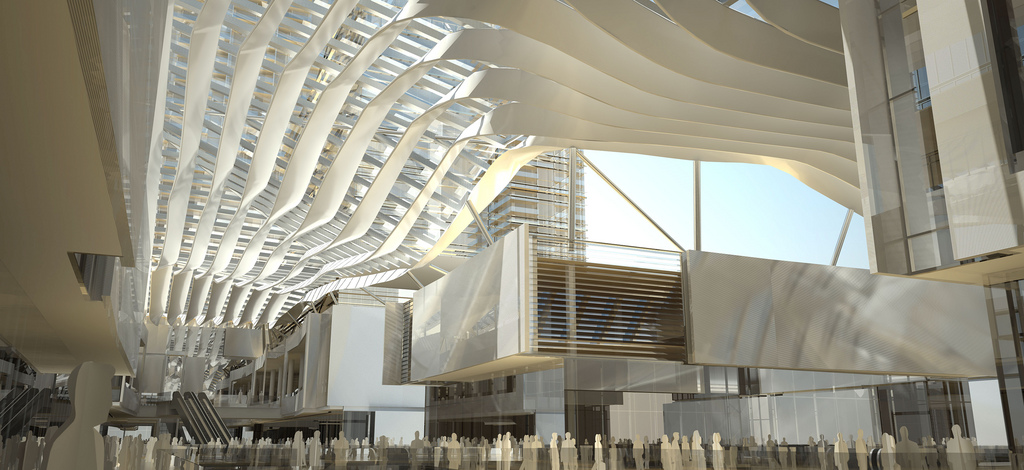
The “Climate RibbonTM” at Brickell City Centre is one of the most unique Green architectural feature that I have seen in years. It provides a continuous surface of glass (11,000 m2) and architectural fabric sun-screening blades. Can it create a comfortable microclimate in hot and humid Miami solely through the use of passive energy strategies?

Check out this video (2:20)


Puerto Rico: Island of Opportunities Video

Check out this Video on Puerto Rico.  Don’t miss the opportunity. Invest in your future. Puerto Rico has a privileged location and is the Gateway to the Americas. Ideal for trade and access to federal programs. The island has an educated bilingual workforce and key business sectors such as: manufacturing, services, technology, research & development, banking, financial, etc. It offers incentives and tax credit to those interested in establishing or doing business in Puerto Rico.

Transforming Cities through Art and Culture

red lips


By Leslie Braunstein, ULI Magazine

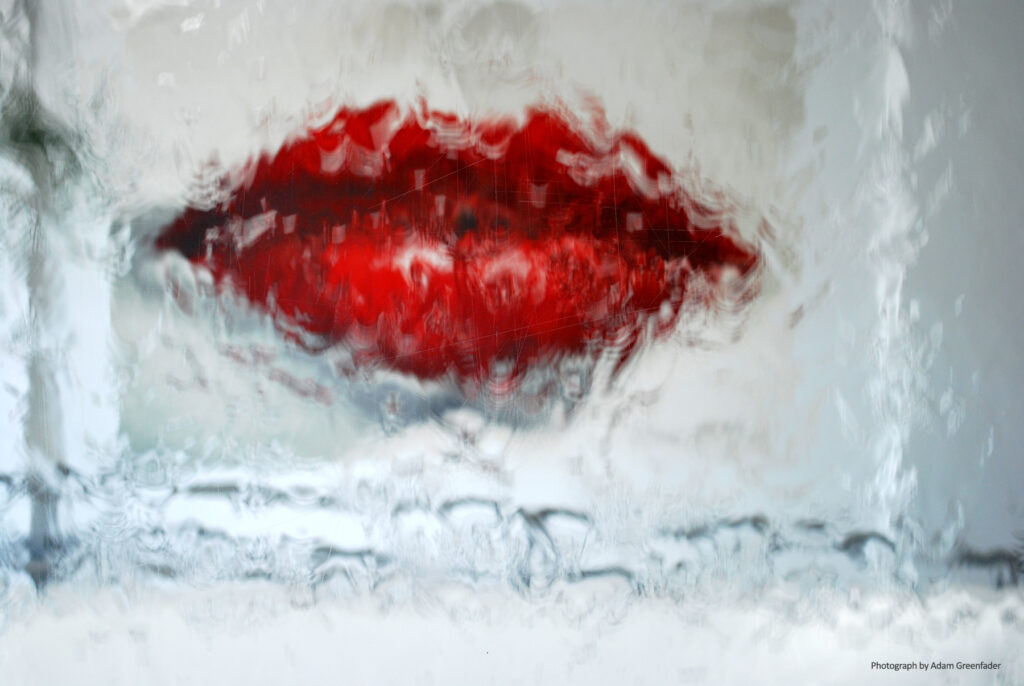
Art and expressions of culture can no longer be considered pricey or optional additions to major real estate projects. “Culture is the new currency,” stated Shaheen Sadeghi, president and CEO, LAB Holding, at a 2015 ULI Fall Meeting opening general session. “It’s the way you think and interact with your community.” Jessica Goldman Srebnick, CEO of Miami-based Goldman Properties, added, “Art is a game-changer.”

Srebnick’s late father, Tony Goldman, “saw things that other people don’t see,” she explained. “We always integrate art into our projects. Why surround yourself with sterility when you can surround yourself with something fascinating? As developers, we have the largest canvases in the world.”

For the last four decades, Goldman Properties has used community-based public art as a springboard for neighborhood revitalization, transforming some of the East Coast’s most downtrodden urban areas into iconic destinations that have skyrocketed in value. After rebuilding much of Greene Street in New York City’s SoHo district, Goldman moved into Miami Beach in 1986, quickly acquiring 18 deteriorating art deco buildings along Ocean Drive. Now, of course, this South Beach strip is a world-class cultural, recreational, and tourist magnet.

More recently, the company has taken on another challenge: acquiring about 20 run-down single-story commercial buildings in the dying industrial Miami neighborhood called Wynwood. It was there, said Srebnick, that her father would implement many of the lessons learned throughout his career. Before redeveloping and leasing a single structure, the company invited a group of the world’s leading graffiti artists to paint the backs of their newly acquired buildings. These modern works of art—open to the public and illuminated at night—became the Wynwood Walls, “the world’s largest outdoor street museum,” attracting up to 15,000 people per day.

One of the lessons learned by Goldman is the evolution of a new live/work/play neighborhood. It starts with the “play” element, often in the form of restaurants. Greene Street Café in New York, Trust in Philadelphia, and Wish and Lucky in Miami Beach all proved that “people will come to a great restaurant even if it’s in a crappy neighborhood.” So Goldman proceeded to lease space to a new restaurant, Wynwood Kitchen and Bar.

The next step, Srebnick went on, is work. “Dad said we should never give in to fear, so we have always been the first to jump into the pool,” she explained. “Curation is important; we wanted differentiated and creative office users.” To obtain an anchor tenant in Wynwood, Goldman leased a building for a dollar a year to the Museum of Contemporary Art. Later, they had an artist paint bold black-and-white stripes on an empty building, then leased it to technology sector tenants, realizing a rent increase from $6 per square foot ($65 per sq m) to $35 per square foot ($377 per sq m). A plain garage was given a stunning, futuristic facade. “We believe that Wynwood will become one of the world’s most important neighborhoods for the marriage of public art and architecture,” Srebnick concluded.

Sadeghi engaged the audience of ULI members with music, images, and a variety of provocative questions. “Why do we fear riding in an elevator with another person? What would happen if you let that other person into your life? What if there was a pawnshop where you could sell your bad memories and leave them behind? As developers, we are in the memory-making business; our projects can change people’s lives.”

The California-based speaker went back in history to point out that after World War II, the world had to buy goods from the United States because other major powers were destroyed. Foreign and domestic demand, combined with new technology, spurred the era of mass production, the era of consumption, and the rise of the middle class. TV dinners and canned meat gave rise to fast food and then the drive-through. Everything had to be done faster and cheaper. Americans represent 4.5 percent of the world’s population, Sadeghi pointed out, but consume 25 percent of the world’s goods.

But now Americans are fed up and a major shift is occurring, he continued. Mass culture in the United States is giving way to a plethora of niche subcultures. “It’s about personalization, customization, and localization, not homogenization. We want content in our lives; we want layers of experiences; we want authenticity that cannot be bought.”

So what does this have to do with real estate development? The answer is: everything. “We are stuck in Development 1.0,” Sadeghi noted. “But insanity is doing the same thing over and over again [and expecting different results]. People in the community are now active participants—even coauthors—in our projects.”